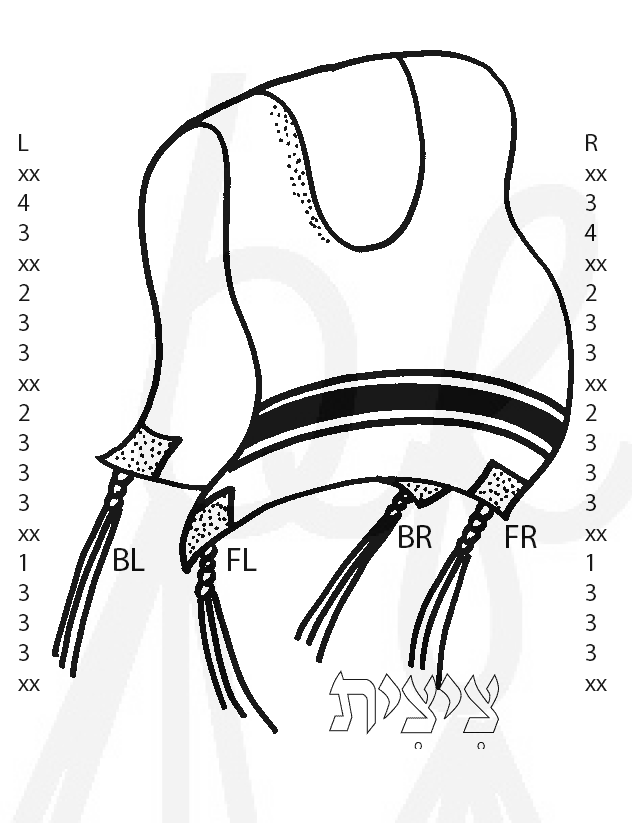
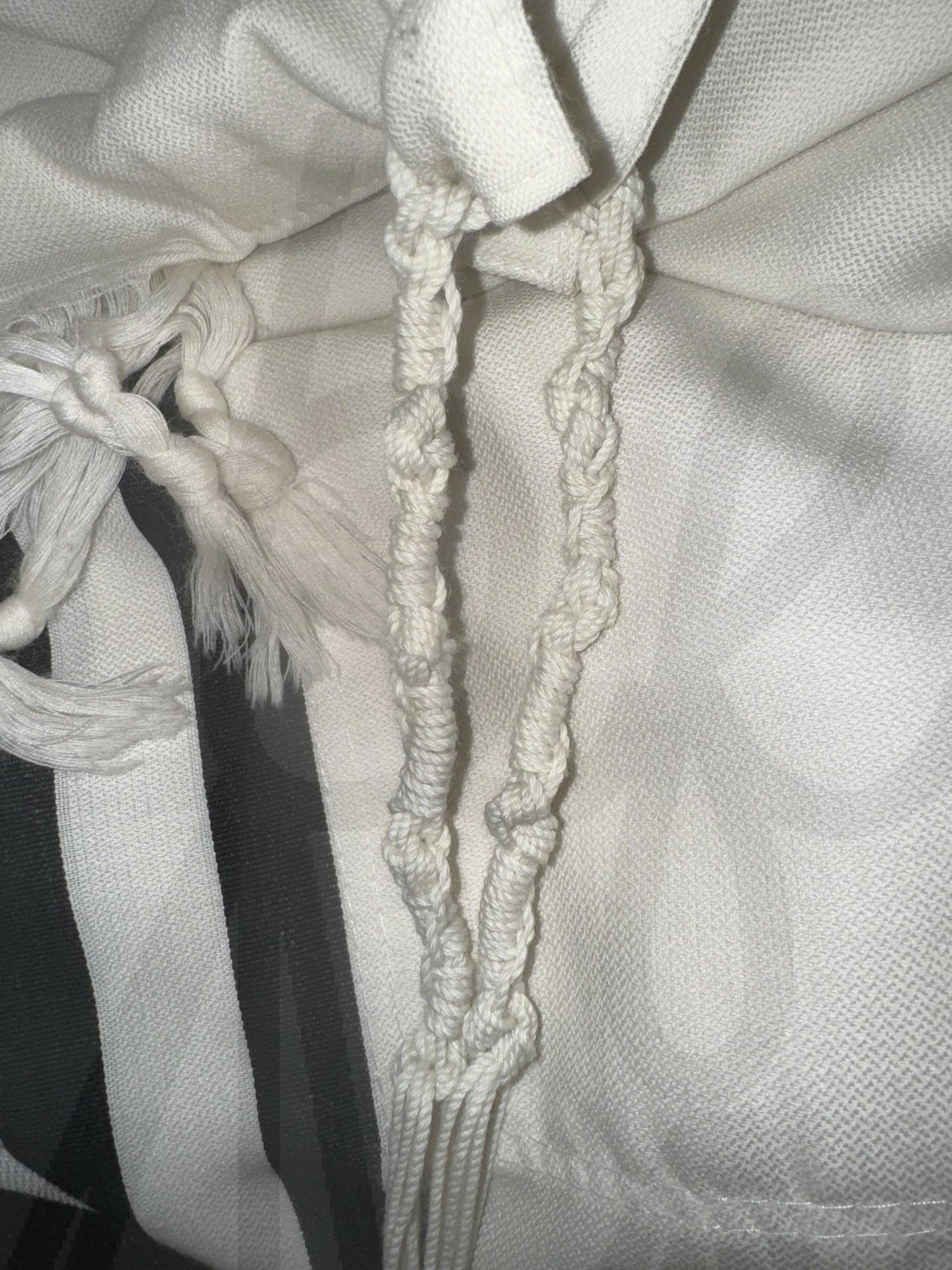
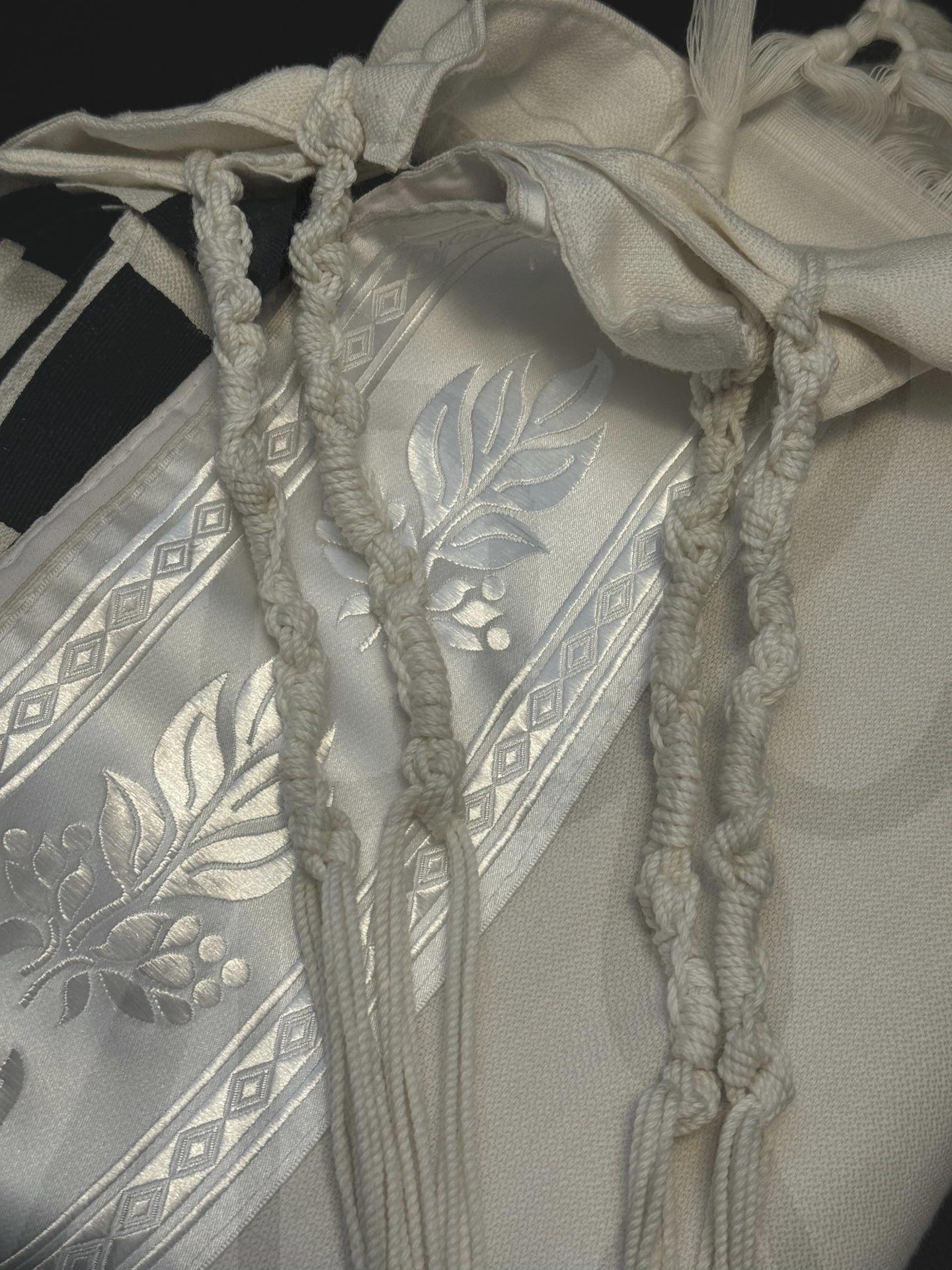
The Ribnitzer Rebbe used to tie his own Tzitzis and he ordered his Chulyos differently from the left and right sides. Here is the order.
| FL | FR | BL | BR | |
|---|---|---|---|---|
| xx | xx | xx | xx | |
| 1 | 4 | 3 | 4 | 3 |
| 3 | 4 | 3 | 4 | |
| xx | xx | xx | xx | |
| 2 | 2 | 2 | 2 | 2 |
| 3 | 3 | 3 | 3 | |
| 3 | 3 | 3 | 3 | |
| xx | xx | xx | xx | |
| 3 | 2 | 2 | 2 | 2 |
| 3 | 3 | 3 | 3 | |
| 3 | 3 | 3 | 3 | |
| 3 | 3 | 3 | 3 | |
| xx | xx | xx | xx | |
| 4 | 1 | 1 | 1 | 1 |
| 3 | 3 | 3 | 3 | |
| 3 | 3 | 3 | 3 | |
| 3 | 3 | 3 | 3 | |
| 3 | 3 | 3 | 3 | |
| xx | xx | xx | xx |
This is in stark contrast with how the Magen Avraham of Trisk and R’ Yissachar Dov from Belz tied their respective Tzitzis, where for each set they started with a complete chulya. It’s interesting since the Raya Mehemna of the Zohar writes that each full chulya comes from a place of kedusha, so it’s unclear why he would start with incomplete chulyos and end with complete ones. At any rate, this is how the tying method is done.
This tying method was initially brought to attention by Yidy Fuxman of Knot the Tzitzit.


Connected across Blue Fringes
Every relationship on this tying style, including pages that link here from the other side.