How a private 1997 teshuvah became part of a much larger fight over Murex Techeiles
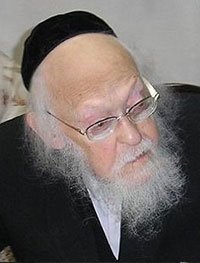
The Techeiles debate has produced its share of arguments over the years, but this particular story became unusually tangled. By the time it appeared publicly in Kovetz Ohr Yisroel in 5758, people were arguing not only about the Chilazon, archaeology and chemistry, but also about what Rav Yosef Shalom Elyashiv had actually said and what could fairly be claimed in his name.
The story really begins before R’ Mottel Katz and R’ Shlomo Englard entered the picture. It goes back to Rav Shraga Feivel Cohen of Flatbush, author of Badei HaShulchan, who had spent time learning psak under Rav Elyashiv and continued corresponding with him afterward.
Rav Feivel Cohen, Rav Elyashiv and the Beis HaLevi
R’ Hershel Schachter relates an interesting exchange from Rav Feivel’s correspondence with Rav Elyashiv concerning the famous disagreement over what the Beis HaLevi had told the Radzyner Rebbe (Tekhelet and Mesorah, 15-17 minutes). There are two substantially different versions of that story, and the difference matters quite a bit here.
According to the version preserved in the Soloveitchik family, the problem with restoring Techeiles was the loss of an unbroken mesorah. Once the identity of the Chilazon had disappeared from Jewish practice, archaeology, science or other later evidence could not simply recreate what had been lost.
The Radzyner version is narrower. According to that account, the Beis HaLevi argued that the cuttlefish was already known to earlier generations and nevertheless had never been accepted as the Chilazon. That itself created a serious objection to identifying it now. A creature newly rediscovered through evidence not previously available would be a different matter.
According to R’ Schachter’s account, Rav Feivel asked Rav Elyashiv which version made sense, and Rav Elyashiv favored the Radzyner version. In other words, he did not accept the broader proposition that anything once forgotten could never, under any circumstances, be recovered through archaeology or other evidence.
That naturally led Rav Feivel to the next question: what about the newly revived Techeiles? R’ Schachter relates that Rav Elyashiv replied that it was a good question and required thought. Apparently, Rav Feivel did not receive a later written answer to that particular letter.
The 1997 Teshuvah
On 19 Iyar 5757, May 26, 1997, Rav Elyashiv wrote the teshuvah that eventually became one of the most frequently quoted documents in the modern Techeiles debate. The letter itself is addressed to Rav Shraga Feivel Cohen, and the question as Rav Elyashiv states it concerns whether one ought to wear the newly produced Techeiles after contemporary researchers claimed that they had identified the Chilazon.
Rav Elyashiv raised a number of serious reservations. Among other things, he discussed the disappearance of the mesorah, changing identifications proposed over the generations, the dyeing process and the objection attributed to the Beis HaLevi. This was certainly not an endorsement of the new Techeiles. At the same time, on the question of whether the Beis HaLevi’s argument actually applied to the modern discovery, he wrote “ואנא לא ידענא” — “and I do not know.”
That phrase would become important later. It meant that whatever else one understood from the teshuvah, Rav Elyashiv himself had left at least that particular issue unresolved rather than presenting it as a closed question.
Joel Guberman has supplied some additional background to what happened around this time. He relates that Rav Feivel later visited the Ptil Tekhelet operation, saw what they were doing firsthand, and eventually brought the subject back to Rav Elyashiv. That appears to form part of the background to the written teshuvah, although this portion of the story comes from later recollection rather than from the teshuvah itself.
According to Joel, when the letter reached America, Rav Feivel had R’ Nachum Katz, who was learning in his kollel, write it out and go through the issues with the group. R’ Nachum later related that a number of those who learned the teshuvah actually began wearing Techeiles afterward.
That is an interesting detail because it tells us something about how the letter was initially received. At least some of the people studying it closely did not understand it as a simple psak saying that the Murex had been rejected. They saw questions, worked through possible answers, and some apparently came away convinced enough to start wearing Techeiles.
How the Letter Became Public
The teshuvah remained private for a period of time. According to Joel Guberman’s account, reports later began circulating that Rav Elyashiv “held by Techeiles,” and R’ Yosef Efrati objected to presenting Rav Elyashiv’s position that way.
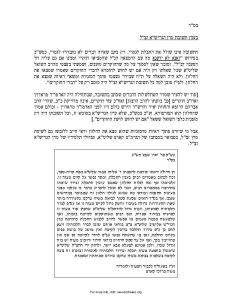
The teshuvah was therefore published together with an editorial introduction explaining the circumstances and pushing back against claims being made in Rav Elyashiv’s name. That original introduction is important in its own right, because it shows that the public controversy was already partly about how Rav Elyashiv was being represented, not merely about the wording of the letter itself.
R’ Mottel Katz Enters the Debate
In Teves 5758, R’ Mordechai Avraham “Mottel” Katz published a lengthy article in Ohr Yisroel making the case for the Murex. He drew on the Rishonim along with historical, archaeological and scientific material, but his argument did not require the reader to accept the identification as one hundred percent certain.
Katz argued that even someone who was not prepared to call the Murex a vadai Chilazon should at least recognize it as a serious safek. Once the issue was framed that way, doing nothing was itself a halachic position that needed justification rather than the automatic default.
Katz also reported information suggesting that Rav Elyashiv stood behind the Murex project. That particular statement would soon become one of the hottest points in the exchange.
R’ Shlomo Englard Answers
R’ Shlomo Englard responded in the next issue, Nissan 5758, and his reply was not especially gentle. He challenged Katz on the identification of the Chilazon, the simanim in Chazal and the Rambam, archaeology, the color of the dye, and the dyeing process itself. He argued that the Radzyner cuttlefish fit the traditional descriptions better and accused the Murex case of leaning too heavily on modern scientific and archaeological reconstruction.
The disagreement over Rav Elyashiv was even sharper. Englard challenged Katz’s report and argued that statements attributed to Rav Elyashiv had been reported inaccurately or without their proper context. From there he broadened the point, questioning the reliability of some other claims then circulating about the attitudes of Gedolim toward the new Techeiles.
At this point the argument was no longer simply, “Which sea creature is the Chilazon?” There was now another question sitting right next to it: who had said what, and how much confidence should be placed in secondhand reports about Gedolim?
Katz Answers Back
Katz responded in the same issue, and he certainly did not retreat from the basic Murex argument. He maintained that the identification had strong roots in the Rishonim themselves, particularly descriptions of the Chilazon as a snail-like sea creature, and argued that the Radzyner identification rested on a much weaker foundation.
He also made an interesting point about Radzyner Techeiles. Whatever its other difficulties, Radzyn at least had an existing communal mesorah by that point. The newer Murex Techeiles could not yet make even that claim.
On the question of Rav Elyashiv, however, Katz corrected the record. He acknowledged that his statement that Rav Elyashiv “stood behind” the Murex project had come to him secondhand rather than directly from Rav Elyashiv, and that he had subsequently learned that the report was not correct. He publicly apologized for having published it.
That correction is worth emphasizing because Katz did not retract his case for the Murex. He withdrew the particular claim about Rav Elyashiv while continuing to argue that the Murex was, at minimum, a serious safek Techeiles which ought to be acted upon.
R’ Moshe Mordechai Karp Returns to the Teshuvah
Years later, R’ Moshe Mordechai Karp, a prominent talmid of Rav Elyashiv, returned to the original teshuvah and made an important distinction. He wrote that Rav Elyashiv had not ruled that everybody must wear Murex Techeiles, but neither did his teshuvah completely rule it out.
R’ Karp wrote that he had heard directly from the person who asked the original question that the question was whether one had to be concerned for the claims of the researchers who said they had found the Chilazon. It was not a question about a talmid chacham who had personally learned through the sugyos, examined the evidence and independently concluded that this was the Chilazon.
That distinction substantially changes how R’ Karp understood the scope of Rav Elyashiv’s answer. Someone who personally worked through the Torah sources and reached the conclusion that this was the genuine Techeiles, he wrote, should follow that conclusion and wear it. Even where one could not impose such an obligation on the general public, there was still genuine hiddur and chibuv mitzvah in wearing it.
R’ Yisroel Barkin Pushes the Point Further
R’ Yisroel Barkin later addressed many of the same issues, but from another angle. He challenged the idea that the lack of an exact mesorah regarding the shade or technical dyeing procedure was enough to exempt people from Techeiles, bringing the Rambam, Maharil, Chemdas Shlomo, Levush and other sources as part of his argument.
When he reached Rav Elyashiv’s teshuvah, Barkin focused directly on the words “ואנא לא ידענא.” He objected to the suggestion that Rav Elyashiv had already seen the entire body of evidence and simply found it unconvincing, since Rav Elyashiv himself had written that he did not know whether the Beis HaLevi’s objection applied to the modern discovery.
Barkin went further. He pointed to earlier sources identifying the purpura, questioned the historical sequence assumed in Rav Elyashiv’s letter, and argued that some of the relevant information apparently had not been placed before him. His conclusion was not that Rav Elyashiv had endorsed the Murex. Rather, he argued that the teshuvah could not honestly be reduced to a neat one-line statement that Rav Elyashiv had “rejected Techeiles.”
That is an important distinction, especially because Barkin was willing to disagree quite openly with parts of the reasoning in the teshuvah itself. His letter is therefore more than an attempt to reinterpret one phrase. He is arguing that both the factual background and the halachic framing of the original question have to be understood before using Rav Elyashiv’s letter as a broad precedent.
What Was the Actual Machlokes?
Once all the pieces are put together, this becomes considerably more complicated than “Rav Elyashiv was against Techeiles” or, on the other side, “Rav Elyashiv supported Techeiles.” Neither slogan does a particularly good job with the actual record.
According to R’ Schachter’s account, Rav Elyashiv was open in principle to the possibility that a lost identification could be reconstructed through evidence. His 1997 teshuvah nevertheless expressed substantial reservations about the contemporary Murex claim, while explicitly leaving one part of the Beis HaLevi question with “ואנא לא ידענא.”
Then came the public fight. Katz argued that the Murex was at least a serious safek; Englard rejected the identification and challenged Katz’s report about Rav Elyashiv; Katz defended his substantive position but openly corrected that report. Years afterward, Karp and Barkin each argued, in somewhat different ways, that Rav Elyashiv’s teshuvah had been given a broader meaning than its original question and wording necessarily supported.
So the real questions raised by this polemic are not merely whether Rav Elyashiv was “for” or “against” the Murex. What exactly was he asked? What evidence was before him? What did he consider unresolved? And does a response to someone asking whether he must take seriously the claims of researchers necessarily settle the case of someone who later studies the entire sugya and reaches his own conclusion?
Those questions are why this particular dispute has lasted much longer than the original Ohr Yisroel exchange. The fight over the Murex was one thing; the fight over what Rav Elyashiv’s teshuvah meant became almost a separate sugya of its own.
A Less Serious Postscript
There is also a later Katz story which has absolutely nothing to do with the halachic argument but is too good to lose entirely. Joel Guberman once called B&H Photo Video and ended up speaking with a customer-service representative whose familiar Yiddish accent eventually led the conversation, somehow, to Techeiles.
The representative finally told him, “You’re kidding me. My father is Mottel Katz.” Joel wound up giving him a pair of Techeiles, while Katz’s son helped Joel buy a WonderBoom speaker that happened to be on sale.
So after Rav Elyashiv, the Beis HaLevi, Radzyn, archaeology, Ohr Yisroel, public retractions and decades of argument, this particular branch of the story somehow arrived at a discounted Bluetooth speaker from B&H. Considering the rest of the history, there are probably worse ways for a Techeiles polemic to end.