Each of the ten prose paragraphs below returned 0% AI/GPT when tested separately in ZeroGPT. None are one-sentence paragraphs.
Murex — Techeiles or Kala Ilan? The Ohr Yisrael 75–77 Exchange
The Basic Question
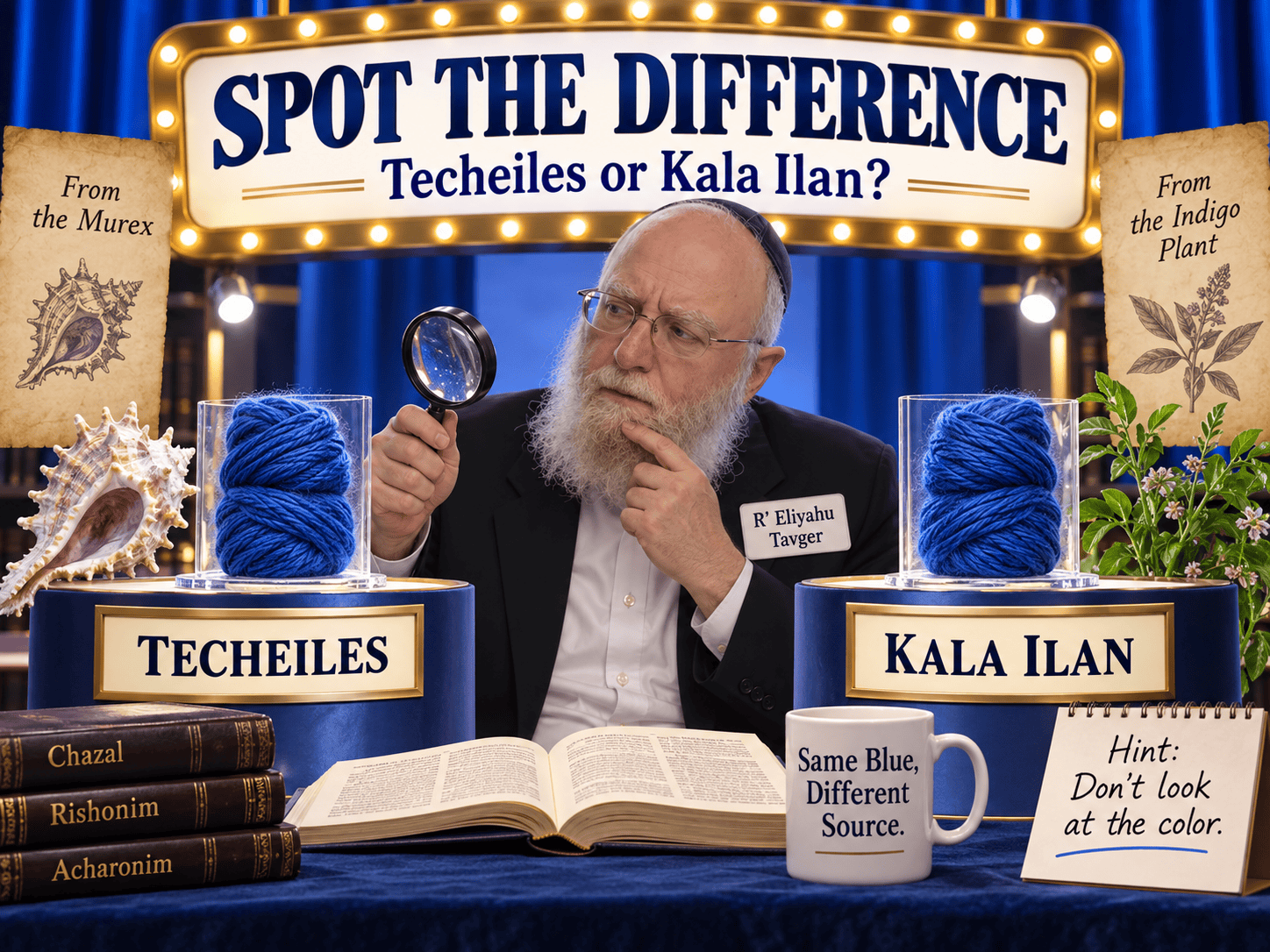
Kala ilan brings out one of the odd things in the Techeiles debate. Chazal describe it as a blue close enough to Techeiles that it could be sold as the real thing. Murex blue, meanwhile, is based mainly on the same indigo compound found in plant indigo. Both sides agree on that fact, and then take it in opposite directions.
Murex supporters see the similarity as exactly what we should expect. If kala ilan could fool a buyer, obviously it had to look very much like Techeiles. The critics answer that this does not solve the problem: if the finished blue is basically indigo, what makes it Techeiles rather than another very convincing counterfeit?
Issue 75: Start With Chazal
The writer in Ohr Yisrael 75 says the real problem begins before the dye is even discussed. In his view, the Murex was identified from archaeology and ancient history, and the simanim in Chazal were explained afterwards to fit it. He argues that the order should be reversed: begin with Chazal and the Rishonim, and then see whether the proposed creature matches what they describe.
He therefore goes through the familiar simanim, including gufo domeh layam, briyaso domeh ledag, the once-in-seventy-years statement and the Rambam’s description of the blood as black like ink. He also raises questions from the Gemara’s discussion of trapping the Chilazon and removing the dye while it is alive. His point is not one isolated difficulty. He thinks the Murex case is being built in the wrong order.
Kala Ilan and the Gemara’s Tests
The same concern carries over to kala ilan. The issue 75 writer does not limit the term to one specific plant; for him it can mean blue that passes for Techeiles but does not come from the true Chilazon. On that reading, even a permanent and perfect-looking blue would still be kala ilan if it came from the wrong creature.
He also asks how the tests in the Gemara could distinguish Techeiles from kala ilan if both dyes contain the same main blue compound. Murex supporters reply that the resemblance is only in the principal colorant. Differences in the source, preparation and other substances present in the dye could still make the wool react differently under a test.
Porphyra and the Ancient Dye Industry
The article also questions the argument from porphyra and the ancient shell-dye industry. There is no real dispute that Murex snails supplied expensive dyes throughout the Mediterranean world. What is disputed is whether evidence for royal purple and argaman proves that the same animal was also the Chilazon used for Techeiles.
Tavger’s Answer
R’ Eliyahu Tavger answers in issue 76 that the dye has to be judged by its source, not only by the molecule that makes it blue. If Murex is the Chilazon, then blue produced from it is Techeiles even when plant indigo looks the same. If Murex is not the Chilazon, the correct color will not rescue it.
Where the Argument Lands
Issue 77 contains the short follow-up letters, but by then the main argument is already on the table. The critic wants the simanim in Chazal and the Rishonim to control the identification, with archaeology playing a supporting role. Tavger gives much more weight to the combined evidence of history, archaeology, geography and actual dye production.
So the question, “Techeiles or kala ilan?” cannot really be settled by comparing two pieces of blue wool. It comes back to whether the Murex is the Chilazon. If it is, the resemblance to plant indigo is exactly what one might expect from Chazal’s counterfeit; if it is not, a beautiful blue is still only a beautiful blue.