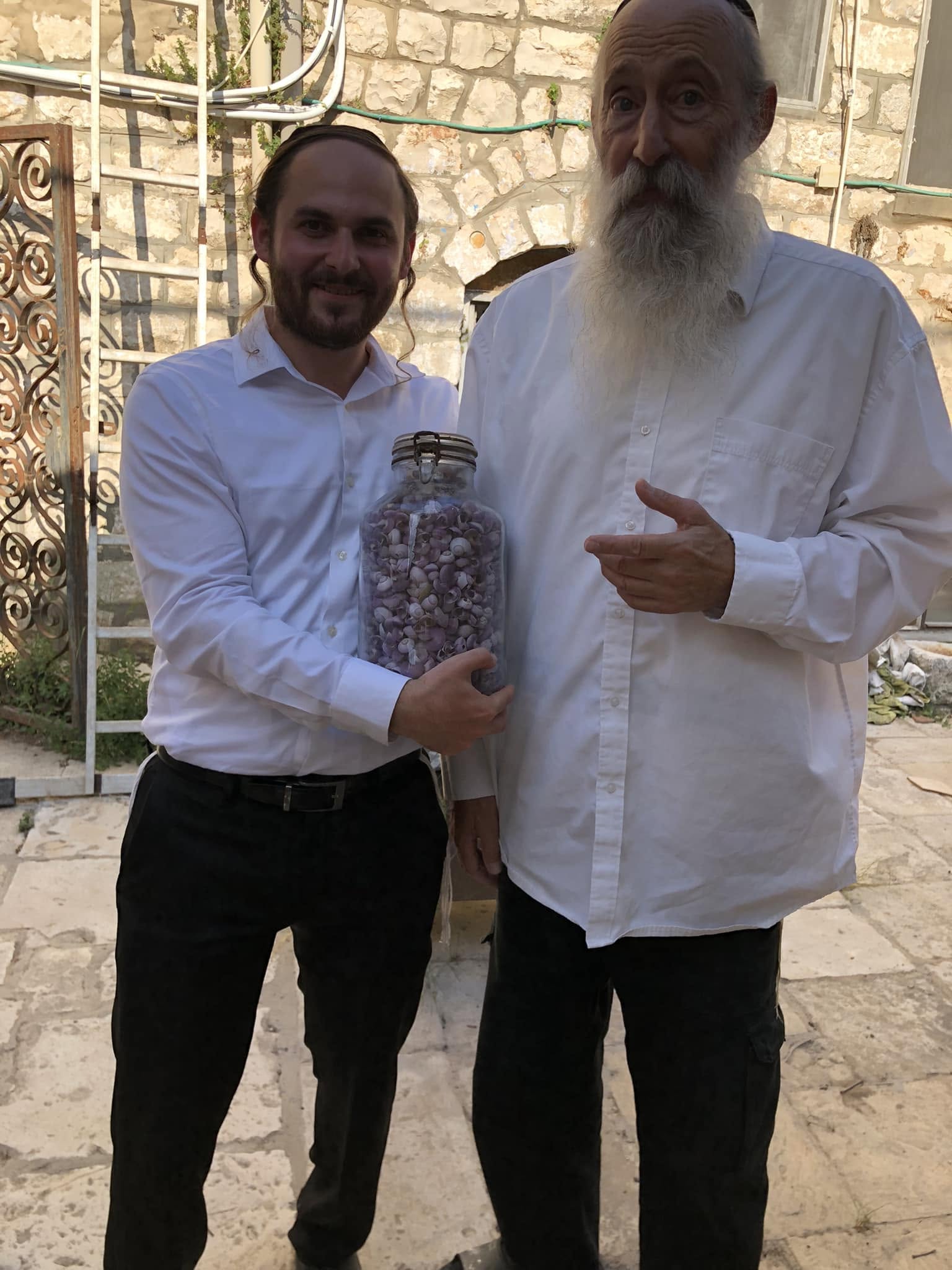
Dr. Shaul Kaplan is an Israeli marine biologist and one of the more unusual figures in the modern history of the search for the Chilazon. He studied at Bar-Ilan University and worked at the Israel Oceanographic and Limnological Research institute. A resident of Rehovot, Kaplan became deeply involved in the Techeiles question after becoming religious and meeting Prof. Hyman Schiffer, a descendant of the Radzyner Rebbe, at a scientific conference in Washington. The encounter sparked what became a roughly fifteen-year investigation into the identity of the Chilazon.
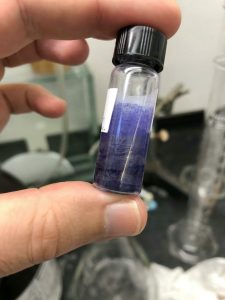
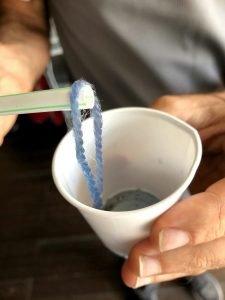
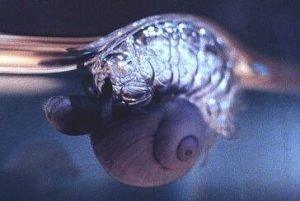
Kaplan became the leading modern advocate of the Janthina (Janthina janthina), the blue-purple pelagic snail that Rav Yitzchak Isaac Herzog had suggested as a possible candidate after encountering difficulties with the Murex identification. Kaplan argued that the Janthina fit the various simanim of Chazal remarkably well. He personally went out to sea collecting specimens, maintained Janthina in laboratory conditions, experimented extensively with their dye, and even named his boat Janthina. He presented his arguments in several publications, most notably his 2002 article “Gilui HaTekhelet” (גילוי התכלת) in Or Torah, which challenged the identification of the Murex trunculus and defended the Janthina alternative. His position became an important part of the early twenty-first-century debate over the revived Techeiles.
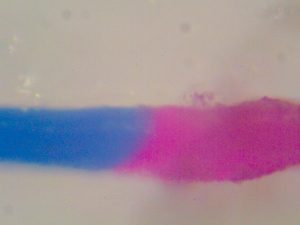
After years of experimentation, however, Kaplan was unable to produce from the Janthina a blue dye with the required permanence: the color he obtained eventually faded. By 2013–2014 he publicly acknowledged that, on the central question of the actual ancient dye source, the evidence favored the Murex. At the same time, he continued to maintain that the traditional descriptions of the Chilazon seemed to fit the Janthina far better than the Murex. He therefore proposed the controversial theory that some of the identifying simanim may originally have functioned as deliberate misinformation intended to protect the closely guarded Techeiles industry associated with the tribe of Zevulun.
Kaplan’s work remains noteworthy in the history of modern Techeiles research because it represents a sustained attempt to test Rav Herzog’s Janthina hypothesis experimentally rather than merely discuss it theoretically. His eventual willingness to abandon his own identification when the dye experiments failed also makes his work an important chapter in the development of the modern case for the Murex.