

String Ratios Discussed:
Tags:

Bottom Line
Rabbeinu Chananel’s Maaseh Tzitzis, tucked away in the National Library of the University of Strasbourg, reads like a step-by-step manual for tzitzis-making, straight from the playbook of the Geonim of Bavel. The manuscript, mostly in Hebrew with an Arabic title, spells out the nitty-gritty: how to tie the knots, arrange the threads, measure their length, and where exactly to fix them on the tallis.
Rabbeinu Chananel’s method is pretty specific. Three Sephardi style winds as “knots” near the corner (kenaf), two Sephardi style winds near the fringes (anaf), and regular winds in between. It’s not just his idea—Rav Sherira Gaon, the Eshkol, and the Itur back him up. But Rav Yehudai Gaon differs on the order of these “knots,” saying it’s two near the corner and three near the fringes.
The manuscript points out four big differences between how tzitzis were done in Ashkenaz-France versus Bavel-Spain-Provence: the way knots were tied, how the five knots were arranged, the length of the tzitzis, and their placement on the tallis. Rabbeinu Chananel sticks with the Babylonian model—use one-third of the thread for the braid (gedil), leave two-thirds as fringes (anaf). Compare that to the Ashkenazi tweaks: evenly spaced knots and longer tzitzis, more for the look than the tradition.
Even though the Rambam took issue with some of these Geonic practices—especially skipping certain windings because Techeiles was missing—Rabbeinu Chananel’s way stays true to what the Gemara lays out. It’s a clear link to earlier traditions. But as Ashkenazi and French customs gained traction, the Babylonian style faded into the background. Still, Rabbeinu Chananel’s Maaseh Tzitzis gives us a window into the rich tapestry of tzitzis-making across Jewish communities.
Main Text
כליל תכלת
מעשה ציצית לרבנו חננאל
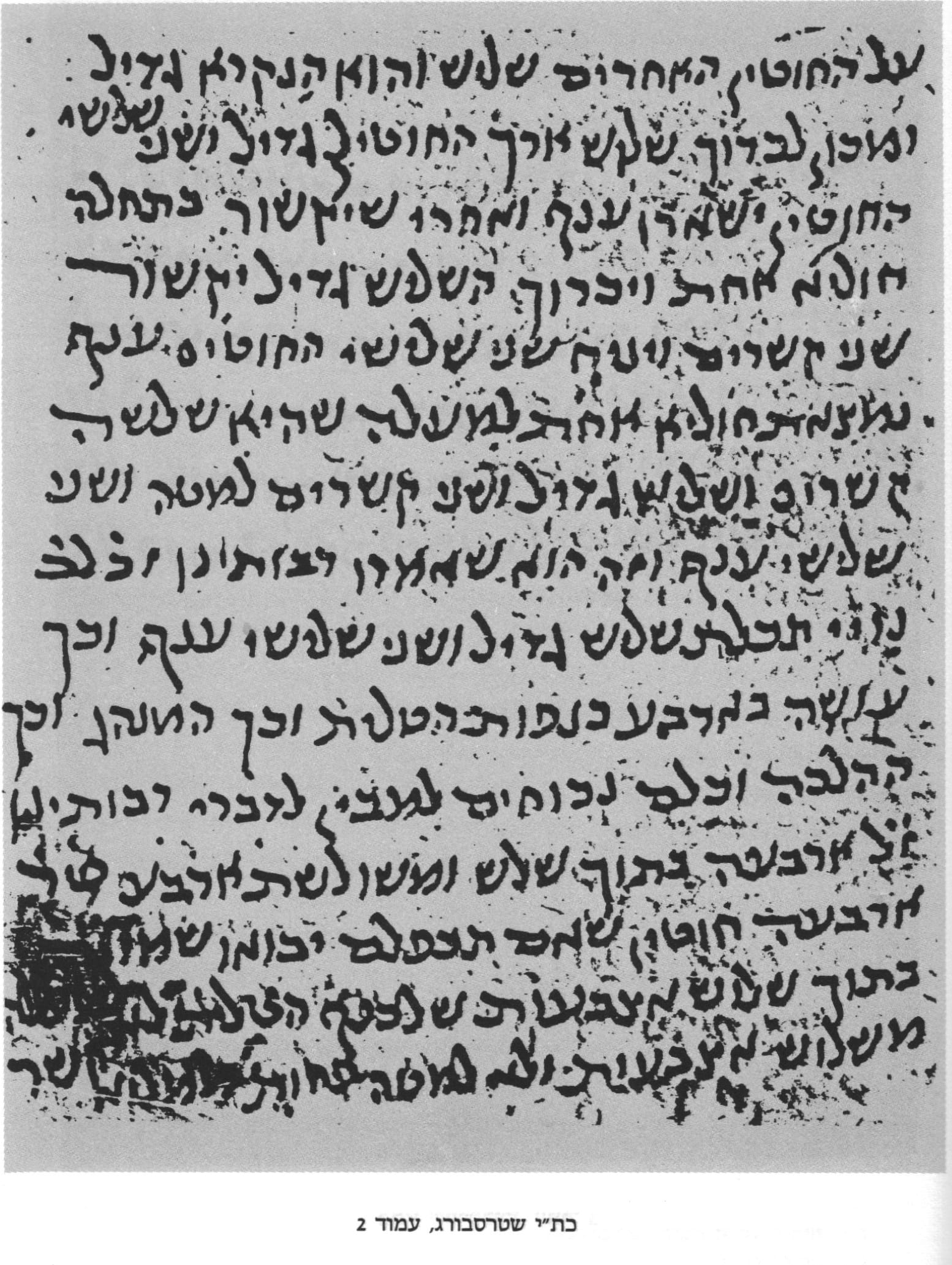
כתב יד זה, הנמצא בספריה הלאומית של אוניברסיטת שטרסבורג אשר בצרפת, נתגלה לנו הודות לבקיאותו הרבה של דוד סקליר בכתבי היד העתיקים. [מספרו בשטרסבורג 18, 4038 ובמכון לכת”י בירושלים 34396.] זה הוא דף אחד המכיל שלשה עמודים הכתובים בשני צדדיו. כתב היד כתוב עברית, מלבד הכותרת בערבית המעידה שלפנינו מעשה ציצית לרבנו חננאל. מלבד העדות הנ”ל יש למצוא תימוכין לכך בשלשה מקורות נוספים. המקור הראשון הוא תשובת הרמב”ם [1] בה מזכיר השואל שלדעת רבנו חננאל אין עושים חוליות שלא כמוזכר בגמרא [2] וזה מתאים לנאמר בכת”י שלנו. שני המקורות האחרים הם דברי האשכול [3] ודברי העיטור בהלכות ציצית [4] ששניהם מזכירים כי דעת רבנו חננאל לקשור ג’ קשרים סמוך לכנף וב’ סמוך לענף, היפך דעת רב יהודאי גאון ב’ סמוך לכנף וג’ לענף, ואף זה מתאים לנאמר בכת”י זה.
בענין המחלוקת הנ”ל, אם לקשור ג’ או ב’ קשרים סמוך לכנף, יש לציין שרבנו חננאל צועד בעקבותיו של רב שרירא גאון שתשובתו מובאת אצל ש. אסף תש”ב סי’ לג, שמקבילות לה תשובה לגאון באשכול [5] ומעשה ציצית בספר האורה [6]. וכתב האשכול [7] שכן עבדי האידנא, וכן דעתם של הראב”ד [8] ושל ר”י מלוניל ]9], וכן המנהיג [10] כתב שהוא מנהג פרובינצא וספרד. דעת רב יהודאי הנ”ל מובאת בהלכות קצובות [11] ובשם רב נטרונאי גאון בתשובתן של הראשונים [12]. ואחריהם
נמשכו הפרדס [13], העיטור [14], ראבי”ה [15], רוקח [16], פסקי הרי”ד [17], ר’ שלמה ב”ר שבתאי ענו מפרש השאילתות [18], מרדכי [19] בשם מנהג העולם ועוד. יש לציין כאן את השערת מ. מרגליות בהקדמתו להלכות קצובות [20] שמחלוקת זו נעוצה בהבדלי מנהגים בין ארץ ישראל לבין בבל. והאשכול [21] ביאר את המחלוקת. ועיין בספר אות מד.
בנוסף למחלוקת הנ”ל אפשר לציין ארבעה הבדלים עיקריים בענין עשית ציצית שהיו בין יהודי אשכנז-צרפת לבין יהודי בבל-ספרד-פרובינצא [החלוקה כללית ולא מדויקת]: א’ בדרך עשית קשרים, ב’ בסידור ה’ קשרים, ג’ באורך הציצית. ד’ במקום נתינת הציצית. ובבולם ממשיך רבנו חננאל את דרכם של גאוני בבל.
א. בדרך עשית קשרים
המנהיג [22] מביא שיש מקומות בצרפת [ע”ש שכתב מקודם רוב חכמי צרפת[ שלוקחים ד’ חוטים מצד זה וד’ מצד זה וקושרים קשר גמור אבל חכמי פרובינצא וספרד עשו קשר רק ע”י החוט הכורך כמו שמתבאר בדברי רבנו חננאל. ובמרדכי [23] האריך בענין זה וכתב שנחלקו בזה חכמי צרפת עצמם. וכדעת חכמי פרובינצא וספרד מפורש בתשובת רב שרירא גאון הנ”ל ובמקבילות שלה הנ”ל. וכן מוכח בעיטור [24], וכן כתב ר”י מלוניל [25] , וכן ר’ שלמה ב”ר שבתאי מפרש השאילתות [26] . אמנם המסורת הצרפתית נמשבה אצל הרא”ש [27] ותלמידיו. ובן הביא מאירי [28] בשם רבני צרפת וכן מובא בספר המאורות לר’ שמעון המעולי [29]. ועיין בספר אות נד.
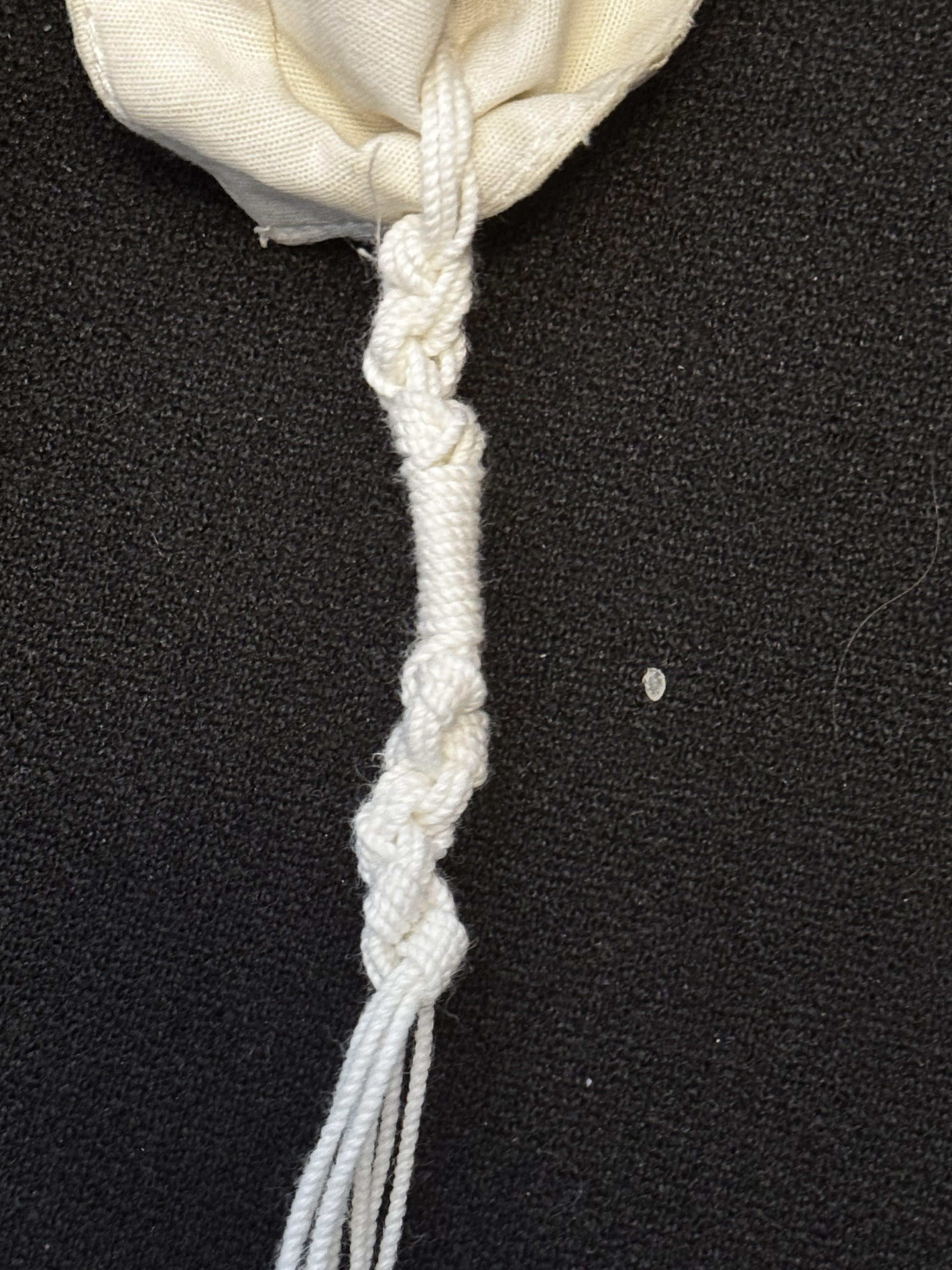
How some Jews in France used to tie.
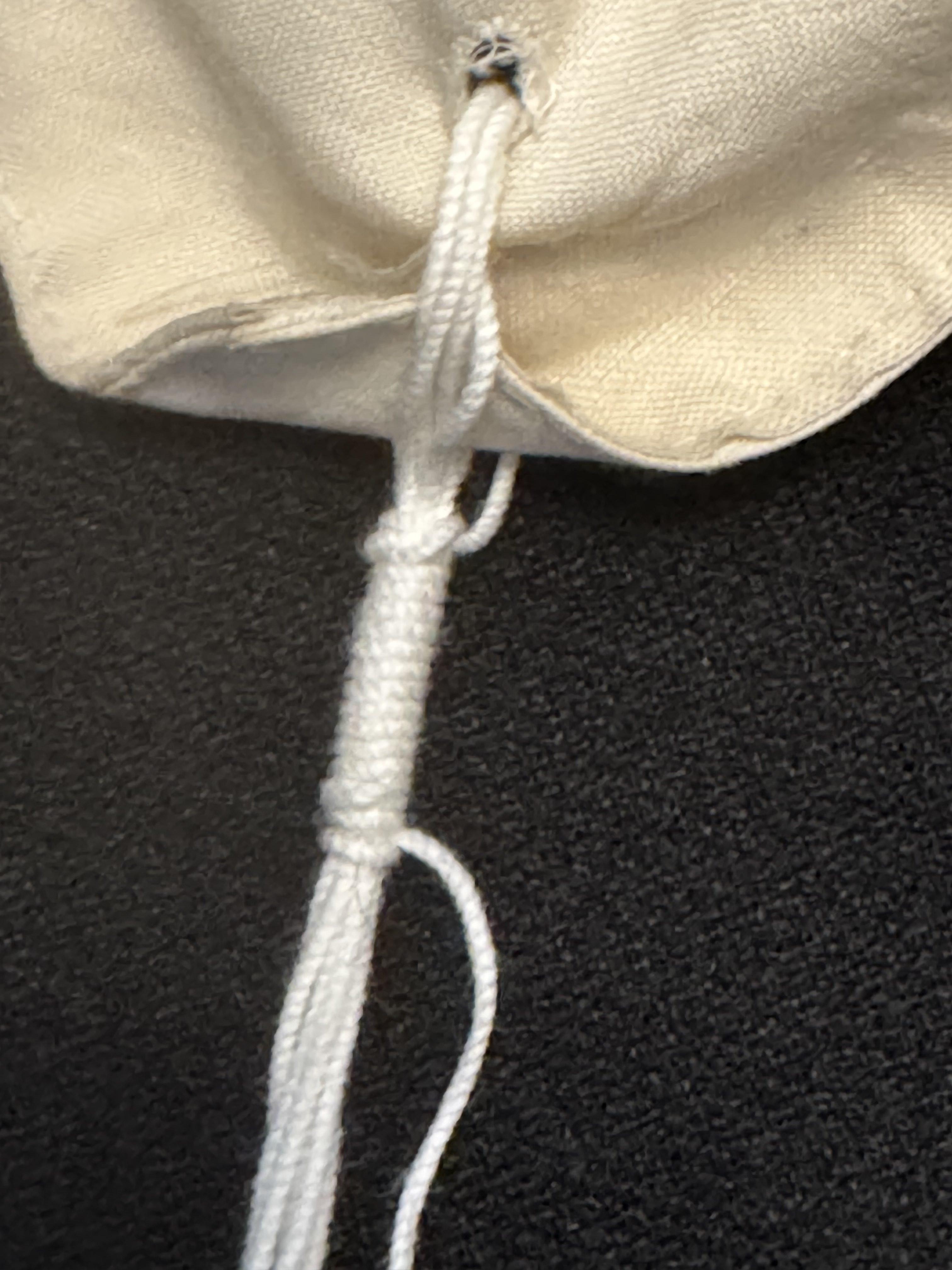
How Jews in Provence and Spain would tie.
ב. בסידור ה’ קשרים
כל הגאונים המדברים על ה’ קשרים בציצית כותבים לקשור סמוך לכנף לפני הכריכות ולאחריהן אך לא באמצען [כל אחד לשיטתו או ב’ ואחר כך ג’ או ג’ ואחר כך ב’, ראה ספרים הנ”ל במחלוקת ר”ח ורב יהודאי ועליהם יש להוסיף גאוניקה [30] והלכות פסוקות לגאונים [31] שלא הזכירו מספר קשרים, וחמדה גנוזה [32] ששם למטה קשר אחד ולמעלה שלושה]. ורבנו חננאל גם נוקט כן. אמנם הראב”ד [33] הביא בשם רב נטרונאי גאון דרך אחרת בסידור הקשרים לכרוך בין הקשרים. ודבר דומה לכך מובא בתוספות [34] בשם רבנו תם. והסמ”ג [35] הביא
שנהגו לעשות ה’ קשרים ברווחים שוים ולכרוך ביניהם, ואחריו הרבה פוסקי אשכנז [יש לציין שפוסקי אשכנז הראשונים — רגמ”ה, רש”י, ראב”ן, הלכו בזה בדרך הגאונים]. ועיין בספר אות מד.
ג. באורך הציצית
נאמר בגמרא [36] אמר ר’ פפא הלכתא ד’ בתוך שלש ומשולשת ארבע. ונחלקו הראשונים בביאור כוונת ר’ פפא, ואין כאן מקום לאריכות, רק אציין ששתי שיטות עיקריות הן בענין אורך הציצית. האחת ד’ גודלים [ומפרשים שר’
פפא מדבר על כל אורך הציצית]. והיא דעת שאילתות [37] , שר שלום גאון [38], האשכול [39] וכן דעתו בתשובה [40] , רב עמרם גאון [41] , רבנו גרשום מאור הגולה [42], עיטור [43] , רמב”ם [44] , ר”י מלוניל [45] , המנהיג [46] , פסקי הרי”ד [47] ועוד. וכן דעת רבנו
חננאל בבת”י שלפינו. והשיטה השניה שאורך הציצית י”ב גודלים [ודברי ר’ פפא על הגדיל שהוא שליש ציצית]. כן כתבו רב שרירא גאון בתשובה הנ”ל ובמקבילות, הלכות קצובות לרב יהודאי הנ”ל, המנהיג בשם רב האי גאון [48], רבנו גרשום מאור הגולה [49], פרדס [50] ובפירושו [51] , ראבי”ה [52] , יראים [53] , רוקח [54], תוספות [55] והרבה פוסקי אשכנז ועוד. ויש להעיר שכל הגאונים הנ”ל שבתבו לעשות ציצית באורך י”ב גודלים לא בהכרח שהוא לעיכובא, ויתבן שדעתם באמת שאורך הציצית לעיכובא רק ד’ גודלים, וכתבו לעשות י”ב גודלים לנוי בעלמא, שכן מצאנו בתשובת רב עמרם גאון [56] , מחזור ויטרי [57] , האורה [58] ובספר המאורות לר’ שמעון המעילי [59] שכתבו למטה עד ארבע אצבעות וארוכה עד זרת שהוא שיעור י”ב גודלים]. ועיין בספר אות פו.
ד. במקום נתינת הציצית
נאמר בגמרא [60] אמר ר’ יעקב אמר ר’ יוחנן וצריך שירחיק מלא קשר גודל. וכתב במחזור ויטרי [61] צריך שירחיק אותו נקב משפה התחתונה של בגד מלא קשר וכו’ ונוהגין באשכנז [ובספרי רש”י המקבילים הנוסח — כאך שמרחיקין אותו כן משפה אחרת שבאורך הטלית כרוחב גודל. ומנהג אשכנז זה מוזכר אצל כמה פוסקי אשכנז מאוחרים יותר [62] . אומנם הרבה כתבו להרחיק רק לאורך [ויש שבתבו להרחיק רק לכוון אחד בסתם] הטלית ולתת ציצית על השפה. והם האורה [63] , יראים [64] , רוקח [65] , שו”ת הראב”י אב”ד [66] , המנהיג [67] , ר”י מלוניל [68] , ר’
אברהם בן הרמב”ם בהמספיק לעובדי ה’ [69] , חינוך [70] . ויותר מהמה אשר פירשו את דבריהם יש להוכיח שכן דעתם של האחרים מתוך תאור מעשה ציצית שלהם ואכמ”ל. וכן דעתו של רבנו חננאל בכת”י אשר לפנינו לתת ציצית בשפת הטלית ולהרחיק רק לאורך הטלית. ועיין בספר אות קצא.
כאמור, דרכו של רבנו חננאל בעשית ציצית שלו היא דרכם של הגאונים אשר היתה נהוגה בימים הקדמונים בהרבה תפוצות ישראל, ורק במשך הדורות התפשטו המנהגים האחרים, אשר מקורם בדרך כלל בצרפת ובאשכנז, בכל תפוצות ישראל והמנהג הרווח הקדום נשבח.
ולבסוף, יש לציין שהרמב”ם [71] מאוד תמה על מנהג הגאונים בעשית הציצית בבלל ומנהג רבנו חננאל בפרט, שהוא נסתר לדעתו מדברי הגמרא וכנ”ל. ואף שפירשם כי אינם עושים חוליות מחמת שאין לנו תכלת ושדברי הגמרא בעשית חוליות בזמן שיש תכלת נאמרו, דעתו לא הסכימה לדעתם. והמעיין בדברי רבנו חננאל יראה שאין פירושו של הרמב”ם מתאים להם, שכל כולם משוים את עצמם לדברי רבותינו שבגמרא, וא”כ יש לחפש להם יישוב אחר ואכמ”ל. ועיין על כך בספר אות מב.
המקומות המחוקים בכתה”י נשארו ריקים בתוך סוגריים. וכן מה שהושלם על פי השערה או על פי שברי אותיות נכתב בסוגריים. במקום נקודות מעל לאות שבכת”י השתמשתי בגרש אחרי האות.
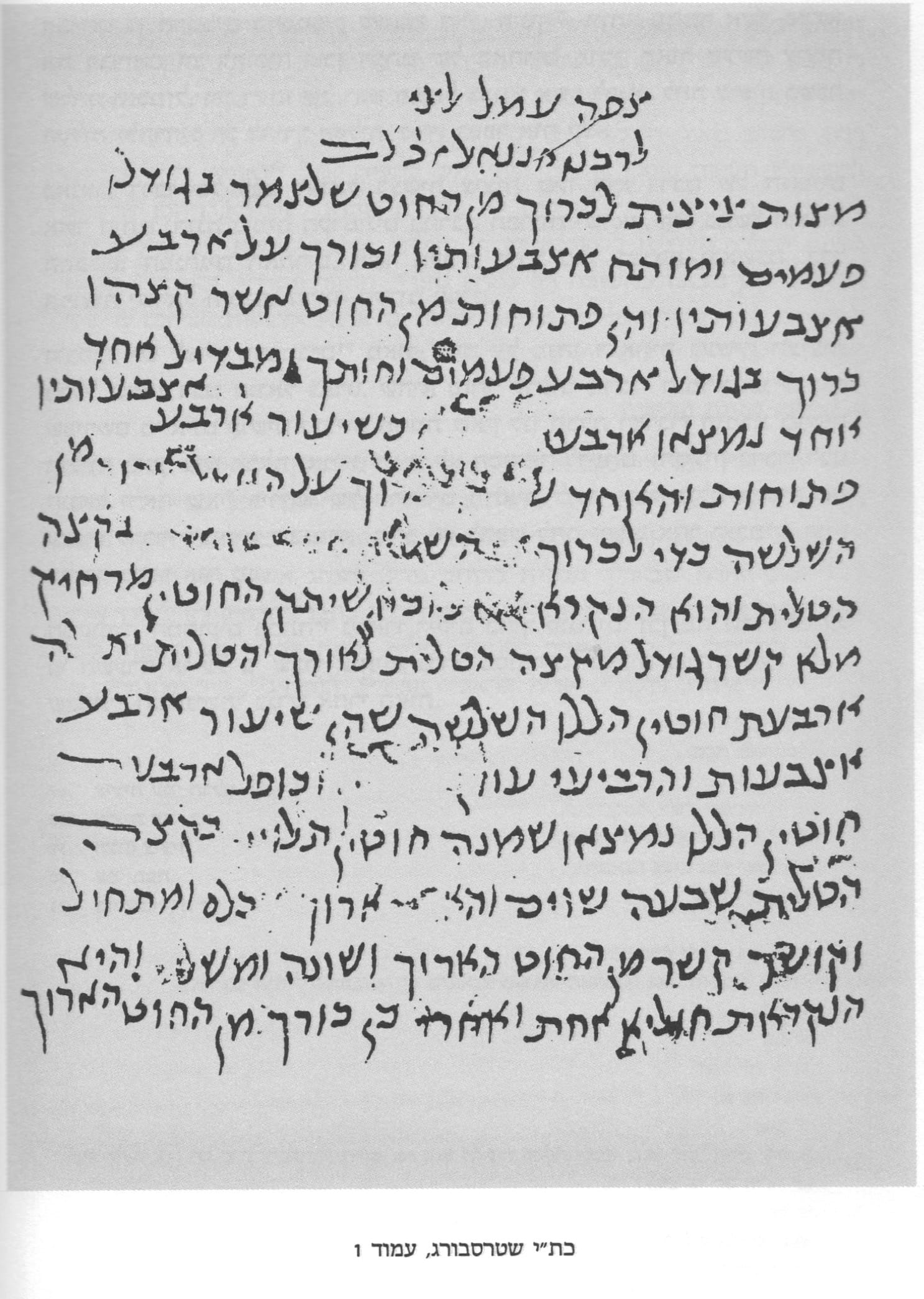
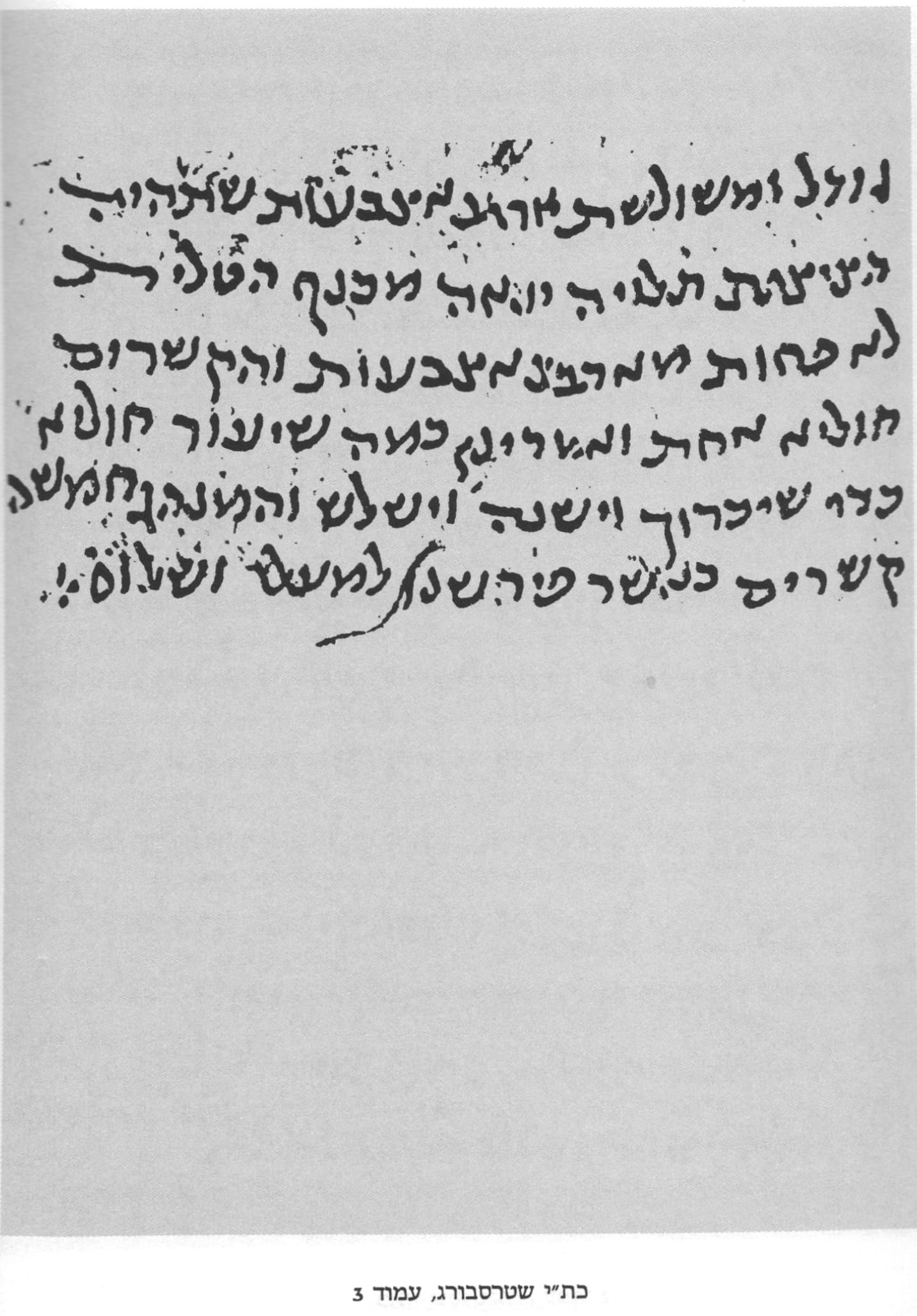
צ’פה עמל לצי[צית] [1]
לרבנו חננאל זכ’ לב [‘]
מצות ציצית לכרוך מן החוט שלצמר בגודל
פעמים ומותח אצבעותיו וכורך על ארבע
אצבעותיו והן פתוחות מן החוט אשר קצהו
כרוך בגודל ארבע פעמים וחותך ומבדיל אחד
אחד נמצאו ארבע[ה חוטין] כשיעור ארבע אצבעותיו
פתוחות והאחד [שהיה כר]וך על ה[גודל ארוך] מן
השלשה כדי לכרוך [ השא ] בקצה
הטלית והוא הנקרא [ כיון] שיתקן החוטין מרחיק
מלא קשר גודל מקצה הטלית לאורך הטלית [ו]ת[ול]ה
ארבעת חוטין הללו השלשה שהן שיעור ארבע
אצבעות והרביעי עו[דף ] וכופל ארבעה
חוטין הללו נמצאו שמנה חוטין תלוי[ן] בקצה
הטלית שבעה שוים והא[חד] ארוך [מ]כלם ומתחיל
וקושר קשר מן החוט הארוך ושונה ומשל[ש] והיא
הנקראת חוליא אחת ואחרי כן כורך מן החוט הארוך
על החוטין האחרים שליש והוא הנקרא גדיל
ומכון לכרוך שליש ארך החוטין גדיל ושני שלישי
החוטין ישארו ענף ואחרי שיקשור בתחלה
חוליא אחת ויכרוך השליש גדיל יקשור
שני קשרים ויניח שני שלישי החוטים ענף
נמצאת חוליא אחת למעלה שהיא שלשה
קשרים ושליש גדיל ושני קשרים למטה ושני
שלישי ענף וזה הוא שאמרו [2] רבותינו זכ’ לב’
נויי תכלת שליש גדיל ושני שלישי ענף וכך
עושה בארבע כנפות הטלית וכך המנהג וכך
ההלכה וכלם נכוחים למבין לדברי רבותינו
ז’ל’ [3] ארבעה בתוך שלש ומשולשת ארבע פיר’
ארבעה חוטין שאם תכפלם יבואו שמונה
בתוך שלוש אצבעות שלכנף הטלית לא למעלה
משלוש אצבעות ולא למטה פחות ממלוא קשר
גודל ומשולשת ארבע אצבעות שתהיה
הציצית תלויה יו[צ]אה מכנף הטלית
לא פחות מארבע אצבעות והקשרים
חוליא אחת ואמרינן [4] כמה שיעור חוליא
כדי שיכרוך וישנה וישלש והמנהג חמשה
קשרים כאשר פירשנו למעל[ה] ושלום.
Footnotes
- קלח.
- .מנחות לט א.
- ח”א עמ’ 205.
- עמ’ 137.
- ח”א עמ’ 221.
- עמי 27.
- שם עמ’ 205.
- תמים דעים סי’ לט, רק בדרך שונה, ע”ש.
- הל’ קטנות ציצית עמ’ כח.
- עמ’ תרמג.
- עמ’ 153.
- ח”ב עמ’ 21.
- עמ’ כא, ובן בשאר ספרי רש”י המקבילים.
- עמ’ 138, וכתב שכן נהגו.
- ציצית עמ’ רמד.
- הלכות ציצית.
- ציצית עמ’ תפ.
- שאילתא קמד עמ’ מא.
- הל קטנות ציצית סי תתקמ.
- עמ’ 18.
- שם.
- ציצית עמ’ תרמג.
- הל’ קטנות ציצית סי’ תתקמ’.
- ציצית עמ’ 137, ע”ש.
- הל’ קטנות ציצית.
- שאילתא קמד עמ’ מא, והוא מחכמי איטליה.
- הל’ קטנות ציצית סי’ טו.
- יבמות ד ב.
- ציצית עמ’ שעד.
- ח”ב עמ’ 331.
- סי’ ע.
- סי’ צא.
- תמים דעים סי’ לט ובהשגות על הרמב”ם ציצית א ז.
- מנחות לט א ד”ה לא יפחות.
- ציצית קח ג.
- מנחות מא ב.
- שאילתא קמד.
- שערי תשובה סי’ קנט.
- ח”א עמ’ 220.
- תשובות ראב”י אב”ד קט.
- גאוניקה ח”ב עמ’ 332-333 ובהלכות פסוקות לגאונים סי’ ע.
- מנחות מא ב ועיין פירושו בכורות לט ב.
- עמ 134.
- ציצית א ו.
- כ ציצית עמ’ כז-כח.
- ציצית עמ’ תרלט.
- ציצית עמ’ תצא וכתב שכן נהגו בארץ ישמעאל, וערוגת הבושם עמ’ 230 הביא בשמו שכן נהגו באלכסנדריה.
- ציצית עמ’ תרמ.
- בכורות לט ב.
- עמ” יט ובספרי רש”י המקבילים.
- בבורות לט ב ל”א של משולשת.
- ציצית עמ’ רמג בשם הגאונים.
- ציצית עמ’ 439.
- הלכות ציצית.
- מנחות מא ב ד”ה ב”ש ועוד.
- גאוניקה ח”ב עמ’ 333 ובהלכות פסוקות לגאונים סי’ ע ובאשכול ח”א עמ’ 220.
- עמ’ 635.
- עמ’ 27.
- ציצית עמ’ שעד.
- מנחות מב א.
- עמ’ 656.
- וכן עיין עיטור עמ’ 138, שבלי הלקט השלם עמ’ 83, שו”ת התשב”ץ ח”ב סי’ רח, ועיין בית יוסף או”ח סי’ יא בענין זה.
- עמ’ 27.
- השלם ציצית עמ’ 440.
- הלכות ציצית.
- סי’ קט.
- ציצית עמ’ תרלט.
- ציצית עמ’ כח.
- (דנה) ציצית,
- עמ’ תפח.
- בתשובה הנ”ל.
Footnotes 2
- תיאור מעשה ציצית [תר’ מערבית].
- מנחות לט א.
- שם מא ב.
- שם לט א.
English Translation
Maaseh Tzitzis of Rabbeinu Chananel
This manuscript, located in the National Library of the University of Strasbourg in France, was discovered thanks to the vast expertise of David Sklir in ancient manuscripts. [Catalog number in Strasbourg: 18, 4038; and in the Institute of Manuscripts in Jerusalem: 34396.] It’s a single page containing three columns written on both sides. The manuscript is written in Hebrew, except for the title in Arabic, which indicates that this is Maaseh Tzitzis of Rabbeinu Chananel. Besides this testimony, there are three additional sources that support this identification.
The first source is a responsum of the Rambam [1], where the questioner mentions that according to Rabbeinu Chananel, one does not make chulyos (windings) other than what’s mentioned in the Gemara [2]. This aligns with what’s written in our manuscript. The other two sources are the Eshkol [3] and the Itur in Hilchos Tzitzis [4], both of which state that Rabbeinu Chananel holds to tie three knots near the corner (kenaf) and two near the fringes (anaf), opposite the opinion of Rav Yehudai Gaon, who says to tie two near the corner and three near the fringes. This too matches the content of our manuscript.
Regarding this machlokes—whether to tie three or two knots near the corner—it’s important to note that Rabbeinu Chananel follows the approach of Rav Sherira Gaon, whose responsum is brought by S. Assaf in 5702, siman 33. A similar responsum is found in the Eshkol [5] and in Maaseh Tzitzis in Sefer HaOrah [6]. The Eshkol writes [7] that this is the current practice. This is also the opinion of the Raavad [8], R”Y of Lunel [9], and the Manhig [10], who writes that this is the minhag in Provence and Spain.
The opinion of Rav Yehudai mentioned above is brought in Hilchos Ketzuvos [11] and in the name of Rav Natronai Gaon in the responsa of the Rishonim [12]. Following them are the Pardes [13], the Itur [14], the Ra’aviyah [15], the Rokeach [16], the Pesakim of the Ri”D [17], R’ Shlomo b’R Shabtai Anu, commentator on the Sheiltos [18], the Mordechai [19] quoting the universal minhag, and others.
It’s worth mentioning here the hypothesis of M. Margaliot in his introduction to Hilchos Ketzuvos [20], suggesting that this machlokes is rooted in differences in customs between Eretz Yisrael and Bavel. The Eshkol [21] elaborates on this disagreement. See also in the book Os 44.
Besides the above machlokes, four main differences can be noted regarding the making of tzitzis between the Jews of Ashkenaz-France and those of Bavel-Spain-Provence [this division is general and not precise]: 1) the method of tying knots, 2) the arrangement of the five knots, 3) the length of the tzitzis, and 4) the placement of the tzitzis. In all these, Rabbeinu Chananel continues the path of the Geonim of Bavel.
1. The Method of Tying Knots
The Manhig [22] writes that in some places in France [as he mentioned earlier, most of the sages of France], they take four strings from one side and four from the other and tie a complete knot. But the sages of Provence and Spain made the knot only using the winding string, as is explained in the words of Rabbeinu Chananel. The Mordechai [23] elaborates on this and writes that even the sages of France themselves disagreed on this. The view of the sages of Provence and Spain is clearly stated in the responsum of Rav Sherira Gaon mentioned earlier and in the corresponding sources. This is also evident in the Itur [24], and similarly written by R”Y of Lunel [25] and R’ Shlomo b’R Shabtai, the commentator on the Sheiltos [26]. However, the French tradition continued with the Rosh [27] and his students. The Meiri [28] also brings this in the name of the French Rabbis, and it is mentioned in Sefer HaMeoros by R’ Shimon HaMa’uli [29]. See also in Os 54.
How some Jews in France used to tie.
How Jews in Provence and Spain would tie.
2. The Arrangement of the Five Knots
All the Geonim who discuss the five knots of tzitzis write to tie them near the corner before the windings and after them, but not in between [each according to his view—either two and then three or three and then two; see the above-mentioned books on the machlokes between Rabbeinu Chananel and Rav Yehudai]. To these, we can add Gaonika [30] and Hilchos Pesukos of the Geonim [31], who did not mention the number of knots, and Chemdah Genuzah [32], which describes placing one knot below and three above. Rabbeinu Chananel also holds this way.
However, the Raavad [33] brings in the name of Rav Natronai Gaon a different method of arranging the knots, where windings are done between the knots. A similar idea is brought in Tosafos [34] in the name of Rabbeinu Tam. The Sefer Mitzvos Gadol (SeMaG) [35] mentions that the custom is to make five knots with equal spacing and to wind between them. After him, many Ashkenazi poskim followed this approach [it should be noted that the early Ashkenazi poskim—the RaGMeH, Rashi, Ra”BaN—followed the path of the Geonim in this matter]. See also in Os 44.
3. The Length of the Tzitzis
The Gemara [36] says: R’ Pappa said, the halacha is four [fingerbreadths] inside three, and tripling makes it four. The Rishonim argued about what R’ Pappa meant, and this isn’t the place for a lengthy discussion. However, I’ll note that there are two main opinions about the length of the tzitzis.
One opinion holds that the tzitzis should be four godlim (fingerbreadths) long [interpreting R’ Pappa as referring to the entire length of the tzitzis]. This is the view of the Sheiltos [37], Sar Shalom Gaon [38], the Eshkol [39], and in his responsum [40], Rav Amram Gaon [41], Rabbeinu Gershom Me’or HaGolah [42], the Itur [43], the Rambam [44], R”Y of Lunel [45], the Manhig [46], the Pesakim of the Ri”D [47], and others. This is also the opinion of Rabbeinu Chananel in the manuscript before us.
The second opinion holds that the tzitzis should be twelve godlim long [with R’ Pappa referring to the gedil (winding) as one-third of the tzitzis]. This is written by Rav Sherira Gaon in the responsum mentioned earlier and its parallels, Hilchos Ketzuvos of Rav Yehudai mentioned above, the Manhig quoting Rav Hai Gaon [48], Rabbeinu Gershom Me’or HaGolah [49], the Pardes [50] and his commentary [51], Ra’aviyah [52], Yereim [53], Rokeach [54], Tosafos [55], many Ashkenazi poskim, and others.
It’s important to note that all the Geonim who wrote to make tzitzis twelve godlim long didn’t necessarily mean it as a strict requirement. It’s possible that their actual opinion is that the minimum length is four godlim, and they wrote twelve godlim for aesthetic reasons. We find this in the responsum of Rav Amram Gaon [56], Machzor Vitri [57], HaOrah [58], and Sefer HaMeoros by R’ Shimon HaMa’uli [59], where they wrote that the minimum is four fingerbreadths, but longer is up to a span, which is twelve godlim. See also in Os 86.
4. The Placement of the Tzitzis
The Gemara [60] says: R’ Yaakov said in the name of R’ Yochanan, it must be placed at a distance of a full thumb’s width from the edge. Machzor Vitri [61] writes that the hole must be placed a thumb’s width from the lower edge of the garment, and in Ashkenaz they also practiced placing it at the same distance from the other edge, across the length of the tallis. This Ashkenazi custom is mentioned by several later Ashkenazi poskim [62]. However, many wrote to place it only along the length [and some wrote generally to place it in one direction] of the tallis and to attach the tzitzis at the edge. These include HaOrah [63], Yereim [64], Rokeach [65], the responsa of Ra”BaV”Y, Av Beis Din [66], the Manhig [67], R”Y of Lunel [68], R’ Avraham ben the Rambam in HaMaspik L’Ovdei Hashem [69], and the Chinuch [70]. Even more than those who explicitly explained their views, it’s clear from the descriptions of their tzitzis practices that this was their opinion, and this isn’t the place to elaborate.
This is also the opinion of Rabbeinu Chananel in the manuscript before us—to attach the tzitzis at the edge of the tallis and to distance it only along the length of the tallis. See also in Os 191.
As mentioned, Rabbeinu Chananel’s method of making tzitzis follows the path of the Geonim, which was practiced in many Jewish communities in ancient times. Only over the generations did other customs, generally originating in France and Ashkenaz, spread throughout the Jewish communities, while the earlier widespread custom diminished.
Lastly, it’s worth noting that the Rambam [71] was very puzzled by the Geonim’s method of making tzitzis in general and Rabbeinu Chananel’s in particular, as he believed it contradicted the words of the Gemara, as mentioned above. Even though it was explained that they didn’t make chulyos because we don’t have Techeiles and that the Gemara’s instructions on making chulyos were given in the context of having Techeiles, the Rambam didn’t agree with their opinion. Anyone who examines the words of Rabbeinu Chananel will see that the Rambam’s interpretation doesn’t fit them, as they all align themselves with the words of our sages in the Gemara. Therefore, another explanation must be sought, and this isn’t the place to elaborate. See more on this in Os 42.
The erased parts in the manuscript remain blank within parentheses. Any completions based on conjecture or partial letters are written in parentheses. Where there were dots above letters in the manuscript, an apostrophe was used after the letter.
Tzitzis Instructions from Rabbeinu Chananel (Extracted from the Geniza – Manuscript translated)
To Rabbeinu Chananel, may his merit protect us [‘]
The mitzvah of tzitzis is to wrap from the wool thread around the thumb
twice, and he stretches his fingers and wraps around four
of his fingers when they are open, from the thread whose end is
wrapped around the thumb four times. Then he cuts and separates each
one individually. Thus, there are found four [threads] in the measure of his four
open fingers. And the one [that was wr]apped on the [thumb is longer] than
the three in order to wrap [ the rem]aining at the edge
of the tallis. And this is called [ when] the threads are prepared, he distances
the width of a thumb’s knot from the edge of the tallis along the length of the tallis and suspends
these four threads—the three that are the measure of four
fingers and the fourth one is [longer], and he folds these four
threads, so that they become eight threads suspended at the edge
of the tallis—seven equal and the [one] is longer [than] all of them. He begins
and ties a knot from the long thread and repeats and does so a third time. This
is called one chulya (segment). After that, he wraps from the long thread
around the other threads by a third, and this is called a gedil (braid).
And he intends to wrap one-third of the length of the threads as a gedil, and the remaining two-thirds
of the threads should remain as ananaf (loose ends). After tying at the beginning
one chulya and wrapping one-third as a gedil, he ties
two knots and leaves two-thirds of the threads as ananaf.
Thus, there is one chulya above, which consists of three
knots and one-third gedil, and two knots below, and two-thirds ananaf. This is what our Rabbis said:
The beauty of techeiles is one-third gedil and two-thirds ananaf. And so
he does on the four corners of the tallis, and this is the custom, and this is
the halacha. And all these are straightforward for one who understands the words of our Rabbis,
of blessed memory.
“Four within three and tripled four” means:
Four threads, so that when folded, they become eight.
Within three finger-widths of the corner of the tallis—not above
three finger-widths and not below less than the width of a thumb’s
knot. “And tripled four fingers” means:
The tzitzis should hang, extending from the corner of the tallis,
not less than four fingers. And the knots
are one chulya. And we say: What is the measure of a chulya?
That he should wrap, repeat, and do so a third time. And the custom is five
knots, as we explained above. And shalom.
English Footnotes
- 138.
- Menachos 39a.
- Eshkol, Vol. 1, p. 205.
- p. 137.
- Eshkol, Vol. 1, p. 221.
- p. 27.
- ibid., p. 205.
- Temim De’im, siman 39, though with a different approach, see there.
- Hilchos Ketanus Tzitzis, p. 28.
- p. 543.
- p. 153.
- Vol. 2, p. 21.
- p. 21, and also in other parallel works of Rashi.
- p. 138, where it states that this was the practice.
- Tzitzis, p. 544.
- Hilchos Tzitzis.
- Tzitzis, p. 780.
- Sheilta 144, p. 41.
- Hilchos Ketanus Tzitzis, siman 580.
- p. 18.
- ibid.
- Tzitzis, p. 543.
- Hilchos Ketanus Tzitzis, siman 580.
- Tzitzis, p. 137, see there.
- Hilchos Ketanus Tzitzis.
- Sheilta 144, p. 41, and he was one of the sages of Italy.
- Hilchos Ketanus Tzitzis, siman 15.
- Yevamos 4b.
- Tzitzis, p. 764.
- Vol. 2, p. 331.
- siman 70.
- siman 91.
- Temim De’im, siman 39, and in his critiques on the Rambam, Tzitzis 1:7.
- Menachos 39a, s.v. Lo Yipchos.
- Tzitzis, 108:3.
- Menachos 41b.
- Sheilta 144.
- Shaarei Teshuvah, siman 159.
- Eshkol, Vol. 1, p. 220.
- Responsa of Ra”BaV”Y, Av Beis Din, siman 109.
- Gaonika, Vol. 2, pp. 332-333, and in Hilchos Pesukos of the Geonim, siman 70.
- Menachos 41b, and see his commentary in Bechoros 39b.
- p. 134.
- Tzitzis 1:6.
- Tzitzis, pp. 27-28.
- Tzitzis, p. 739.
- Tzitzis, p. 791, where it states that this was the practice in the Land of Ishmael, and Arugei HaBosem, p. 230, brings in his name that this was the practice in Alexandria.
- Tzitzis, p. 543.
- Bechoros 39b.
- p. 19, and in other parallel works of Rashi.
- Bechoros 39b, explaining the concept of tripling.
- Tzitzis, p. 543, in the name of the Geonim.
- Tzitzis, p. 439.
- Hilchos Tzitzis.
- Menachos 41b, s.v. B”S, and more.
- Gaonika, Vol. 2, p. 333, and in Hilchos Pesukos of the Geonim, siman 70, and in Eshkol, Vol. 1, p. 220.
- p. 635.
- p. 27.
- Tzitzis, p. 764.
- Menachos 42a.
- p. 656.
- See also Itur, p. 138, Shibolei HaLeket HaShalem, p. 83, Responsa of the Rashba, Vol. 2, siman 208, and see Beis Yosef, Orach Chaim, siman 11 on this matter.
- p. 27.
- Shalem Tzitzis, p. 440.
- Hilchos Tzitzis.
- siman 109.
- Tzitzis, p. 739.
- Tzitzis, p. 28.
- (Dana) Tzitzis.
- p. 788.
- In the above-mentioned responsum.
Footnotes 2
- Description of the Maaseh Tzitzis [translated from Arabic].
- Menachos 39a.
- ibid., 41b.
- ibid., 39a.


