Please note:
- This page and all derivatives is/are a continued work in progress. Please send a message for any corrections and those will be considered and/or actioned as soon as possible.
- Just because the below authorities wearing Techeiles are listed doesn’t mean we have contact info on all of them. This is for informational purposes only.

- Hebrew Name: יצחק שלמה זילברמן
- String Ratio: Raavad Ratio
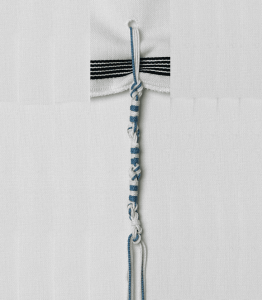
- Tying Method: Vilna Gaon (GR”A) Method
- How We Know: Heard from Reliable Source
- Date Born: 30 April 1929
- Location Born: Berlin, Germany
- Date Passed: 13 March 2001
- Location Passed: Jerusalem, Israel
Type of wearer: Rabbi, Rosh Yeshiva
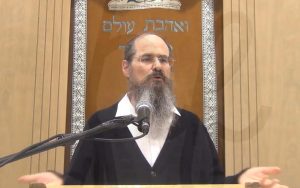
HaRav Yitzchak Shlomo Zilberman zt”l wasn’t your average mechanech. He was a man with a mission—though you’d never catch him saying it that way. Quietly, steadily, and often against the grain, he reshaped how generations of kids learn Torah.
Born in Berlin on April 30, 1929, his life began in a world already shifting under his feet. His father, Rabbi Dr. Avraham Moshe Zilberman, was a sharp scholar and the man behind one of the earliest German translations of Tanach. When Rav Yitzchak Shlomo’s mother, Rivka, passed away while he was still a toddler, his father stepped in to raise him alone.
With the Nazi regime creeping in, the family escaped to England in 1934. It wasn’t long after—1939—when young Yitzchak Shlomo found himself an orphan. He eventually made aliyah to Eretz Yisrael and moved in with his uncle, R’ Yaakov Levy, in Yerushalayim.
He learned at some serious places—Yeshivat Horev, Kol Torah under Rav Yechiel Michel Schlesinger, and later at the Mir. But even during his formative years, he didn’t just follow. He searched. He tried Chabad. He dabbled in Breslov. But ultimately, he gravitated toward the path of the Perushim—the old-school disciples of the Vilna Gaon.
About Wearer
From Wikipedia:
Yitzchok Shlomo Zilberman (Hebrew: יצחק שלמה זילברמן; 30 April 1929 – 13 March 2001) was an Israeli Haredi rabbi and educator, pioneer of the Zilberman Method of Torah study. He founded Yeshivat Aderet Eliyahu, part of a community that follows the path of the Vilna Gaon.
Early life
Yitzchok Shlomo Zilberman was born in Berlin, Germany to Rabbi Dr. Avraham Moshe Zilberman, translator of the Tanakh into German, and Rivka, née Levy. His mother died when he was 3 years old, and he was raised by his father.[1] In 1934, in response to the coming to power of Adolf Hitler, Zilberman escaped with his father, brother, and sister to England.[1]
In 1939, after his father died, Zilberman caught the last boat leaving England for Palestine before the war halted sea traffic, and he made aliyah. He went to live with his uncle Yaakov Levy in Rehavia, Jerusalem, the director of the labor ward at Bikur Cholim Hospital. He studied at the Horev Yeshiva, and continued his education at Kol Torah under the watchful eye of Rabbi Dr. Yechiel Michel Schlesinger. He later went on to study in the Mir Yeshiva.[1]
Lacking the guidance of a father figure, Zilberman struggled in his youth to find an appropriate spiritual path within Orthodox Judaism to which he could relate. He first experimented with Hasidic Judaism, in particular Chabad and Breslov, before eventually adopting the stance of the Perushim of the Sha’arei Hesed neighbourhood, followers of the Vilna Gaon.
Educator
Zilberman began his teaching career as a tester at Kolel Shomrei HaChomos. In the 1960s, he was instrumental in founding the Kaminetz and Hadar Zion Talmud Torahs, but his maverick teaching style caused him difficulties, which ultimately led to a parting of ways with those institutions. During this time, Zilberman became active as a sofer, in order to avoid deriving benefit from Torah scholarship.[1]
Zilberman Method
In the beginning of the 1980s, after having had limited success with incorporating his teaching style in existing institutions, Zilberman founded, with the help of his sons, Yeshivat Aderet Eliyahu, in the northern part of the Jewish Quarter of Jerusalem. The school, also known as “Zilberman’s Cheder“, adopted its founder’s method, and became an inspiration for many of his students, who later branched out all over the country founding schools with the same teaching approach.[1]
The Zilberman Method was not a new innovation, but rather a return to an ancient form of Torah study elucidated in the Mishna and Talmud, and favoured by both the Maharal and the Vilna Gaon. In Pirkei Avos 5 it states, “A 5-year-old [learns] the Torah, a ten-year old [learns] the Mishna, a 15-year-old [learns] the Talmud.” In Shabbat 63a it states, “A man should recite, and only later expound.” This is in contrast to standard procedure in the Torah world, where intense scrutiny of the text at a relatively young age is favoured over the covering and committing to memory of vast amounts of material. Zilberman also instituted that school sessions be continued on Shabbat and Jewish holidays, albeit at a reduced schedule.[1]
Zilberman’s life work was favoured by Shlomo Zalman Auerbach and the Tchebiner Rav.[1]
Zilberman kept the practice of donning his tefillin all day, and so encouraged his students. In normative practice, the tefillin are removed after Shacharit.
Zilberman was one of the first rabbis to promote the usage of tekhelet, and encouraged his students and family to make use of the dye in their tzitzit.[2] He encouraged his students to get married young, based upon a teaching in Pirkei Avot Chapter 5.
Tying Method
| Method | String Ratio | URL |
|---|---|---|
| GRA | Raavad |
Minhagim
| Minhag | Minhag SubGroup | Fully or Partially? |
|---|---|---|
| Ashkenazi | GRA | Full |