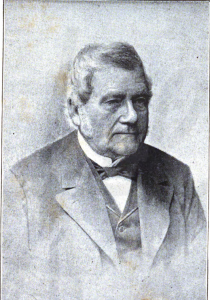
Ludwig Lewysohn (April 15, 1819 – March 26, 1901) was a rabbi, scholar, and intellectual whose contributions to Jewish zoology and historical preservation remain significant. However, his association with the Reform movement and advocacy for its practices represent a controversial aspect of his legacy. While his scholarship demonstrated extraordinary rigor and insight, his role in promoting Reform ideas brought him into conflict with the principles of Torah-observant Judaism.
Early Life: A Promising Torah Scholar
Born in Schwersenz (modern-day Swarzędz, Poland), Ludwig Lewysohn grew up in a traditional Jewish environment. His father, Rabbi Joseph Lewysohn, was a respected Torah scholar, and his mother, Gitel Henriette Wiener, fostered an appreciation for intellectual pursuits.
From a young age, Ludwig displayed remarkable potential in Torah learning. At 13, he began studying under leading rabbis, including Rabbi Feibel Fraenkel and Rabbi Eliah Gutmacher, whose rigorous approach to Talmud and halacha left a lasting impression on him. Despite his grounding in traditional yeshiva studies, Lewysohn’s decision to pursue secular education marked the beginning of his departure from Orthodoxy.
He attended the Catholic Gymnasium in Breslau and later the Realgymnasium in Berlin, where he mastered classical languages and philosophy. In 1847, he earned his doctorate at the University of Halle, focusing on biblical sacrifices. His dissertation, De sacrificiis veteris testamenti (“On the Sacrifices of the Old Testament”), combined his yeshiva training with academic methodologies, foreshadowing his later scholarly endeavors.
Rabbinic Career: Leadership and Departure from Orthodoxy
Worms: Historic Jewish Roots
In 1851, Lewysohn became the rabbi of Worms, a city with a rich Orthodox Jewish heritage dating back to medieval times. His time in Worms was a blend of scholarship and controversy. On the one hand, he produced Nafshot Zaddikim (1855), an invaluable catalog of epitaphs from the historic Jewish cemetery, preserving the legacy of Worms’ Jewish community. On the other hand, his introduction of reforms to synagogue services and educational practices began to alienate the traditional community.
Stockholm: Reform Leadership
In 1859, Ludwig Lewysohn assumed the position of chief rabbi in Stockholm, Sweden, serving until his retirement in 1883. His tenure was marked by significant reforms that aligned with the principles of Reform Judaism, diverging from traditional Orthodox practices.
Introduction of Vernacular Sermons
Lewysohn began delivering sermons in German, replacing the traditional Hebrew divrei Torah. This shift aimed to make religious teachings more accessible to congregants, reflecting the Reform movement’s emphasis on modernization and assimilation. However, within Orthodox communities, this change was viewed as a departure from the sanctity of Lashon HaKodesh (the Holy Tongue), potentially undermining the traditional liturgical language that has been central to Jewish worship and scholarship for centuries.
Implementation of Confirmation Classes
He introduced confirmation classes to supplant the traditional bar mitzvah ceremony. These classes emphasized general ethics and history over in-depth Torah study, aligning with Reform Judaism’s focus on universal moral principles. From an Orthodox perspective, this approach was seen as diluting the commitment to Torah values among Jewish youth, as it shifted the focus away from rigorous religious education and the personal acceptance of mitzvot (commandments) that are integral to the bar mitzvah tradition.
Incorporation of Choral Music
Lewysohn adopted choral singing in services, inspired by non-Jewish worship styles prevalent in contemporary society. This practice was intended to enhance the aesthetic appeal of the services and attract a broader audience. However, Orthodox authorities criticized this innovation, considering it a deviation from established liturgical traditions and an introduction of foreign elements into Jewish prayer, which could lead to the erosion of authentic Jewish worship practices.
Multilingual Proficiency and Scholarly Contributions
Despite these controversial reforms, Lewysohn’s proficiency in multiple languages—including German, Swedish, Hebrew, Greek, Latin, English, and French—enabled him to engage with a diverse audience and contribute to various scholarly publications across Europe. His academic work, particularly in Talmudic zoology, remains respected in scholarly circles. His ability to communicate across linguistic and cultural boundaries facilitated the dissemination of Jewish scholarship and opened dialogues between Jewish and non-Jewish intellectuals.
Orthodox Critique
From an Orthodox standpoint, Lewysohn’s reforms in Stockholm represented a significant departure from halachic norms. While intended to facilitate integration into modern society, these changes were seen as distancing the Jewish community from Torah observance and traditional values. The Orthodox critique centered on the belief that such reforms compromised the integrity of Jewish law and practice, potentially leading to assimilation and the loss of Jewish identity.
In summary, Ludwig Lewysohn’s tenure in Stockholm was characterized by reforms that sought to modernize Jewish practice but were met with resistance from Orthodox communities committed to preserving traditional halachic standards. His legacy reflects the broader tensions between tradition and modernity that have shaped Jewish religious life in the modern era.
Scholarly Achievements: Contributions That Transcend Movements
Despite the problematic aspects of his rabbinic leadership, Lewysohn’s scholarly contributions earned widespread respect, even in Orthodox circles.
Die Zoologie des Talmuds: A Masterwork of Jewish Zoology
In 1858, Lewysohn published Die Zoologie des Talmuds, a groundbreaking study that systematically cataloged animal life in biblical and Talmudic literature. This work combined zoological knowledge with rabbinic sources, highlighting the role of animals in Jewish law, culture, and symbolism.
- Comprehensive Scope: The book analyzed over 300 species mentioned in the Bible, Talmud, and Midrash, presenting their physical descriptions alongside their halachic and cultural roles.
- Enduring Legacy: Die Zoologie des Talmuds remains a foundational text in Jewish scholarship. Its inclusion in Encyclopedia Talmudit demonstrates its value even within halachic frameworks.
The Chilazon Debate
Lewysohn’s work on the Chilazon, the creature associated with producing the blue dye Techelet, is particularly noteworthy. Drawing from Talmudic sources, he proposed three distinct creatures:
- Cuttlefish: Known for its ink-producing ability, it aligns with Maimonides in that the blood is black.
- Murex Snail: Historically used to produce dyes in antiquity, the Murex aligns with halachic descriptions of the Chilazon and has been strongly supported by modern research. Lewysohn therefore placed it as a Chilazon in context of doing a specific dye test.
- Mussels: He also considered certain mussels as potential candidates based on the Tosafot that talked about the “Chilazon’s almonds.”
While some of his identifications lack definitive halachic backing, his systematic approach to correlating zoological knowledge with Torah texts has inspired continued research in the field.
Critique of Maimonides’ Identification
In his seminal work, Die Zoologie des Talmuds (1858), Rabbi Ludwig Lewysohn proposed that the Chilazon, the creature responsible for producing the sacred blue dye Techelet, could be identified as the cuttlefish (Sepia officinalis). He based this identification on his interpretation of Talmudic descriptions and the cuttlefish’s known ink-producing capabilities.
However, this identification faced significant scrutiny from later scholars, notably Rabbi Dr. Isaac Herzog. In his 1913 doctoral dissertation, “Hebrew Porphyrology,” Rabbi Herzog conducted an extensive analysis of the sources and methods used to produce Techelet. He critically evaluated Lewysohn’s identification of the Chilazon as the cuttlefish and presented several key challenges:
- Color of the Dye: Rabbi Herzog noted that the dye obtained from the cuttlefish’s secretion is typically brown or black-brown. This contrasts with the Talmudic description of Techelet as sky-blue, suggesting that the cuttlefish could not be the source of the authentic dye.
- Shell Description: He pointed out that the cuttlefish’s shell is white, and its body is whitish with red spots. This does not align with Talmudic descriptions of the Chilazon, which describe it as having a body resembling the sea in color.
- Rarity and Value: The Talmud describes the Chilazon as a rare and valuable creature. Rabbi Herzog argued that the cuttlefish is relatively common in various seas and not particularly precious, challenging the notion that it could be the Chilazon.
Based on these critiques, Rabbi Herzog concluded that the cuttlefish does not fit the Talmudic criteria for the Chilazon. Instead, he proposed that the Chilazon was more likely a type of marine snail, be it the Murex trunculus, known historically for producing purple dyes (which blue would have been categorized under in ancient times), or the Janthina . These identification, namely with the Murex trunculus, have gained significant support in subsequent research on the topic.
Rabbi Herzog’s thorough analysis highlighted the importance of aligning zoological identifications with traditional Jewish texts and descriptions. His work remains a cornerstone in the study of Techelet and the Chilazon, providing a critical perspective on earlier identifications, including that of Rabbi Lewysohn.
Additional Works
In addition to his work in Talmudic zoology, Lewysohn made significant contributions to the preservation of Jewish history through his documentation of epitaphs and his analyses of Jewish art and architecture. His publications in various Hebrew periodicals, such as Ha-Maggid, and his contributions to encyclopedias like the Swedish “Nordisk familjebok,” reflect his commitment to disseminating Jewish knowledge and culture to a broader audience. His writings often addressed contemporary issues facing the Jewish community, including the challenges of modernization and assimilation, and he advocated for a balanced approach that respected tradition while embracing beneficial aspects of modernity.
A Controversial Figure in Jewish History
Lewysohn’s alignment with Reform Judaism and his role in promoting assimilationist practices make him a divisive figure in Jewish history. His embrace of choral music, confirmation ceremonies, and sermons in German reflected a worldview at odds with Torah Judaism’s emphasis on fidelity to halacha. These changes, while intended to modernize Judaism, often resulted in communities drifting further from Torah observance.
Nevertheless, his scholarly rigor cannot be dismissed. Works like Die Zoologie des Talmuds and Nafshot Zaddikim transcend denominational boundaries, providing tools and insights for both academics and Torah scholars.
Legacy: A Mixed Inheritance
Enduring Scholarship
Lewysohn’s meticulous research has left an indelible mark on Jewish studies. His contributions to Talmudic zoology, historical preservation, and biblical analysis continue to serve as valuable resources.
A Warning for the Future
At the same time, Lewysohn’s life serves as a cautionary tale. His attempts to adapt Judaism to modern sensibilities often came at the cost of halachic integrity. For those committed to Torah-true Judaism, his legacy underscores the importance of resisting pressures to conform to societal trends at the expense of Torah principles.
Conclusion
Ludwig Lewysohn was a complex figure whose intellectual brilliance and Reform affiliations make him both fascinating and controversial. While his scholarship, particularly in zoology and historical preservation, continues to enrich Jewish knowledge, his alignment with Reform practices highlights the tensions between tradition and modernity. His story remains a powerful reminder of the enduring strength of Torah Judaism and the risks of straying from its eternal truths.
References
- Lewysohn, Ludwig. Die Zoologie des Talmuds. Frankfurt: 1858.
- Lewysohn, Ludwig. Nafshot Zaddikim. Worms: 1855.
- Lewysohn, Ludwig. Die Opfer des alten Testaments. Halle: 1867.
- Encyclopedia Talmudit. Jerusalem: Mosad Harav Kook.
- Rationalist Judaism Blog, “The First Zoo Rabbis.” Natan Slifkin, 2024.
- BlueFringes.com, “Ludwig Lewysohn on the Chilazon.”
- Meyer, Michael A. Response to Modernity: A History of the Reform Movement in Judaism. Oxford University Press, 1988.
- Worms Jewish Historical Society, Jewish Cemeteries in Europe.
- National Library of Israel
- Encyclopedia: https://www.encyclopedia.com/religion/encyclopedias-almanacs-transcripts-and-maps/lewysohn-yehudi-leib-ludwig
- Epigonism and the Beginning of Orthodox Historical Writing in Nineteenth-Century Eastern Europe: https://www.jstor.org/stable/41482513
Comments by Rafi Hecht
Please note that this was from combining all Wikipedia articles in different languages, as well as from his encyclopedia as well as other articles, and putting it in a coherent format.