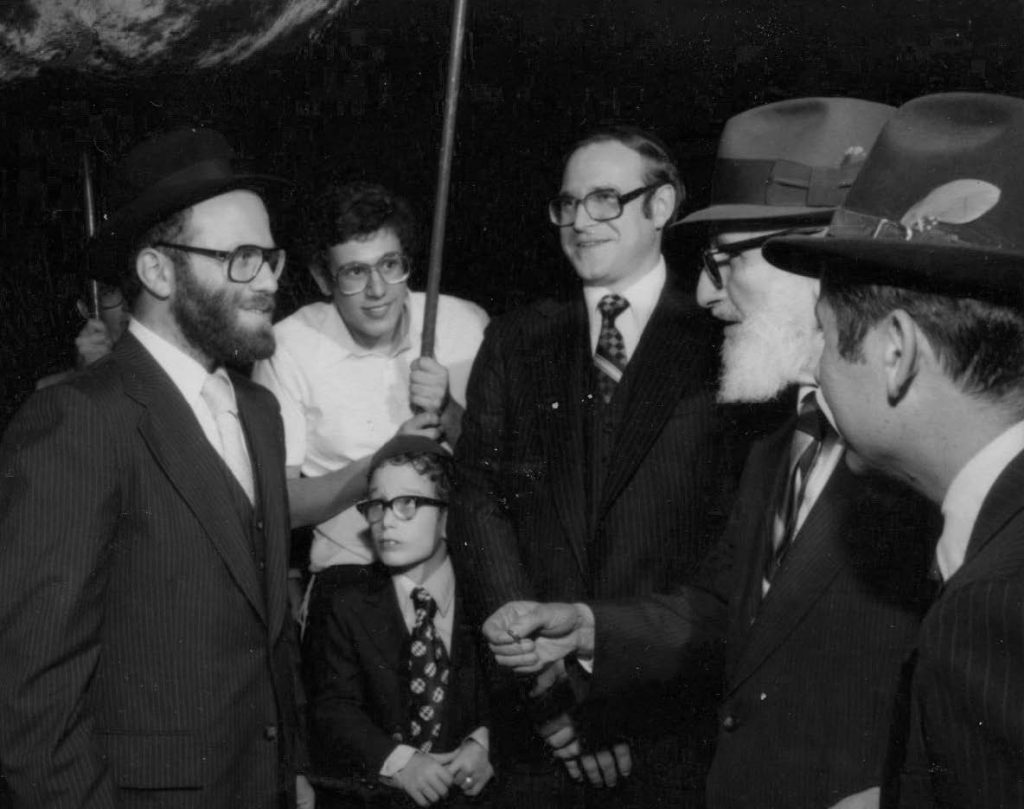
From https://jewishlink.news/rabbi-seth-mandel-zt-l/:
By Micha Berger | June 1, 2023
It is ironic that right after you lose someone, something comes up that makes you realize how much you relied on them. For example: For some 44 years I had a rebbe-chaver, a combination of mentor and friend, in Rabbi Dr. Seth Mandel, zt”l. Rabbi Mandel not only held a doctorate in linguistics from Harvard, specializing in semitic languages, he was a rav whom I am sure paskened for you personally. If you ever ate meat with OU shechita, you relied on his decision as the OU’s rabbinic coordinator for all of shechita.
So what happened? The day after his passing, there was something I wanted to check in Chovos haLevavos, Shaar haBitachon. My question revolved around specific wording. Did Rabbeinu Bachya ibn Pequdah mean to say that if you have proper bitachon, faith and trust in Hashem, things will work out? Or that bitachon means that things are working out because everything is in accordance with His Will, regardless of how it feels to me?
Having a relationship with a rav with a doctorate in semitic languages for all these years meant that my instinct was to email Rabbi Mandel, asking him to please check and explain the words Rabbeinu Bachya actually used in the original Judeo-Arabic Al Hidayah ila Faraid al-Qulub. The loss was driven home.
We met shortly after my bar mizvah. Rabbi Matis Blum, zt”l, author of the Torah Lodaas, obtained the science room at the Yeshiva of Central Queens for his bachurei minyan. I found a seat at one of the tables next to someone a bit older than the rest of us. And I haven’t spoken Hebrew like a normal Ashkenazi ever since: attention to where in davening the commas should go; which syllable to emphasize; how to pronounce a dageish (vowel) in a letter that doesn’t make two distinct sounds; which shva (another type of vowel) is pronounced, and which silent; long and short qamatz (another type of vowel). All these things I learned by osmosis and by asking many small questions back in those years. Back before I realized I should have been asking him about how Halakhah works and could he please articulate the system behind Brisker lomdus (learning)?
I remember one time, the then-future-Rabbi Gil Student and I organized a yom iyun. I asked Rabbi Mandel to be one of the speakers. I asked him for his Hebrew name to put on the fliers. I figured “Rabbi Seth Mandel” would give the whole program a more Modern Orthodox first impression, limiting our potential audience, whereas a Hebrew name would be equally inviting to any observant Jew. “Well, it’s Binyamin. But really I am Seth. I don’t go by Binyamin; it would be pretending to be something I am not, ” he said. The posters read Binyamin. Personal misgivings came second to letting me have what I asked for.
You often hear of a man who authors his own derech get called a man of truth, an ish emes. But that idiom is usually hiding a criticism, describing someone who values truth over tact. More rare is the ish emes who emulates Hashem as “rav chesed v’emes, who has much loving-kindness and truth;” who lived on that tightrope walk of truth and personal integrity and also of loving-kindness and peace.
Rabbi Seth Mandel’s pursuit of truth took his life on a unique trajectory—to shemiras hamitzvos (mitzvah observance), to the Rav (Rav YB Soloveitchik; he wrote for Jewish Action about that relationship at https://jewishaction.com/the-rav/observing-the-rav), to a love of the Rambam, to becoming the rav of a Teimani minyan—all the while loyal to his own Novhardoker ancestry and the attention to midos with which he grew up.
Or when he said, “Pardon me for telling you this story. It feels like bragging to let you know one of my professors confided something personal to me. But you really ought to know…”
Rabbi Mandel was active on the email lists that I run. There, he was “RSM”, following the convention that everyone was a rav or reb, rebbetzin or a Sephardiah rabbanit. Above, I called RSM a “rebbe-chaver.” He couldn’t be just an unhyphenated “rebbe,” because despite his brilliance he would never have assumed that kind of air of authority. And similarly, when Areivim, the chattier side-room to our Torah discussions on avodah, needed a moderator, he happened to be out of work and he offered to do the work. Picture a rav offering to fill in as secretary. Hakaras hatov to the group for the discussions we had together was primary. Ego wasn’t an issue.
Novhardok and Brisk in Harmony
The last time I saw Rabbi Mandel was a week before his passing. A combination bikur cholim (visiting the sick) visit and shiva call, as his son Yisrael had just passed away when he was only 36. And all RSM spoke about was tzidduq hadin, accepting the righteousness of Hashem’s justice. He expressed his pain at the loss of his son, the loss of the dreams of what that son could be someday and how much it hurt. Last week and that week were different worlds. He didn’t pretend all was well. He quoted Yeshaiah, Hashem “makes peace and creates ra (bad).” The tragic is indeed ra. And despite that … It was the right thing to happen because it was Hashem’s will. “Yehi sheim Hashem mevorakh, May Hashem’s Name be blessed!”
I opened by lamenting being unable to just email RSM one more time to see something in the Chovos haLevavos: Did Rabbeinu Bachya really support the idea that bitachon is a way for Hashem to provide you with a happy life, or a way to come to terms with the life He provided you: Many popularizations say the former, but from only seeing the Hebrew translations myself, I still can’t judge the wording well enough to know what Rabbeinu Bachya really meant—but the last lesson Rabbi Mandel taught me was which he believed.
I know I just closed the circle and therefore could have, and perhaps should have, just ended this hesped there. But I want to leave you with a different take-away. The one thing I recall the most of all the things he taught me, is how happy he was to discuss just anything. And how he would make sure you were proud of your thoughts and questions, to make sure he knew he valued your opinion.
יהי זכרו ברוךRabbi Micha Berger wrote “Widen Your Tent,” expounding Rav Shimon Shkop’s idea that the Torah centers on our connecting to others. His AishDas Society offers Jewish thought and mussar workshops. He can be reached at micha@aishdas.org.
From https://ohr.edu/yachad/issue15.htm:
Rabbi Seth Mandel, one of the more colorful alumni with one of the longest running relationships with Ohr Somayach, has filled a variety of different roles actively serving Klal Yisrael.
In 1976, after graduating from the University of Connecticut and writing for a small daily paper for several years, Seth found himself in Israel, taking a kibbutz ulpan and working in a community center in Afula for six months. When spring came, Seth packed up to head back to the States before entering the Peace Corps in the fall. He and a friend decided to drive south to a beach town near Eilat for a few last days in Israel.
On the way south they decided to stop in Jerusalem for a visit to the Kotel. There Seth met none other than Rabbi Meir Schuster, who brought them to Ohr Somayach. After meeting Rabbi Schiller, Rabbi Weinbach and Rabbi Bulman, they did eventually make it to the beach, but Seth soon decided to return to Ohr Somayach and learn. He stayed for almost four months, and finally took a flight home.
Back in America, Seth began preparing for the Peace Corps. He met Ohr Somayach staff in the US, and through them re-encountered Rabbi Schiller. To make a long story short, when fall came, Seth didn’t go to Africa, but back to Ohr Somayach to learn full time.
In 1981, Seth and another O.S. alumnus started up a magazine for a small publishing firm, called “Stay Kosher in Israel.” Seth later took over as Managing Editor, and kept the presses rolling for two years. From there he was sent by Ohr Somayach to help build the Jewish Learning Exchange network back in America. Every three months in America, however, he flew back to Israel to learn for a month, and eventually he decided just to cut out the three month trips to America and stay in Israel.
Next, R’ Mandel took a position as the Public Relations Director for Porat Yoseph, a Sephardi Israeli yeshiva in the Old City. During this phase of his life, he met his wife, with whom he now has four lovely children, aged 3 to 10.
Shortly after the wedding Seth returned to Ohr Somayach to enter the Ohr Lagolah Program, simultaneously receiving his Smicha. These two in combination took him and his family back to the States, where he served a 2-year term at Penn State University as Hillel Director, and five more at the University of Maryland.
One and a half years ago, they returned to Israel. R’ Mandel raised funds for Ohr Somayach for many months, and last September became a recruiter for the JLE programs in the East Coast and here at Hebrew University. Often he can be seen in the early afternoon in the Ohr Somayach Beis Medrash, a place obviously dear to his heart, learning with boys from Hebrew University and elsewhere. Through the years and the many positions he has capably filled, R’ Mandel has proven himself to be both a dedicated servant of Klal Yisroel and a big fan of Ohr Somayach.
From https://aspaqlaria.aishdas.org/2023/05/24/rsm/:
There is something I wanted to check today in Chovos haLvavos, Shaar haBitachon. Related to the machloqes between the prescriptive focus of Chassidus and Novhardoker Mussar (if you have bitachon, things will work out well) and the descriptive focus of the Chazon Ish (bitchon is the knowledge that things are working out well as Hashem Planned it, even if I personally would have wanted something else).
My question revolved around specific wording.
And this is only a couple of days after losing the rebbe-chaver who would have explained the original Judeo-Arabic Al Hidayah ila Faraid al-Qulub, the word Rabbeinu Bachyah ibn Pequdah actually used!
R Dr Seth Mandel not only held a PhS in Linguistics from Harvared, specializing in Semitic Languages. He is a Rav I am sure pasqened for you personally. If you ever ate meat with OU shechitah, you relied on his decision as the OU’s Rabbinic Coordinator for all of Shechitah. (See his article here.)
We met some 44 years ago. R Matis Blum zt”l, the Torah Lodaas and my “chavrusah” who taught me how to figure out a piece of gemara on my own, obtained the Science Room at the Yeshiva of Central Queens for his Bachurei Minyan. I found a seat at one of the tables next to someone a bit older than the rest of us. And I haven’t spoken Hebrew like a normal Ashkenazi ever since. Attention to where in davening the commas should go. Which syllable to emphasize. How to pronounce a dageish in a letter than doesn’t make two distinct sounds. Which sheva is pronounced, and which silent. Long and short qamatz. All things I learned by osmosis and by asking many small questions back in those years. Back before I realized I should have been asking him about how halakhah works and can you articulate the system behind Brisker Lomdus?
I remember one time, the then-future-Rabbi Gil Student and I organized a Yom Iyun. I asked R Seth Mandel z”l to be one of the speakers. I asked him for his Hebrew name to put on the fliers. I figured “Rabbi Seth Mandel” would give the whole program a more Modern Orthodox first impression, limiting our potential audience. Whereas a Hebrew name would be equally inviting to any observant Jew. “Well, it’s ‘Binyamin’. But really I am ‘Seth’. I don’t go by ‘Binyamin’; it would be pretending to be something I am not.” The posters said “Binyamin”. Personal misgivings came second to letting me have what I asked for.
You often hear of a man who authors his own derekh get called a Man of Truth, an Ish Emes. But that idiom is usually hiding a criticism, describing someone who values Truth over tact. More rare is the Ish Emes who emulated Hashem as “Rav Chessed veEmes – Who has much Lovingkindness and Truth.” Who lived on that tightrope walk of Truth and Personal Integrity and also of Lovingkindness and Peace.
Rabbi Seth Mandel’s pursuit of Truth took his life on a unique trajectory – to shemiras hamitzvos, to the Rav (R YB Soloveitchik; he wrote for Jewish Action about that relationship here), to a love of the Rambam, to becoming the Rav of a Teimani Minyan – all the while loyal to his own Novhardoker ancestry, and the attention to Middos he grew up with.
Or when he said, “Pardon me for telling you this story. It feels like bragging to let you know one of my professors confided something personal to me. But you really out to know…”
Rabbi Mandel was active on the email lists that I run. There, he was “RSM”, following the convention that everyone was a “Rav” or “Reb”, “Rebbetzin” or a Sephardiah “Rabbanit”. Above, I called RSM a “rebbe-chaver“. He couldn’t be just an unhyphenated “rebbe”, because despite his brilliance he would never have assumed that kind of air of authority. And similarly, when Areivim, the chattier side-room to our Torah discussions on Avodah, needed a moderator, he happened to be out of work and he offered to do the work. Picture a rav offering to fill in as secretary. Hakaras hatov to the group for the discussions we had together was primary. Ego wasn’t an issue.
Novhardok and Brisk in harmony.
The last time I saw Rabbi Mandel was a week before his passing. A combination biqur cholim visit and shiv’ah call, as his son Yisrael had just passed away when he was only 36. And all RSM spoke about was tzidduq hadin, accepting the righteousness of Hashem’s Justice.. He expressed his pain at the loss of his son, the loss of the dreams of what that son could be someday, and how much it hurt. Last week and that week were different worlds. He didn’t pretend all was well. He quoted Yeshaiah, Hashem “makes Peace and creates Ra.” The tragic is indeed ra. And despite that… It was the right thing to happen because it was Hashem’s Will. “Yehi sheim Hashem mevorakh!”
I opened by lamenting being unable to just email RSM one more time to see something in the Chovos haLvavos — did Rabbeinu Bachya really support the idea that bitachon is a way for Hashem to provide you with a happy life, or a way to come to terms with the life He provided you. Many popularizations say the former, but from seeing the Hebrew translations myself, I still can’t judge the wording well enough to know what Rabbeinu Bachya really meant. But the last lesson Rabbi Mandel taught me was which he believed.
I know I just closed the circle and therefore could have, and perhaps should have, just ended this hespeid there. But I want to leave you with a different take-away. The one thing I recall the most of all the things he taught me, is how happy he was to discuss just anything. And how he would make sure you were proud of your thoughts and questions, to make sure he knew he valued your opinion.