Main Text
בענין זיהוי דג חלזון של תכלת
הרב מאיר שלזינגר
כתב הרה”ק ר’ שמשון מאוסטרופוליא זיע”א בספרו מחנה דן (דף רצ”ה) אין לנו תכלת כי לאחר החורבן נגנז… והנה זה ימשך עד ת”ר לאלף הששי, כי בשנת ת”ר (האדמו”ר מראדזין נולד בסוף שנת תקצ”ט) יתחיל אור החכמה להאיר על מלכות… והנה אז יקום אחד משורשה ובכח התורה… ויברר וילבן מציאות התכלת ודיניו… ובכח זה יעשה את התכלת בפועל… ובודאי שבדורו לא יסכימו על זה במהרה… עכ”ל והובא בספר התכלת עמוד 159.
והנה ידוע כי זה לפני כמה דורות קם האדמו”ר מראדזין גאון עצום בכל מכמני התורה וגם בקי במדעי הטבע ובשילוב שניהם חתר להחזיר עטרת התכלת שנאבדה בעוה”ר במשך הגלות, והשקיע הרבה עמל תחילה בבירור סוגיא זו עפ”י הש”ס ומדרשי חז”ל ופי’ הראשונים ובמיוחד בדעת הרמב”ם שהעלה בפרוטרוט ענין התכלת להלכה, ואח”כ עבר לחיפוש וחקירה עד לצביעה למעשה של תכלת מסוג דג הנקרא טינטפיש (דג הדיו) המתאים לכל ההגדרות והתנאים שהעלה קודם מחז”ל ורמב”ם.
הן אמנם רוב חכמי ומאורי ישראל בשעתו לא אבו בחידושו ולא קבלו דבריו לשנות מאומה והמשיכו להטיל לבן בלבד בציצית אך לעומת זאת היו גם מגדולי ישראל שהסכימו לדבריו [אמנם יש שנמנעו להורות כן בפומבי אך לעצמם חששו ולבשו בהצנע ציצית עם תכלת] ומאז נהגו כן חסידי ראדזין ועוד חוגים מסוימים ואנשים פרטיים שהצטרפו להם ושמרו והעבירו מסורת צביעת תכלת זה של הראדזינר.
בשנים האחרונות חידושים מקרוב באו שאף הן בעקבות הראדזינר הלכו לחקור ולחפש ולחדש מעצמם חדש מצות התכלת אך הגיעו למסקנא שהוא חלזון הנתון בתוך צדף הנקרא מורקע”ס וביססו דבריהם א. על מחקר הארכיאולוגים שמצאו במקומות שנראים כבתי צביעה עתיקים הרבה מצדפים אלו ב. פקפקו מאד על עצם אמיתות צורת הצביעה של הראדזינר אם באמת דם החלזון הוא הגורם לצבע התכלת או החום הגדול משאר הסממנים שנותנים עמו ג. חלקו על עצם פירושו של הראדזינר בגמ’ וראשונים והוכיחו שחלזון הוא דוקא בצורה כזאת המתאימה לסוג זה שמצאו (וכבר קדם להם הרב הרצוג ששיער שחלזון התכלת הוא מסוג הצדפים).
ועל כך ובעיקר על הנקודה השלישית בביאורי הסוגיא מגמ’ וראשונים נסוב מאמר זה לברר מקחו של האי גאון וצדיק הגאון מראדזין זצ”ל בזיהוי חלזון התכלת האמיתי עפ”י חז”ל ופירושי הראשונים.
טעות טכני
הרמב”ם (הלכות ציצית פ”ב ה”ב) כתב שצבע דג החלזון הוא תכלת וכותב הראדזינר (בספר פתיל תכלת עמוד מ”ג) שדג הדיו הוא בצבע תכלת והראדזינר מעיד שהוא עצמו ראה אותו והצבע שלו הוא תכלת ואחרי כמה שנים בא הרב הרצוג וכתב (בספר התכלת עמוד 411) שצבע דג הדיו אינו תכלת וכתב שזה קושיא חמורה על הראדזינר ונשתוממתי איך יתכן שיחלקו על מציאות אם צבע דג הדיו הוא תכלת או צבע אחר והלכתי בעז”ה לברר את המציאות עד שדיברתי עם זה שעושה כיום את התכלת של הראדזינר הרב החסיד ר’ יצחק אנגלרד שליט”א ואמר לי שצבע דג הדיו הוא שמחליף את הצבע שלו לפי הסביבה שהוא נמצא ולפ”ז יוצא שבין מה שכתב הראדזינר ובין מה שכתב הרב הרצוג אמת והיינו שהראדזינר כותב מפורש שראה אותו כשהוא נמצא בתוך הים והרי הים צבעו תכלת אז גם דג הדיו הוא תכלת אבל הרב הרצוג מסתבר שראה אותו במעבדה לא בתוך הים ושם במעבדה אינו צבעו תכלת.
יוצא מזה שקושית הרב הרצוג היא טעות טכני ואינה קושיא כלל כי כשכתב הרמב”ם שהחלזון הוא תכלת כוונתו כשבאים לצודו מתוך הים ושם דג הדיו הוא תכלת כמו שהעיד הראדזינר.
ועכשיו אתחיל את גוף הענין
הנה הראדזינר אמר שחלזון בתכלת הוא דג הדיו והרב הרצוג חלק עליו ואמר שחלזון הוא בעל חי החי בנרתיק (קונכיה-צדף-מהייר קאפ) ובמאמר זה יוכח בעזהשי”ת ששני הסברות אמת, כי סתם חלזון הוא כדברי הרב הרצוג ורק חלזון דתכלת הוא כהראדזינר.
חלזון דתכלת
הנה תיאור התכלת מקורו בגמ’ מנחות (מד:) ת”ר חלזון זה (וי”ג זהו) גופו (מראה גופו רש”י) דומה לים וברייתו (תבנית דיוקנו. רש”י עפ”י שטמ”ק אות ו’) דומה לדג עכ”ל הגמ’.
הנה האדמו”ר מראדזין אמר שדג הדיו הוא החלזון שבו מתפרשת ברייתא זו כפשוטה הסימן הראשון הוא שדומה לים דהיינו שהצבע שלו תכלת כבר כתבתי שהראדזינר מעיד שראה את דג הדיו והצבע שלו הוא תכלת הסימן השני בברייתא הוא שתבנית דיוקנו של החלזון דומה לדג כי דג הדיו אינו נראה כדג ממש כי מלבד צבעו (שאינו כצבע הדג) הרי גם עצם דיוקנו רק דומה לדג כי פיו נפתח לכמה חלקים וגם בזנבו הוא משונה מדג.
והרמב”ם (ציצית ב’ ב’) הביא שני סימנים אלו והוסיף עוד שתי סימנים וזה לשונו מביאין דם חלזון והוא דג שדומה עינו לעין התכלת ודמו שחור כדיו ובים המלח הוא מצוי עכ”ל.
הסימן השלישי הוא דמו שחור כדיו, הראדזינר כותב בספרו שפוני טמוני חול (עמוד לח) וגם דמו השחור כדיו הוא תחת ידי עכ”ל.
הסימן הרביעי הוא בים המלח הוא מצוי כתבו האחרונים שאין כוונתו למה שקוראים בזמן הזה ים המלח שהרי לים המלח של זמנינו קורא הרמב”ם ימא של סדום אלא כוונתו שחי במים מלוחים של ים ולא במים מתוקים של נהר והראדזינר כותב בספרו פתיל תכלת (עמוד מד) לא יחיה (דג הדיו) רק במי הים ולא במים מתוקים עכ”ל.
שאר חלזונות
והנה הרמב”ם סותר עצמו דבהלכות ציצית כתב שחלזון הוא דג ובפירוש המשניות (כלים פי”ב מ”א) כתב שחלזון הוא שרץ המים והם שני הפכים כמבואר ברמב”ם הלכות מאכלות אסורות (פ”ב ה”ב) שהחיים בים נחלקים לשתי סוגים מי שיש לו צורת דג נקרא דג ומי שאין לו צורת דג נקרא שרץ המים עיי”ש.
וכדי ליישב הסתירה צריך על כרחך לומר שהחלזון דציצית אינו אותו חלזון דמשניות כלים והיינו שחלזון דציצית הוא דג ויש לו כל הארבעה סימנים הנ”ל והוא מתאים עם דג הדיו אבל חלזון דמשניות כלים הוא צבע שאינו בצורת דג לכך נקרא שרץ המים, ומקורו של הרמב”ם שיש שתי סוגי חלזונות הוא מלשון הגמ’ במנחות (מד:) שהסוגיא שם מדברת על תכלת דציצית ואיתא שם ת”ר חלזון זה (גמ’ זהו) גופו דומה לים וברייתא דומה לדג עכ”ל הגמ’ ומדייק הרמב”ם מלשון חלזון זה שדוקא חלזון זה דציצית יש לו סימנים אלו משא”כ שאר חלזונות וכדי שלא יקשה לך איך שני סוגי בעלי חיים נקראים בשם אחד אומר לך שבאמת יש קשר בין שניהם וגם בשיטת המיון המקובלת כיום נמצא דג הדיו במשפחת הרכיכות המשותפת לו ולחלזונות כמו שכתב בספר התכלת עמוד 174.
ואם בכל זאת יקשה לך לקבל מושג חדש שיש שתי סוגי חלזונות אומר לך שזה לא חדש, עצם המושג שיש יותר מאחד כבר נזכר ביד רמה בסנהדרין דף צא. שם מוזכר בגמ’ חלזון וכתב שם וזה לשונו מסתברא דהאי חלזון דהכא לאו האיך דאמרינן גבי תכלת הוא אלא מינה אחרינא עכ”ל. עכ”פ זכינו להוציא מדעת הרמב”ם דהחלזון שצובעים בו הציצית הוא דג ובשיטת הראדזינר ונסתר מזה דעת האומרים דחלזון דציצית הוא צדף.
והנה הרב הרצוג מקשה על הראדזינר (עי’ ספר התכלת עמוד 373) שהשם חלזון המצוי בגמ’ נמצא גם בסורית ובערבית ובשתי השפות הללו הוראתו זוחל בעל נרתיק וברור שם כוונת הגמ’ לזה וזה מתאים לצדף וזהו קושית הרב הרצוג.
אבל להנ”ל אין זו קושיא כלל אע”פ שהרב הרצוג צודק שחלזון היינו צדף אבל זה רק סתם חלזון לא של תכלת אבל חלזון דתכלת הוא דג.
ועתה אכתוב עוד קושיא על הראדזינר קושיא שהיא מפורסמת שכל מי שרק מתחיל לעסוק בנושא התכלת יודע קושיא זו על הראדזינר אבל התירוץ על קושיא זו לא ידוע, את הקושיא אעתיק מספר ים החכמה (תשס”ה) מהרה”צ ר’ י”מ מורגנשטרן שליט”א (עמוד כ”ד) וזה לשונו הקשו אחרוני זמננו שבדקו ומצאו שאם משתמשים בסממנים שהביא האדמו”ר מראדזין, אפשר להוציא צבע כחול מכל דבר חי, ומכח קושיא זו בטלו לגמרי שיטתו של האדמו”ר מראדזין עכ”ל. ועיי”ש עוד מה שמפלפל בזה אמנם עי’ בספר התכלת (עמוד ) שכתב שהקשו לפני הרב הרצוג קושיא זו ודחה אותה שאינה קושיא כלל עיי”ש ועיי”ש עוד בעמוד 199 שהקשה ג”כ קושיא זו על הראדזינר שכיון שעשיית התכלת של הראדזינר הוא ע”י אש גדולה מאד ובכחות חום גבוהה גם אם לא יכניסו את דם החלזון ג”כ יהיה הצמר כחול אבל זה לא קושיא כלל כי צבע הכחול יהיה רק על הצמר מבחוץ אבל אינו נקלט עד כדי לצבוע את הצמר שיהיה כחול בתוך תוכיותו עיי”ש היטב.
וכן כותב הראדזינר בעצמו (בסוף ספר פתיל התכלת) ובעזה”י עלה בידי להוציא מהדם השחור כדיו את צבע התכלת באופן שאין שום דבר מסייע להצבע רק דם החלזון והסממנים הם משוללי צבע ורק פועלים להוציא הצבע מהדם עכ”ל.
יש עוד קושיא על הראדזינר והיינו שמביאים ראיה שהחלזון הוא מורעקס (ארגמן קהה קוצים) וקושיא זו הביא הרה”צ ר’ מ”מ מורגנשטרן שליט”א בספרו ים החכמה (עמוד כ”א) שיש שרוצים להביא ראיה ממה שמצאו בורות צביעה עם קונכיות (צדפים) מחלזון המורעקס אבל הוא דוחה ראיה זו וכותב שאין להביא מכך שום ראיה כלל שכן אין הוכחה וראית מלפני כמה שנים הבורות הללו, והם בעצמם מודים שהזמן היותר מוקדם שאפשר לשייך להם הוא מזמן האמוראים ועיי”ש שכתב עוד תירוץ על קושיא זו.
עכשיו אכתוב דבר מעניין דהרמב”ם כתב (בהלכות ציצית פ”ב ה”א) והתכלת האמורה בציצית צריך שתהיה צביעתה צביעה ידועה שעומדת ביופיה ולא תשתנה עכ”ל והתעניינתי אצל משפחת בית ראדזין אם התכלת של הראדזינר עומדת ביופיה ולא השתנה וקיבלתי מכתב מהרה”ח אלחנן ראובן גולדהבר שליט”א וזה לשונו יש בידנו תכלת מלפני כ-70 שנה ועדיין עומדת ביופיה כשעת הצביעה עכ”ל.
והנה המאמר הזה הוא תמצית מקונטרס שכתבתי, ועל הקונטרס קבלתי הסכמות מהרבנים הגאונים (לפי סדר הא”ב) הרב עזריאל אוירבך שליט”א הרב שאול אלתר שליט”א, הרב ישראל הלוי בעלסקי שליט”א, הרב זלמן נחמיה גולדברג שליט”א, הרב משה הלברשטם שליט”א, הרב אפרים פישל הערשקאוויטש שליט”א הרב ישראל יעקב פישר זצ”ל, הרב אפרים פישל רבינוביץ שליט”א, הרב צבי שרייבר שליט”א, ועוד.
English Translation
R’ Meir Shlesinger
Regarding the Identification of the Chilazon of Techeiles
R’ Shimshon of Ostropoli zy”a writes in his sefer Machaneh Dan (p. 295) that we do not have Techeiles because after the Churban it was hidden away. He continues that this would last until the year 5600, because around then “the light of wisdom will begin to shine upon Malchus… and then someone will arise from its root, and through the power of Torah… he will clarify and establish the reality of Techeiles and its halachos… and through this he will actually produce the Techeiles… and certainly in his generation they will not accept it quickly…” End quote. This is brought in Sefer HaTecheiles, p. 159.
It is well known that several generations ago the Admor of Radzyner arose, a tremendous gaon in all areas of Torah who was also knowledgeable in the natural sciences. Combining the two, he worked to restore the crown of Techeiles, which had unfortunately been lost during the long galus. He invested enormous effort first in clarifying the sugya from the Gemara, the Midrashim of Chazal, and the Rishonim, particularly the opinion of the Rambam, who lays out the subject of Techeiles in considerable halachic detail.
Afterward, he moved on to practical investigation and research in order to actually produce Techeiles. He ultimately identified the creature as the tintenfish, the cuttlefish or ink-fish, which he maintained fits all the definitions and conditions that he had derived earlier from Chazal and the Rambam.
It is true that most of the Chachmei and Gedolei Yisrael of his time did not accept this innovation and did not agree to change the existing practice of wearing only white tzitzis. On the other hand, there were also Gedolei Yisrael who agreed with him. [There were even some who refrained from publicly ruling this way, but privately were concerned for his view and wore Techeiles discreetly.] From then onward the Radzyner Chassidim, as well as certain other groups and individuals who joined them, continued wearing it and preserved the Radzyner mesorah for producing this Techeiles.
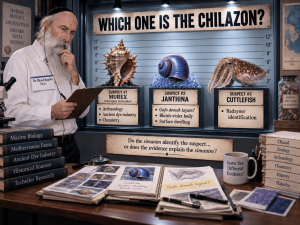
In recent years, new developments have come about. Following in the footsteps of the Radzyner, people began once again to investigate and search in order to restore the mitzvah of Techeiles. They reached the conclusion that the chilazon is a creature found inside a shell, known as the Murex.
They based their position on several arguments:
First, archaeologists found large quantities of these shells in places that appear to have been ancient dyeing installations.
Second, they raised serious questions about the Radzyner dyeing process itself — whether the blood of the chilazon is really what causes the blue color, or whether the intense heat together with the other chemicals produces the color.
Third, they disagreed with the Radzyner’s explanation of the Gemara and Rishonim and argued that the chilazon is specifically a creature of this sort, namely the type they had discovered. Rav Herzog had already earlier suggested that the chilazon of Techeiles was a type of shellfish.
This article will focus mainly on that third point — the interpretation of the sugya in the Gemara and Rishonim — in order to clarify the approach of that gaon and tzaddik, the Radzyner Rebbe zt”l, regarding the identity of the true chilazon of Techeiles according to Chazal and the Rishonim.
A Technical Mistake
The Rambam writes in Hilchos Tzitzis 2:2 that the color of the chilazon is Techeiles. The Radzyner writes in Pesil Techeiles (p. 43) that the cuttlefish is Techeiles-colored, and he testifies that he personally saw it and that its color is Techeiles.
Several years later Rav Herzog wrote in Sefer HaTecheiles (p. 411) that the cuttlefish is not Techeiles-colored, and he presented this as a major kashya on the Radzyner.
I was surprised: how can people argue over a simple metzius — whether the cuttlefish is Techeiles-colored or some other color?
I therefore went to clarify the matter. Eventually I spoke with R’ Yitzchak Englard shlita, who today produces the Radzyner Techeiles. He explained to me that the cuttlefish changes its color depending on its surroundings.
Accordingly, both the Radzyner and Rav Herzog may have been correct. The Radzyner explicitly writes that he saw the creature while it was in the sea. Since the sea is Techeiles-colored, the cuttlefish there also appears Techeiles-colored. Rav Herzog, on the other hand, presumably saw it in a laboratory rather than in the sea, and there its color would not be Techeiles.
It therefore comes out that Rav Herzog’s kashya is merely a technical mistake and is not a kashya at all. When the Rambam writes that the chilazon is Techeiles-colored, he means the way it appears when it is caught from the sea, and there the cuttlefish is indeed Techeiles-colored, as the Radzyner testified.
Now to the Main Point
The Radzyner said that the chilazon of Techeiles is the cuttlefish. Rav Herzog disagreed and said that a chilazon is a creature that lives inside a casing — a shell.
In this article, I will show, be’ezras Hashem, that both positions are correct.
The ordinary meaning of chilazon is indeed as Rav Herzog says. But the specific chilazon of Techeiles is as the Radzyner says.
The Chilazon of Techeiles
The description of the Techeiles chilazon comes from the Gemara in Menachos 44a:
“This chilazon — its body resembles the sea, and its form resembles a fish.”
Rashi explains “its body” as the appearance of its body, and “its form” as the shape or image of its form.
The Radzyner said that this description fits the cuttlefish literally.
The first siman is that its body resembles the sea, meaning that its color is Techeiles. As already explained, the Radzyner testifies that he saw the cuttlefish and that its color was Techeiles.
The second siman is that the form of the chilazon resembles a fish. The cuttlefish does not look exactly like an ordinary fish. Aside from its color, its actual form merely resembles a fish. Its mouth opens into several sections, and its tail is also different from that of an ordinary fish.
The Rambam in Hilchos Tzitzis 2:2 brings these two simanim and adds two more:
“They bring the blood of the chilazon, which is a fish whose appearance resembles the color of Techeiles, whose blood is black like ink, and which is found in the salt sea.”
The third siman is that its blood is black like ink.
The Radzyner writes in Sefunei Temunei Chol (p. 38):
“Its black, ink-like blood is also in my possession.”
The fourth siman is that it is found in the yam hamelach.
The Acharonim explain that the Rambam does not mean what we today call the Dead Sea, since the Rambam calls our Dead Sea the Sea of Sodom. Rather, he means that the creature lives in salty seawater rather than in freshwater rivers.
The Radzyner writes in Pesil Techeiles (p. 44) that the cuttlefish “lives only in seawater and not in freshwater.”
Other Chilazonos
There appears to be a contradiction in the Rambam.
In Hilchos Tzitzis he writes that the chilazon is a fish, while in his Peirush HaMishnayos to Keilim 12:1 he writes that a chilazon is a sheretz hamayim, an aquatic crawling creature.
These are two different categories. As the Rambam explains in Hilchos Maachalos Assuros 2:2, sea creatures are divided into two categories: a creature with the form of a fish is called a dag, while one without the form of a fish is called a sheretz hamayim.
To resolve this contradiction, we are forced to say that the chilazon of Hilchos Tzitzis is not the same chilazon as the one mentioned in Mishnayos Keilim.
The chilazon of Techeiles is a fish and has all four simanim mentioned above, fitting the cuttlefish.
The chilazon of the Mishnah in Keilim, however, is not fish-shaped and is therefore called a sheretz hamayim.
The Rambam’s source that there are different kinds of chilazonos may be the wording of the Gemara in Menachos itself. The Gemara, speaking specifically about Techeiles, says:
“This chilazon — its body resembles the sea and its form resembles a fish.”
The Rambam understood the phrase “this chilazon” to mean that specifically this chilazon, the chilazon of Techeiles, has these simanim, unlike other chilazonos.
And if you wonder how two different types of creatures can share the same name, the answer is that they are in fact related. Even according to modern biological classification, the cuttlefish belongs to the mollusk family, the same broader family that includes snails and shellfish, as discussed in Sefer HaTecheiles, p. 174.
And if it is still difficult to accept the idea that there are different types of chilazon, this is not really a new concept. The Yad Ramah in Sanhedrin 91a already says this explicitly.
The Gemara there mentions a chilazon, and the Yad Ramah writes:
“It appears that this chilazon mentioned here is not the one that we discuss regarding Techeiles, but rather a different species.”
We therefore learn from the Rambam that the chilazon used for dyeing tzitzis is a fish, in accordance with the Radzyner’s position. This would contradict those who maintain that the chilazon of Techeiles is a shellfish.
Rav Herzog raises another kashya against the Radzyner (Sefer HaTecheiles, p. 373). The word chilazon exists in both Syriac and Arabic, and in both languages it refers to a crawling creature that lives inside a shell. Rav Herzog therefore argues that this is clearly what the Gemara means as well, and that this supports the shellfish identification.
According to what we have explained, however, this is not a kashya.
Rav Herzog is correct that a chilazon generally means a shelled creature. But that applies only to an ordinary chilazon. The chilazon of Techeiles is a different type and is a fish.
I will now address another well-known kashya on the Radzyner. Anyone who begins studying the Techeiles issue knows this objection, but the answer to it is not as well known.
I will quote the kashya from Yam HaChochmah (5765), by R’ Y.M. Morgenstern shlita, p. 24:
“The later scholars questioned this, because they tested the Radzyner’s process and found that if one uses the chemicals he prescribed, one can produce a blue color from any organic material. Based on this kashya, they completely rejected the Radzyner’s position.”
See there for further discussion.
However, see Sefer HaTecheiles, where it records that this kashya was presented to Rav Herzog and he rejected it, saying that it was not a kashya at all.
See also p. 199, where the same objection is raised against the Radzyner: since the Radzyner Techeiles process involves an extremely strong fire and very high temperatures, even without adding the chilazon blood the wool might become blue.
But this is not a kashya, because such a blue color would only be on the surface of the wool; it would not penetrate the wool deeply enough to truly dye it blue through and through.
The Radzyner himself likewise writes at the end of Pesil HaTecheiles:
“With Hashem’s help I succeeded in extracting the Techeiles color from the black, ink-like blood in such a way that nothing else contributes to the color. Only the blood of the chilazon provides the color, while the other ingredients are themselves colorless and merely act to extract the color from the blood.”
There is another kashya on the Radzyner, namely the argument that the chilazon is the Murex (argaman keheh kotzim).
R’ M.M. Morgenstern shlita brings this objection in Yam HaChochmah (p. 21). Some bring proof from the discovery of ancient dyeing pits containing shells of the Murex.
He rejects this proof, writing that the discovery by itself proves nothing because there is no clear evidence establishing how old those pits actually are. According to him, even those presenting the evidence admit that the earliest date that can definitely be assigned to them is from the era of the Amoraim.
He also gives another answer there.
I will now mention an interesting point.
The Rambam writes in Hilchos Tzitzis 2:1:
“The Techeiles referred to in tzitzis must be dyed with a particular known dyeing process that remains beautiful and does not change.”
I therefore asked members of the Radzyner family whether Radzyner Techeiles in fact retains its appearance without changing.
I received a letter from R’ Elchanan Reuven Goldhaber shlita stating:
“We have Techeiles in our possession from approximately seventy years ago, and it remains as beautiful as it was at the time it was dyed.”
This article is a condensed version of a kuntres that I wrote. I received haskamos on the kuntres from the following rabbanim and geonim, listed alphabetically:
Rav Azriel Auerbach shlita; Rav Shaul Alter shlita; Rav Yisroel Belsky shlita; Rav Zalman Nechemia Goldberg shlita; Rav Moshe Halberstam shlita; Rav Ephraim Fishel Hershkowitz shlita; Rav Yisrael Yaakov Fisher zt”l; Rav Ephraim Fishel Rabinowitz shlita; Rav Tzvi Schreiber shlita; and others.