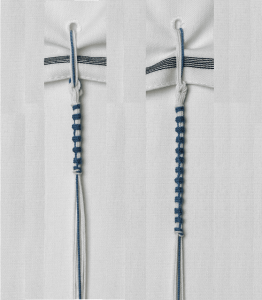
Please note:
- This page and all derivatives is/are a continued work in progress. Please send a message for any corrections and those will be considered and/or actioned as soon as possible.
- Just because the below authorities wearing Techeiles are listed doesn’t mean we have contact info on all of them. This is for informational purposes only.
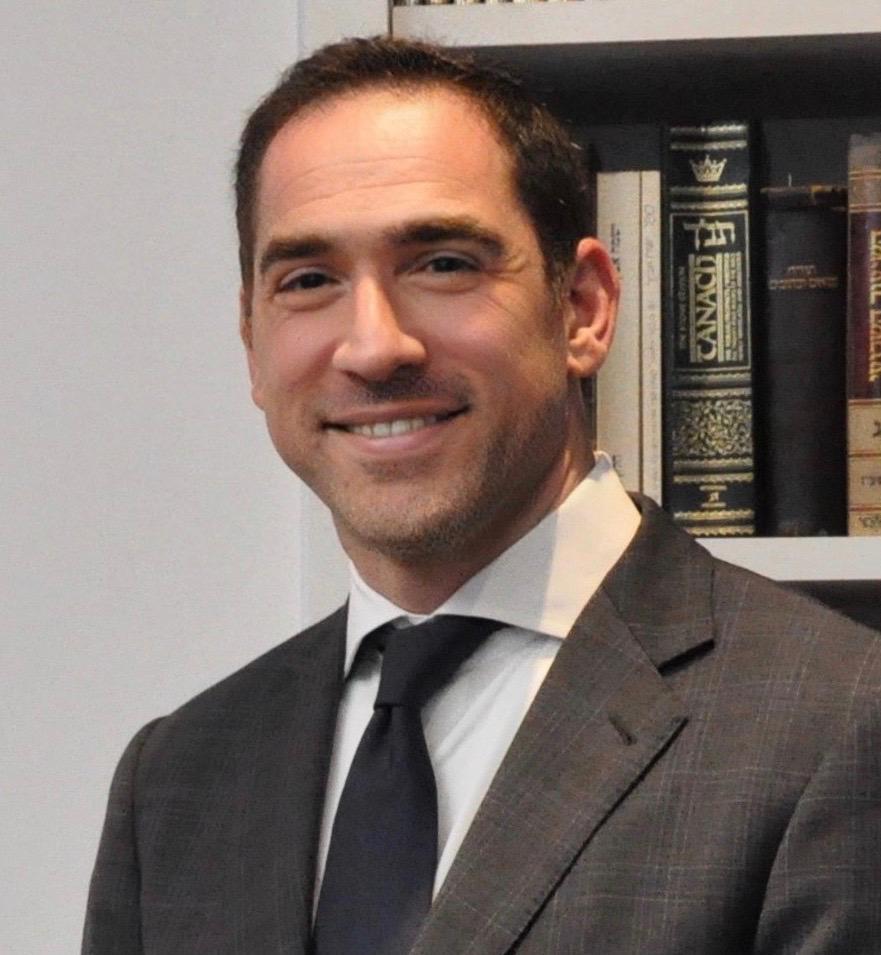
- Hebrew Name: רבי יוסף דוויק
- String Ratio: Rambam Ratio
- Tying Method: Rambam Method (Yemenite)
- How We Know: Picture(s), Told me Directly
- Date Born: May 17, 1975
- Location Born: Los Angeles, CA, USA
- Current Location: London, UK
Type of wearer: Rabbi, YouTube Personality
Affiliation: Modern Orthodox, Sepharadi
Rabbi Joseph Dweck has never sat comfortably in a neat label. People pick up on that, and they don’t tune him out.
He was born in Los Angeles in 1975, right into the Syrian crowd there—same shuls, same families, same voices you hear at every simcha. That’s the world he grew up in. Later he went off to Yeshiva Hazon Ovadia in Yerushalayim and learned under Rav Ovadia Yosef and Rav Yitzhak Yosef. It wasn’t some neat “program”; it was packed batei midrash, long days at the shtender, real shimush, and a lot of slow grinding through halacha. At the same time, he didn’t shut the door on the outside world. Studies in psychology and philosophy at Santa Monica College, followed by a Liberal Arts degree from Excelsior College, gave him other tools and language. That mix of beis midrash and general studies is still there in his talks: grounded in sources, but not afraid to ask a harder question or use a different kind of vocabulary.
His first major posting was back in Brooklyn. At Congregation Shaare Shalom he didn’t just inherit a pulpit; he slowly turned a small kehillah into a serious community of roughly 350 families. During those years he also served as Headmaster of Barkai Yeshivah, pushing for strong limudei kodesh alongside solid academics, trying to produce kids who can read a Gemara and hold their own in the wider world. His Sephardic roots aren’t just sentimental either—he’s a grandson-in-law of Rav Ovadia Yosef, whose psak and outlook shaped an entire century of Sephardic life.
In 2014 he took on a very different stage: the Spanish and Portuguese Jews’ Congregation of London. It’s one of the oldest, most storied communities around, with its own minhagim, history and politics. They hired a rav who respects the weight of that past yet insists on speaking to the present, straight on. Whether he’s giving a shiur at Bevis Marks, teaching at LSJS, or logging into a Zoom class to tackle some thorny topic, he tries to put Torah on the table without pretending the modern world isn’t sitting there too.
Of course, that way of speaking hasn’t kept things quiet.
Some of his talks, especially when he walked straight into sensitive topics where halacha and the surrounding culture don’t sit nicely together, really set people off. There were letters, meetings, late-night phone calls, and plenty of side conversations that never made it public. And no, not every word landed well. Still, he hasn’t switched over to soft, fuzzy language just to stay out of trouble. He’s still giving shiurim, still opening sefarim, still answering back when he feels people heard him wrong, and still sitting with anyone who wants to argue it out seriously. It can be a bit awkward at times, for him and for them, but it doesn’t come across as staged.
And tucked inside all of that is a quieter detail: Techeiles.
You won’t find it highlighted on his website, and he’s not running a campaign around it. But Joel Guberman, founder of Ptil Techeiles, has said he’s “99% sure” that Rabbi Dweck wears Techeiles. The story, as he tells it, runs through Rabbi Dweck’s son Ezra—a Maaleh Adumim talmid chacham, soft-spoken, serious, and very driven. Ezra went deep into the sugya, weighed the sources, and came out convinced that Techeiles today is the real thing. His father listened. Another son, also a Maaleh Adumim graduate, wears Techeiles as well. In this case, the influence didn’t only flow from the rabbi down to the children; it moved upward too.
That small story captures a lot about who Rabbi Dweck is. He leads, but he’s willing to be moved by the people closest to him. He stands for mesorah, but he’ll still let new questions and old sources sit in the same room. And if he does wear Techeiles, it’s not as a slogan or a banner. It’s one more mitzvah he’s tried to take seriously—quietly, consistently, even when nobody is making a big deal out of it.
Sometimes the strongest statements are the ones you almost miss if you’re not paying attention.