

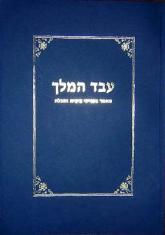
Yehuda Rock’s Eved Hamelech: Maamar Tzitzis U’Techeiles, published by Ptil Tekhelet, examines the mitzvah of tzitzis from its basic halachic definitions through the identification of the chilazon and practical tying methods. Its central conclusion is that the evidence identifies the Murex chilazon clearly enough to restore techeiles, and that wearing it fulfills a Torah obligation.
The first section explores what creates the chiyuv of tzitzis and how the person and garment relate to that obligation. Rock develops the idea of tzitzis as a chosam avdus, a badge identifying its wearer as an eved Hashem. Attaching tzitzis expresses acceptance of Hashem’s authority, while their continued presence on the garment preserves a visible reminder of that act. He uses this understanding to explain several halachos, including shortened strings and taaseh velo min ha’asuy.
The second section examines the relationship between lavan and techeiles. Rock explains the different thread counts of the Rambam, Raavad, and Tosafos: one, two, or four blue ends among the eight hanging ends. He connects these differences to a deeper machlokes over techeiles’s role. In his reading of the Rambam, techeiles winds around and beautifies the basic tzitzis; other approaches give lavan and techeiles parallel roles. These distinctions also help explain Chazal’s descriptions of tzitzis as a servant’s seal and techeiles as a reminder of the Kisei HaKavod.
The third section presents the case for identifying the chilazon with Murex, particularly the blunt-spined species commonly called Murex trunculus. Rock brings together historical accounts, archaeological finds, the location of ancient dyeing industries, and the dye’s resemblance to kala ilan. He addresses Rav Herzog’s objections and explains how sunlight can turn the dye blue. He also examines the Radzyner cuttlefish and Herzog’s Janthina proposal, arguing that neither has comparable supporting evidence. His discussion distinguishes the requirement of a blue hue from the question of how light or dark that blue should be.
Rock then considers the restoration of techeiles and objections based on the loss of mesorah. He distinguishes the validity of lavan without techeiles from the continuing obligation to add techeiles when it is available. Although he carefully examines whether its omission constitutes formal bittul aseh under different shitos, his conclusion is firm: once the chilazon has been identified, the mitzvah should be restored.
The final section compares the principal winding and knotting methods, including those of the Rambam, Rav Amram Gaon, the Itur, Tosafos, Raavad, Gra, and Radzyn. Rock separates requirements essential for validity from the fuller arrangements required lechatchilah. Comparative diagrams and illustrated Chabad and Yemenite tying instructions make this section useful for understanding how the halachic analysis translates into practice.
Authors

Let's meet
Let’s schedule a time to meet in order that you not only are getting strings, but quality service as well. Fill out the form below or email bluefringes613@gmail.com directly.