

String Ratios Discussed:
Tags:

Bottom Line
This is a peirush from the Cairo Geniza on the sugya of Techeiles in Maseches Menachos. It’s from an anonymous chacham and was pointed out by Dovid Sklir. The manuscript is part of the Taylor-Schechter collection in Cambridge and also has a copy in the Jerusalem Institute for Manuscripts.
The peirush goes through the Gemara step-by-step, bringing down pieces of the sugya and explaining them. It’s missing the beginning and the end, and the pages are out of order—the second page follows the first, and the fourth follows the third, but the third doesn’t continue from the second.
The chiddush here is that the peirush aligns with certain Rishonim, especially the Rambam, which gives it added importance. There’s also a diagram of the tzitzis that matches some Rishonim’s shittos.
The translation was done by Rav Shmuel Kreuzer. Parts of the text that were missing were filled in with brackets, and abbreviations were written out fully.
Some key points:
-
Borrowed Talis: A borrowed talis for less than 30 days is patur from tzitzis, but if it already has tzitzis, you can still make a bracha.
-
Techeiles and Lavon: The peirush discusses the placement and shiurim for techeiles and lavon. It mentions that Beis Hillel holds you need three tefachim of hanging tzitzis, which is longer than the common understanding.
-
Chulya Configuration: The peirush explains how to twist the strings—four strings doubled into eight through the hole, with a specific method of twisting to make proper chulyos. It references the machlokes between Rav Achai bar Yaakov and Mar Brei d’Ravina, saying they follow the method we use today.
-
Material Issues: It brings down the shaila about putting wool tzitzis on linen garments (Shatnez by tzitzis) and follows the shitta that if you have linen strings available, you should use them for linen garments.
-
Testing Techeiles: The Gemara says techeiles has no siman (test), but the peirush brings down that there are some ways to check, like seeing how the dye reacts to certain materials. Still, it concludes that only an expert (mumar) can truly verify it.
-
Lishma Requirements: There’s a comparison to tefillin and mezuzos—just like they need to be made lishma, techeiles also needs to be dyed lishma. Some argue whether this is needed, but the peirush leans towards being machmir.
In short, this Geniza peirush gives important insights into the halachos of tzitzis and techeiles, mostly following the Rambam’s shitta, and adds some clarity on practical issues like how to tie them and what materials to use.
Main Text
כליל תכלת
נספח ג: פירוש פרק התכלת מהגניזה
פירוש פרק התכלת מהגניזה
גם לכת”י זה הופניתי ע”י דוד סקליר. כתה”י שמוצאו מן הגניזה שייך לאוסף טיילור-שכטר אשר בקמברידג’ (47.65 14900 ובמכון לתצלומי כת”י אשר בירושלים מספרו 19632). ארבעת העמודים אשר לפנינו הם פירוש מחכם אלמוני על הגמרא שבפרק התכלת במסכת מנחות. המחבר מביא קטע מהגמרא ומפרשו, מביא קטע ומפרשו וכך הוא עושה לאורך כל כה”י. הפירוש אשר לפנינו קטוע, ללא התחלה וללא סוף. העמוד השני נמשך אחרי הראשון והרביעי אחרי השלישי, אך אין השלישי נמשך אחר השני. בקטעים אלו מובאים פירושים חשובים וחדשים שתואמים לשיטות מסויימות אצל המפרשים הראשונים (ובמיוחד הולך המפרש כאן בשיטת הרמב”ם), ובכך חשיבותו. במו כן מובא בו תרשים של הציצית שאף הוא מתאים לשיטות של המפרשים הראשונים.
להלן מובאים המקור והתרגום שנעשה ע”י הרב שמואל קרויזר. המקומות המחוקים וההשלמות יובאו בתוך סוגריים מרובעים. והנקודות ששימשו לשם קיצור מלה יוחלפו בגרש. (מעל מילים רבות המובאות מהגמרא סימן הסופר נקודות. נקודות אלה לא יובאו בהדפסה.)
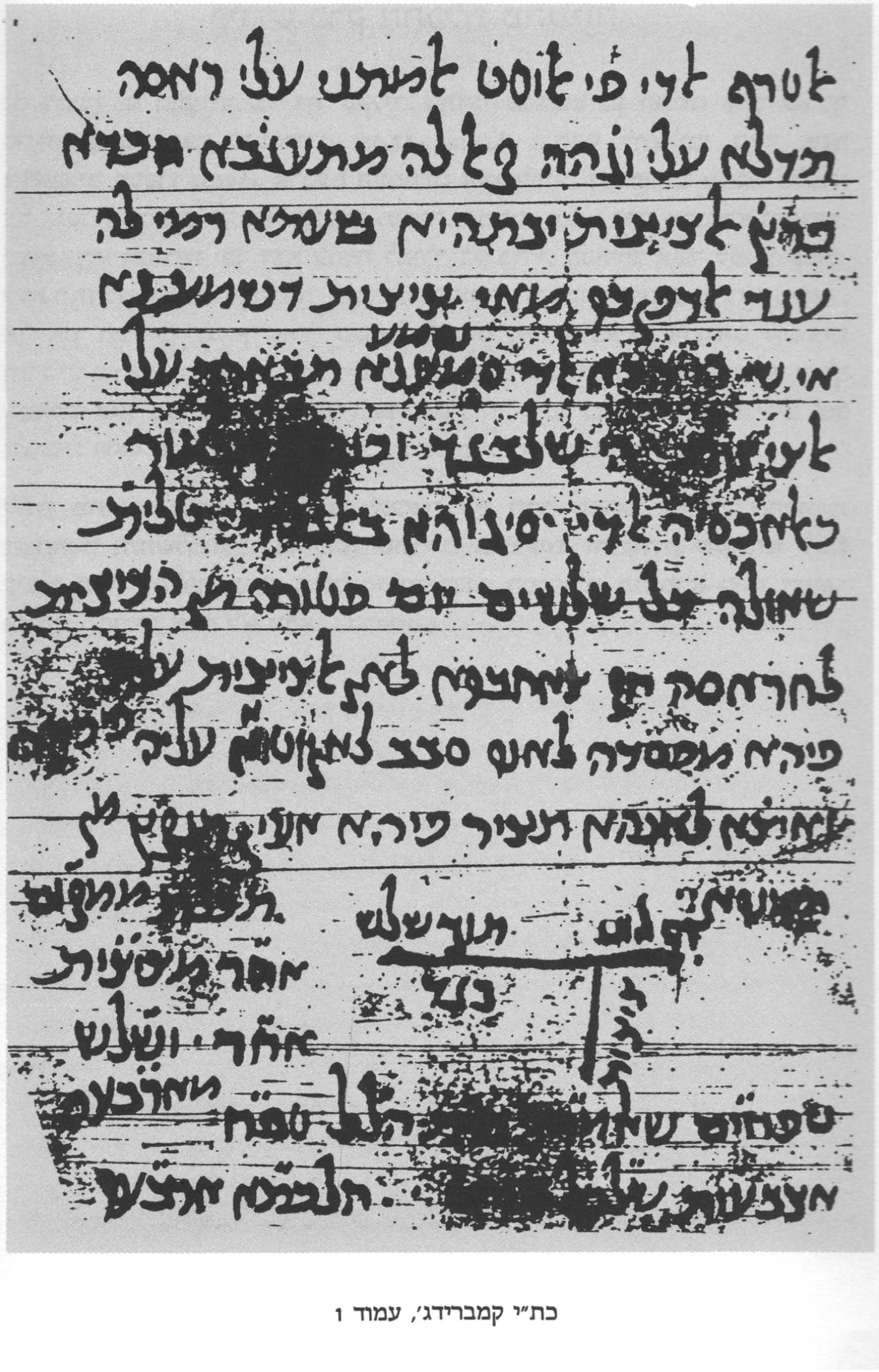
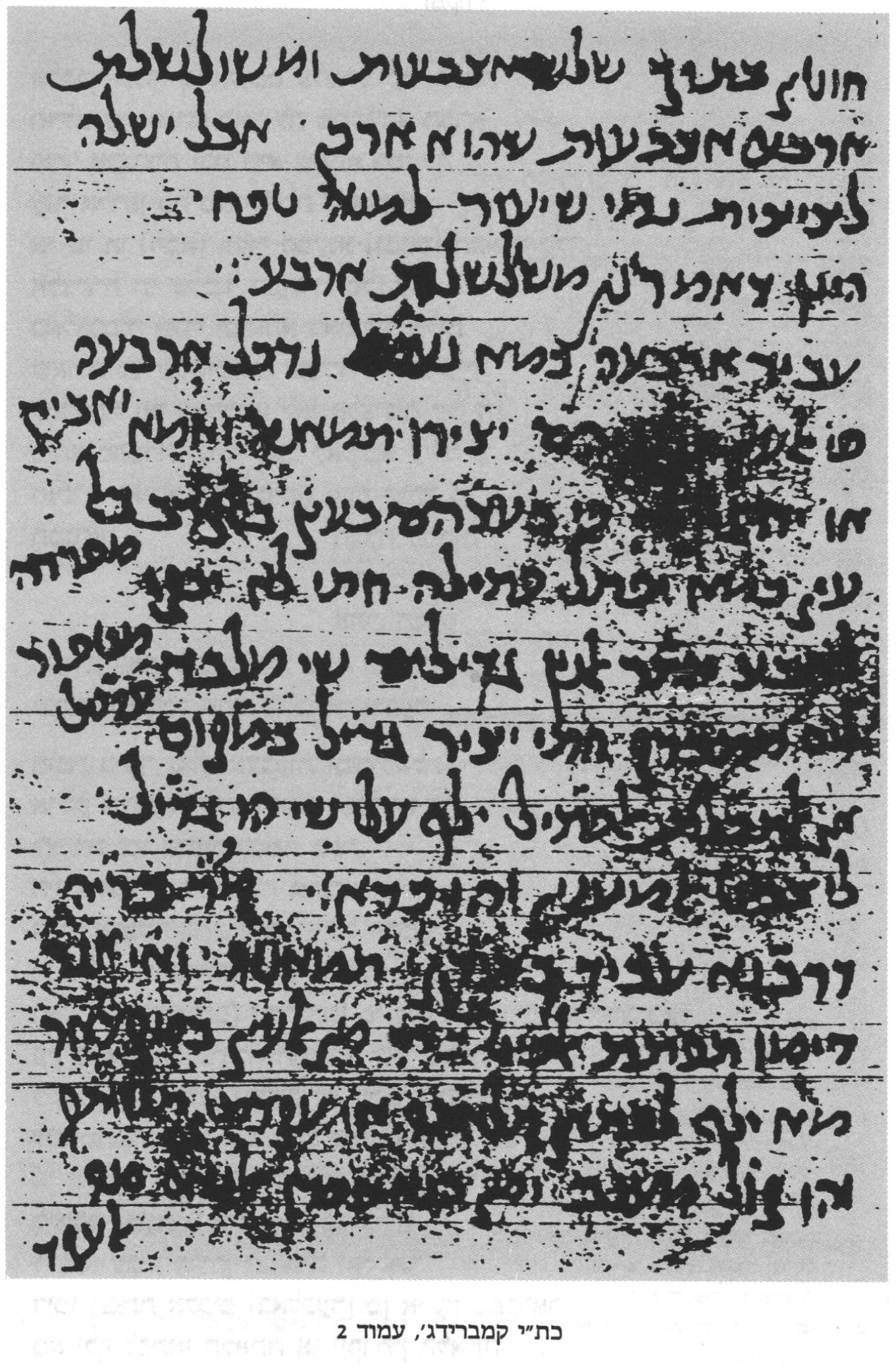 [מקור]
אלטרף אלדי פי אלוסט אלמתני עלי ראסה
תדלא .עלי וג’הה קאל לה מתעג’בא הכדא
פרץ’ אלציצית יבת היא שעתא רמי לה
ענד אלדפן בה מאי ציצית דשמענא
אי שי הו [הכא] אלדי סמענא [נסמע] תבארך עלי
אלציצית הי שלבגד וכנ[פיה של] עור
כאלאכסיה אלדי יסיגוהא באלגלוד טלית
שאולה כל שלשים יום פטורה מן הציצית
לחראסה חק צאחבהא לאן אלציצית על[יה]
פיהא מפסדה לגונה סבב לאקוטא עליה פי כזקהא
ואיצ’א לאנהא תציר פיהא אעין תנקץ מן
תמנהא: תכלת ממקום
אחר מציצית
אחר. ושלש
טפחים שאמרו בית הלל מפח מארבעה
אצבעות שלכל אדם. הלכתא ארבעה
חוטין בתוך שלש אצבעות ומשולשלת
ארבע אצבעות שהוא ארכן אבל יש לה
לציצית נמי שיעור לממה מפח.
הינו דאמרינן משלשלת ארבע:
עביד ארבעה כמא נעמל נדכל ארבעה
פי אלעין [ונתניהם] יצירו תמאנה ואמא ואביק
(או) [אי] (ידרנהם) [ידרגהם] פי בעצ’הם בעץ’ באלקרב באל
עין כמא יפתל פתילה חתי לא יבקו מפרדה
לתבע את’ר אלנץ גדילים שי מלבד מטפור
לים מתפרק חתי יציר גדיל במקום פתיל
אן אלתכלת אלפתיל ילף עלי שי הו גדיל.
ליצ’בט אלמענין והו כדא. מר בריה
דרבנא עביד כדידן תמאניה ואי אגר
דימו תפתת אלכיט [באלבעד] מן אלעין במקדאר
מא ילף לפתאן תלאתה או עקדתין תלאתה
והו קול מענב ומן הנא אכדו אלנאם מה אלעקר
[תרגום]
השפה אשר באמצע הכפל על ראשו
ותלויה על פניו אמר לו בתמיהה איך
מתקיימת מצות ציצית היא שעתא רמי לה
נתנם בצד [1] מאי ציצית דשמענא [2]
איזה דבר שמעתי שתברך על
הציצית. הי שלבגד וכנפיה של עור [3]
כ”אכסיה” שמקיפים אותה בעור. טלית
שאולה כל שלשים יום פטורה מן הציצית [4]
לשמור זכות חברו שהציצית בה
הפסד הוא שהוא סיבה לניקובה כשמנתקן
וגם מפני שגורם על ידי הנקבים הנעשים בה פחת
בערכה. תכלת ממקום
אחר [5] מציצית
אחר. ושלש
טפחים שאמרו בית הלל טפח מארבעה
אצבעות שלכל אדם הלכתא ארבעה
חוטין בתוך שלש אצבעות ומשולשלת
ארבע אצבעות [6] שהוא ארכן אבל יש לה
לציצית נמי שיעור למטה טפח
היינו דאמרינן משולשלת ארבע.
עביד ארבעה [7] כמו שאנו עושים נכניס ארבעה
בנקב ובהכפלתם יהיו שמונה ואביק
שיכרכם זה בזה בקירוב [8]
לנקב כמו שפותלים פתילה עד שלא ישארו מפורדים
לקיים מה שנאמר גדילים דבר מחובר קלוע
ולא מפורד עד שיהיה גדיל במקום פתיל
שהתכלת הפתיל המלופף על דבר הוא גדיל
וליישב שני הענינים כך הענין. מר בריה
דרבנא עביד כדידן תמאניה. ואי אגרד
דימו [9] ליפוף החום … מן הנקב בשיעור
שתים שלש לפיפות או שנים שלשה קשרים
והוא מאמר מענב. ומכאן סמכו האנשים שקושרים …
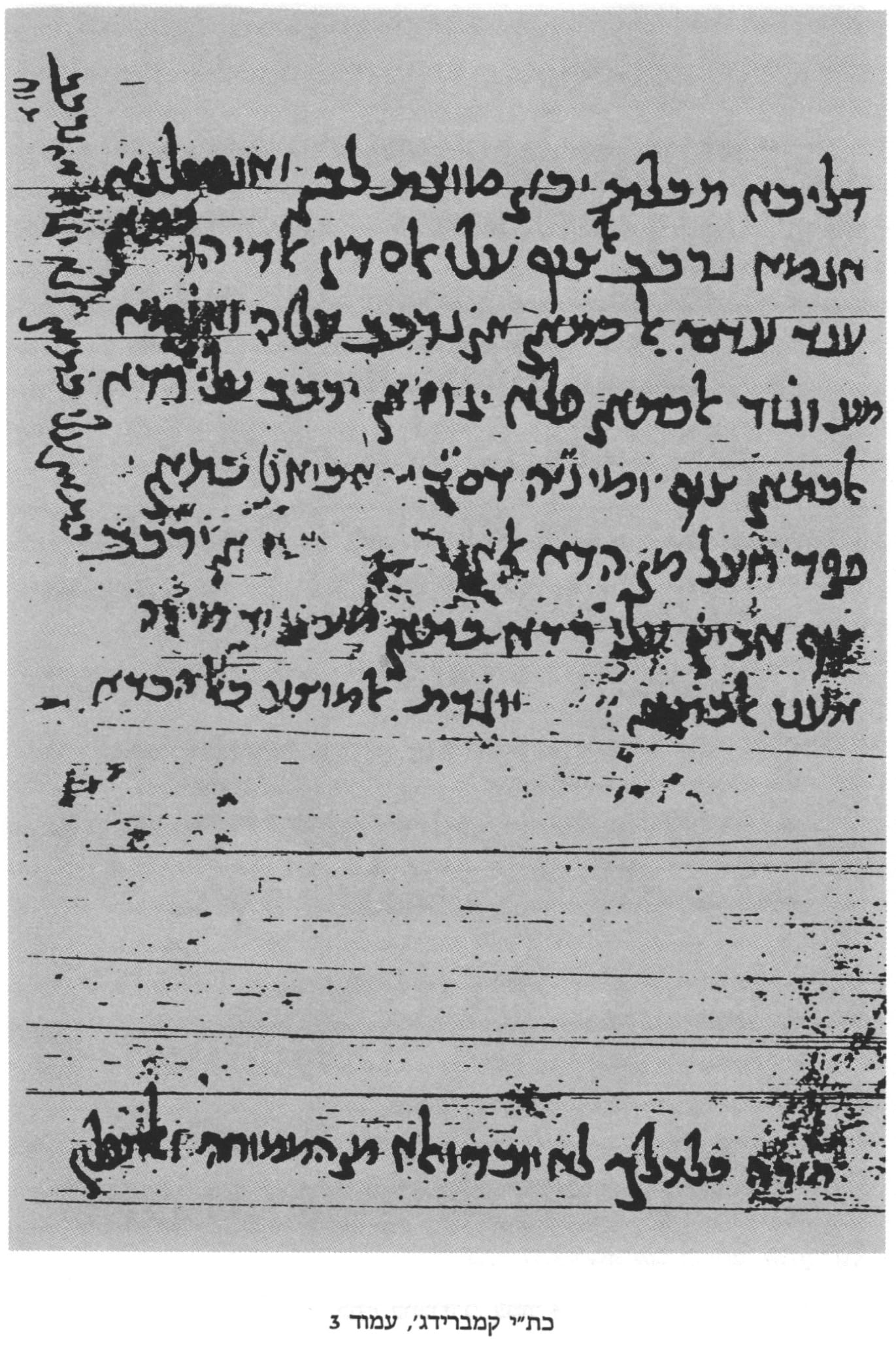
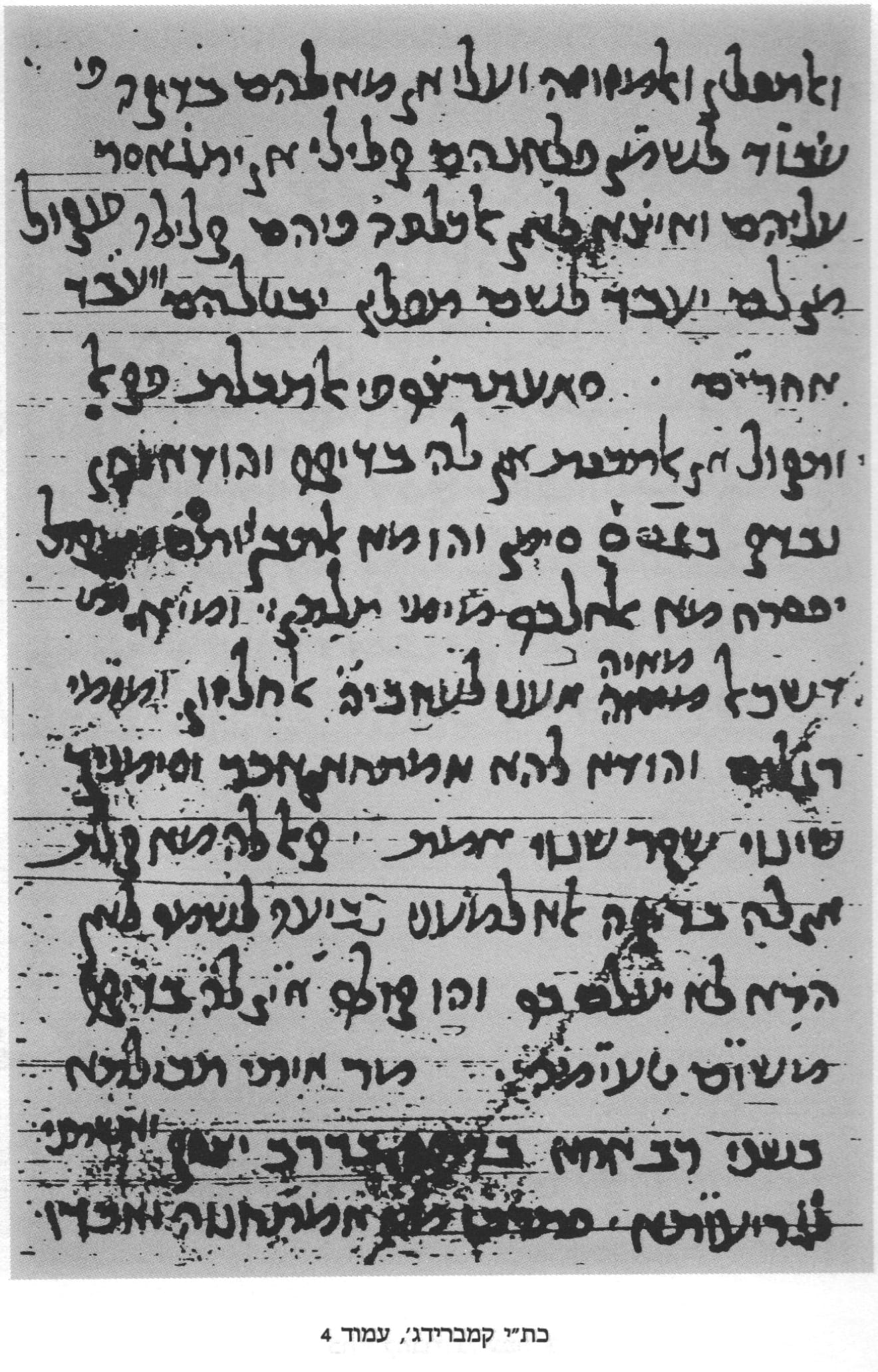
כתאן עלי כתאן ולא יגוז אן נרכב
[מקור]
דליכא תכלת יכון (מוצת) [מצות] לבן ואנפצלנא
אנמא נרכב אלצוף עלי אלסדין אלדי הו כתאן
ענד עדם אלכתאן אן נרכב עליה ואנמא
מע וג’וד אלכתאן פלא יגוז אן ירכב עלי רדא
אלכתאן צוף. ומיניה דםד[ין] אכיאט כתאן
פקד חצל מן הדא…………………….. ירכב
צוף אביץ’ עלי רדא כתאן מע וגוד מינה
אעני אלכתאן ווגדת אלמוצע כאל הכדא
תורה פלדלך לא יוכדו אלא מן (הממוחה) [המומחה] ואל תפלין
ואלתפלין ואלמזוזה ועלי אן מא להם בדיקה פי
עיבוד לשמן פלאנהם קלילי אן ימג’אסר
עליהם ואיצ’א לאן אלכלפה פיהם קלילו פנקול
מן לם יעבד לשם תפלין יבטלהם ויעבד
אחרים. פאעתרצ’ה פי אלתכלת פקאל
ותקול אן אלתכ[ל]ת אין לה בדיקה והודא נחן
ובדק בגס”ם סימן והו מא אלתבן ותם [מן קול]
יפסרה מא אלחלבה מימי תלתן ומיא
דשכאל מאיה אעני לעאביה אלחלזון ומימי
רגלים והודא להא אמתחאן אכר וסימניך
שינוי שקר שנוי אמת קאל לה מא קלת
(אן) [אין] לה בדיקה אלא למעני צביעה לשמה לאן
הדא לא יעלם בה והו קולה אין לה בדיקה
משום טעימה. מר איתי תכילתא
בשני רב אחא בדקה בדרב יצחק ואישתני
לגריעותא. פתרכו מא אמתחנוה ואכדו
פשתן בפשתן ולא יותר להטיל
[תרגום]
דליכא [10] תכלת תהיה מצות לבן ואנחנו
אומנם נטיל צמר בסדין שהוא פשתן
אם אין פשתן להטיל בו ואומנם
עם מציאות הפשתן לא יותר להטיל במלבוש
פשתן צמר. ומיניה דסדין חוטי פשתן
וכבר למדנו מוה……………………. יטיל [11]
צמר לבן במלבוש פשתן עם מציאות מיניה
היינו פשתן [12]
תורה [13] ולכן לא ילקחו אלא מן המומחה
והתפילין והמזוזה אע”פ שאין להם בדיקה
בעיבוד לשמן [14] אבל הם קל לבודקם ְ
וגם ההוצאות בהם קלות נאמר
מי שלא יעבד לשם תפילין יבטלם ויעבד
אחרים והקשו [15] בתכלת ואמרו
ותאמר שהתכלת אין לה בדיקה ואנו
בודקים בגס”ם סימן והוא מי תבן [16] ואחרים [מן האומרים]
יפרשו מי החלב מימי תלתן ומיא
דשכאל [17] מאיה היינו ריר החלזון ומימי
רגלים ועוד יש לזה בחינה אחרת וסימניך
שינוי שקר שנוי אמת אמר לו מה שאמרו
אין לה בדיקה לענין צביעה לשמה
שזה לא יודע בה והוא אומרו אין לה בדיקה
משום טעימה. מר איתי תכילתא
בשני רב אחא בדקה בדרב יצחק ואישתני
לגריעותא. ועזבו מה שבחנו..
Footnotes
- 1. ע”כ הוא שארית ביאור הגמ’ מנחות מא א בענין טלית בכפולה.
- מנחות מב א.
- שם מב ב, ומביאורו כאן משמע שמפרש לשון כנף שפת הטלית אשר מסביב לטלית, עיין בספר אות רד הערה 33.
- שם מד ב, ודין זה נלמד בגמ’ חולין קלו א מן הפסוק כסותך, וכאן המחבר נותן טעמא דקרא, ולפי דבריו יוצא שאם כבר היתה ציצית בטלית שאולה יש בלבישתה מצוה ומברך על כך, ועיין בספר אות שיג, ועיין בספרו של רב שמואל בן חופני (נספח א’) הערה 118, [ובהסבר זה יש ליישב את מעשה רב יהודה המובא בגמ’ חולין קי א שלא הטיל ציצית בבגדו מחמת שהיה שאול, וקשה שאעפי”כ יש בכך מצוה כנ”ל וגם מצוה על כל איש ישראל לקיים מצות ציצית אף שאינו מחוייב בדבר, עיין בספר אות שג, אך להסבר זה ניחא שאין לו רשות להפסיד בגד חברו].
- שם מא א, ומשמע קצת שתכלת הוא תכלת דווקא ולא מוסב על כל הציצית. עיין בספר אות רמה.
- שם מא ב, בכורות לט ב, וגירסתו כאן שונה מהגירסא אשר לפנינו, שלפנינו: וג’ שבית הלל אומרים אחת מארבע בטפח, שלפי גירסתנו ג’ של בית הלל מוסב על אצבעות ולפי הגירסא כאן זה מוסב על הטפחים וא”כ יש מקור שיש לאורך הציצית שיעור גם למעלה והוא ג’ טפחים כמו שמשמע מהמשך דבריו, ועיין גאוניקה ח”ב עמ’ 333 – ושיעור אורך הציצית וכו’ למטה עד ארבע אצבעות למעלה אפילו הארכוה עד זרת . נוהוא ג’ טפחים], ועיין בספר אות פז הערה 20.
- הוא דעת ר’ אחא בר יעקב במנחות מב א, וגירסתו כאן כגירסת רב שמואל בן חופני בספרו (נספח א) הערה 24 ע”ש [ודבריהם משלימים זה את זה] וממילא מפרש שר’ אחא בר יעקב עשה כמו שאנו עושים ומר בריה דרבינא אינו חולק עליו, וכמו שמפרש והולך, ובדברי המחבר כאן יש פירוש יפה לגמ’ מנחות לט ב — כתיב גדיל וכתיב פתיל וכו’ ורב סבר לעולם פתיל בעינן וההיא גדילים למניינא הוא דאתא גדיל שנים גדילים ארבעה עשה גדיל ופותליהו מתוכו, [והוא בשיטת הרמב”ם הולך שפתיל תכלת הוא החוט הכרוך על הלבן, ועיין על זה בספר אות כח, עה, עו.
- מוכח מדבריו שמטילים ציצית בשפת הטלית ממש [וכמו שזה מצויר גם בציור בא ועיין על כך בספר אות קצא הערה 12.
- מפרש כאן גמ’ מנחות לח ב — גרדומי תבלת בשרין וכו’ וכמה שיעור גרדומין וכו’ כדי לענבן, והפירוש הזה כמו שפירשתי בדעת הרמב”ם, עיין בספר אות סח [רק שסובר המחבר באן שאין די בכריכה אחת אלא בשתים או שלש כריכות, שהוא כדי לעשות חוליא אחת, ומה שכתב שתים או שלש ולא דווקא שלש הוא תמוה. אך מצאנו בעין זה בהמספיק לעובדי ה’ (דנה) לר”א. בן הרמב”ם עמ’ 272],
- כל הקטע הזה מפרש את הגמ’ מנחות מ א — תנו רבנן סדין בציצית ב”ש פוטרין וכו’ כיון דאפשר במינן לא כדריש לקיש דאמר ריש לקיש כל מקום שאתה מוצא עשה ולא תעשה אם אתה יכול לקיים את שניהם מוטב ואם לאו יבוא עשה וידחה את לא תעשה, ועיין בספר אות רכט-רלא שרבו הפירושים באיזה אופן אמורים דברי ריש לקיש, והמחבר כאן נוקט כפירוש רשב”א והמאירי, ע”ש הערה 61, וגם דעת המחבר כאן כדעת הרי”ף שמטילים חוטי פשתן בפשתן, עיין בספר אות רטו.
- מכאן יש לקרוא את המשפט שבשוליים.
- כאן באות עוד ארבע מילים ולא תרגמתין מחמת שאין להן הקשר.
- הוא סוף הפירוש על הגמ’ מנחות מב ב — ת”ר תכלת אין לה בדיקה ואינה נקחית אלא מן המומחה תפילין יש להם בדיקה ואין ניקחין אלא מן המומחה ספרים ומזוזות יש להן בדיקה וניקחין מכל אדם, וגירסתו בברייתא זו אינה כלפנינו אלא כגירסת הגאונים [עיין בספרו של רב שמואל בן חופני (נספח א’) הערה 142] שגורסים במקום תפילין ספר תורה ובמקום ספרים תפילין.
- עיין בספר אות קכג מה שפירש הרמב”ן לפי גירסת הגאונים בברייתא זו, ושם בדבריו שאין תפילין ומזוזות צריכים עיבוד לשמה לדעת תנא זה, אך המחבר כאן, למרות שגירסתו כגירסת הגאונים, מפרש שגם לתנא זה צריך עיבוד לשמה בתפילין ובמזוזות. עוד יש לציין שדעת המחבר שלא כדעת הרמב”ם, שהרמב”ם לא מצריך עיבוד מזוזה לשמה, עיין בספר אות קלח.
- מפרש המשך הגמ’ מנחות שם.
- הוא פירוש מה שנאמר בגמ’ שם מגביא גילא, ועיין רמב”ם ציצית ב ה שגם פירש כך את הדברים האלה, ועיין רגמ”ה ורש”י שם שפירשו פירוש אחר.
- איני יודע מה זה.
English Translation
Peirush on Perek HaTecheiles from the Genizah
I was also pointed to this manuscript by Dovid Sklir. This ksav yad, which comes from the Genizah, belongs to the Taylor-Schechter collection in Cambridge (47.65 14900), and in the Institute of Manuscripts in Yerushalayim, its number is 19632. The four pages in front of us are a pshat from an anonymous chacham on the Gemara in Perek HaTecheiles in Maseches Menachos. The mechaber brings a piece of Gemara and explains it, brings another piece and explains it, and this is how he goes through the whole ksav yad. The pshat we have here is incomplete, without a beginning and without an end. The second page follows the first, and the fourth follows the third, but the third does not follow the second.
In these pieces, there are important and new explanations that line up with certain shitos among the Rishonim (especially, the mefaresh here follows the shita of the Rambam), and this is where its chashivus lies. Also brought in it is a diagram of the tzitzis that also fits with the shitos of the Rishonim.
Below, the source and translation are brought as done by Rabbi Shmuel Kreuser. The places that were erased and the additions will be brought in square brackets, and dots that were used for abbreviations will be replaced with an apostrophe. (On many of the words brought from the Gemara, the sofer marked dots above them. These dots will not be brought in the print.)
The edge that is in the middle of the fold on his head and hangs over his face—he asked in astonishment: How is the mitzvah of tzitzit being fulfilled? At that moment, he was placing it. He set them aside. What is the tzitzit that I heard about? I heard something about blessing over the tzitzit. Regarding a garment whose corners are made of leather, like a covering that is surrounded by leather: A borrowed tallit is exempt from tzitzit for the first thirty days, to preserve his friend’s right, since the tzitzit can cause damage by creating holes when they are removed, and also because the holes reduce the garment’s value.
Techelet from another place, from another tzitzit. And the three handbreadths that Beit Hillel mentioned—a handbreadth is four fingers. For everyone, the halacha is four strings within three fingers, and they hang down four fingers, which is their length. But there is also a measure for the tzitzit below: one handbreadth. That is what we say: it should hang four.
We do four, as we do—insert four into the hole, and when doubled, they become eight. And ensure that they are twisted close to each other near the hole, like twisting a wick, so they are not left separated, to fulfill what is said: “Gedilim”—something connected, braided, and not separated, so it should be a braid instead of just a string. Because the techelet, the string wound around something, is a braid. And to reconcile both matters, that is how it is.
Mar, son of Ravina, did like us—eight. And if you tighten, wrap it snugly… from the hole, about two or three windings or two or three knots, and that is what is called tying. And from here, people rely on it when they tie…
Since there’s no Techeiles, the mitzvah will be with white strings. And
we can put wool on a sadin that’s linen
if there’s no linen to use for the fringes. But,
if linen is available, you shouldn’t put wool on a linen garment.
And from it, dasadin—linen threads.
And we already learned from there… that he should put [11]
white wool on a linen garment if there’s a situation from it—
meaning, linen [12].
When it comes to Torah matters, you should only take from a professional.
Tefillin and Mezuzos, even though they don’t need to be checked if the leather was processed l’shem Tefillin, they’re easy to inspect, and also the expenses for them are light. It’s said that if someone didn’t process the leather l’shem Tefillin, he should nullify them and make new ones.
By Techeiles, they asked a kasha: they said that Techeiles doesn’t have a way to check it. But we check it using the G-S-M sign, which is mei teven (straw water) [16]. Others explain that it’s mei chalav (milk water), mei tiltan (fenugreek water), and mei d’sh’kala [17]—that’s the slime from the chilazon (snail), and mei raglayim (urine). There’s also another method to check it, and your sign for remembering this is: Shinui Sheker Shinui Emes (Change Falsehood, Change Truth).
He told him: what they said that there’s no way to check it is talking about whether it was dyed l’shma—that you can’t know. And that’s what it means when it says there’s no checking, because it could have been used for Teima. Mar brought Techeiles in front of Rav Acha, and he checked it by Rav Yitzchak, and it changed for the worse. And they left off what they had tested…
English Footnotes
- This is the rest of the explanation of the Gemara in Menachos 41a about a folded Tallis.
- Menachos 42a.
- There 42b, and from his explanation here it sounds like he explains knaf to mean the edge of the Tallis that goes around it. See Sefer Os Reish-Daled, note 33.
- There 44b. This halacha is learned in Chullin 136a from the pasuk kesuscha. Here, the Mechaber gives a taam dekra (reason from the pasuk). According to his words, if there were already Tzitzis on a borrowed Tallis, wearing it is a mitzvah and you make a bracha. See Sefer Os Shin-Yud-Gimel and also Sefer of Rav Shmuel ben Chofni (Appendix A), note 118. [With this explanation, you can answer the story of Rav Yehuda in Chullin 110a, who didn’t put Tzitzis on his borrowed garment. It’s difficult since even so, there’s a mitzvah like we said, and every Yid has a mitzvah to do Tzitzis even if he’s not obligated. See Sefer Os Shin-Gimel. But with this explanation, it’s fine because he didn’t have permission to damage his friend’s garment.]
- There 41a. It sounds a bit like Techeiles is specifically Techeiles and not referring to the whole Tzitzis. See Sefer Os Reish-Mem-Hei.
- There 41b, Bechoros 39b. The version here is different from what we have. Our version says: “and three,” Beis Hillel says one out of four in a tefach. According to our version, the “three” of Beis Hillel refers to fingers, but according to the version here, it refers to tefachim. So, there’s a source that the length of Tzitzis has a shiur going upwards too, which is three tefachim, as it sounds from his words later. See Geonika vol. 2, p. 333, and the shiur of the Tzitzis length below until four fingers, and above even if they stretched it till a span, it’s three tefachim. See Sefer Os Pei-Zayin, note 20.
- This is the opinion of R’ Acha bar Yaakov in Menachos 42a, and his version here matches the version of Rav Shmuel ben Chofni in his Sefer (Appendix A), note 24. [Their words complement each other.] So he explains that R’ Acha bar Yaakov did like we do, and Mar Brei d’Ravina doesn’t argue on him, as he continues to explain. In the Mechaber’s words here, there’s a nice explanation of Menachos 39b: it says gedil and it says pesil, etc. Rav holds we always need pesil, and gedilim comes to count—gedil means two, gedilim means four. Make a gedil and twist it from itself. [This goes like the Rambam who holds that pesil Techeiles is the string twisted on the white. See Sefer Os Chaf-Ches, Ayin-Hei, Ayin-Vav.]
- It’s clear from his words that you put Tzitzis right on the edge of the Tallis [and like it’s drawn in the picture too]. See Sefer Os Kuf-Tzadi-Alef, note 12.
- He explains here the Gemara Menachos 38b—gardumei techeiles means leftover scraps of the threads, etc., and how much is gardumin, enough to tie them. This explanation is like how I explained the Rambam’s opinion. See Sefer Os Samech-Ches [but the Mechaber here holds that one winding isn’t enough; you need two or three windings, which makes one chulya. Why he wrote two or three and not exactly three is strange. But we find similar in HaMasphik L’Ovdei Hashem (Dana) by R’ Avraham ben HaRambam, p. 272].
- This whole section explains Menachos 40a—Tanu Rabbanan: A linen sheet with Tzitzis, Beis Shammai exempts, etc. Since it’s possible to use its own kind, it’s not like Reish Lakish who said, “Every time you find an aseh and a lo sa’aseh, if you can do both, good, but if not, the aseh pushes off the lo sa’aseh.” See Sefer Os Reish-Kaf-Tes to Reish-Lamed-Alef, where there are many explanations about how Reish Lakish’s words apply. The Mechaber here goes like the Rashba and Meiri’s explanation (see note 61). Also, the Mechaber’s opinion is like the Rif that you can put linen threads in linen garments. See Sefer Os Reish-Tes-Vav.
- From here, read the line in the margins.
- Here there are four more words, but I didn’t translate them since they have no context.
- This is the end of the explanation of Menachos 42b—Tanu Rabbanan: Techeiles doesn’t need checking and is only bought from an expert, Tefillin need checking and are only bought from an expert, Sifrei Torah and Mezuzos need checking and can be bought from anyone. His version of this Beraisa isn’t like ours but like the Geonim’s version [see Sefer of Rav Shmuel ben Chofni (Appendix A), note 142], where they read “Sefer Torah” instead of “Tefillin,” and “Tefillin” instead of “Sifrei Torah.”
- See Sefer Os Kuf-Chaf-Gimel where the Ramban explains according to the Geonim’s version of this Beraisa. There he says that Tefillin and Mezuzos don’t need to be processed lishmah according to this Tanna. But the Mechaber here, even though his version is like the Geonim, explains that even according to this Tanna, Tefillin and Mezuzos need to be processed lishmah. Also, the Mechaber’s opinion isn’t like the Rambam, who doesn’t require Mezuzos to be processed lishmah. See Sefer Os Kuf-Lamed-Ches.
- He explains the continuation of Menachos there.
- This explains what’s said in the Gemara there, megaviyah gila. See Rambam Hilchos Tzitzis 2:5, who explains it this way too. See Ragamah (Rabbeinu Gershom Me’or HaGolah) and Rashi there, who explained it differently.
- I don’t know what this is.


