Type of wearer: Posek, Rosh Yeshiva
Affiliation: Dati Leumi, Modern Orthodox, Yeshivish, Yeshivish Modern
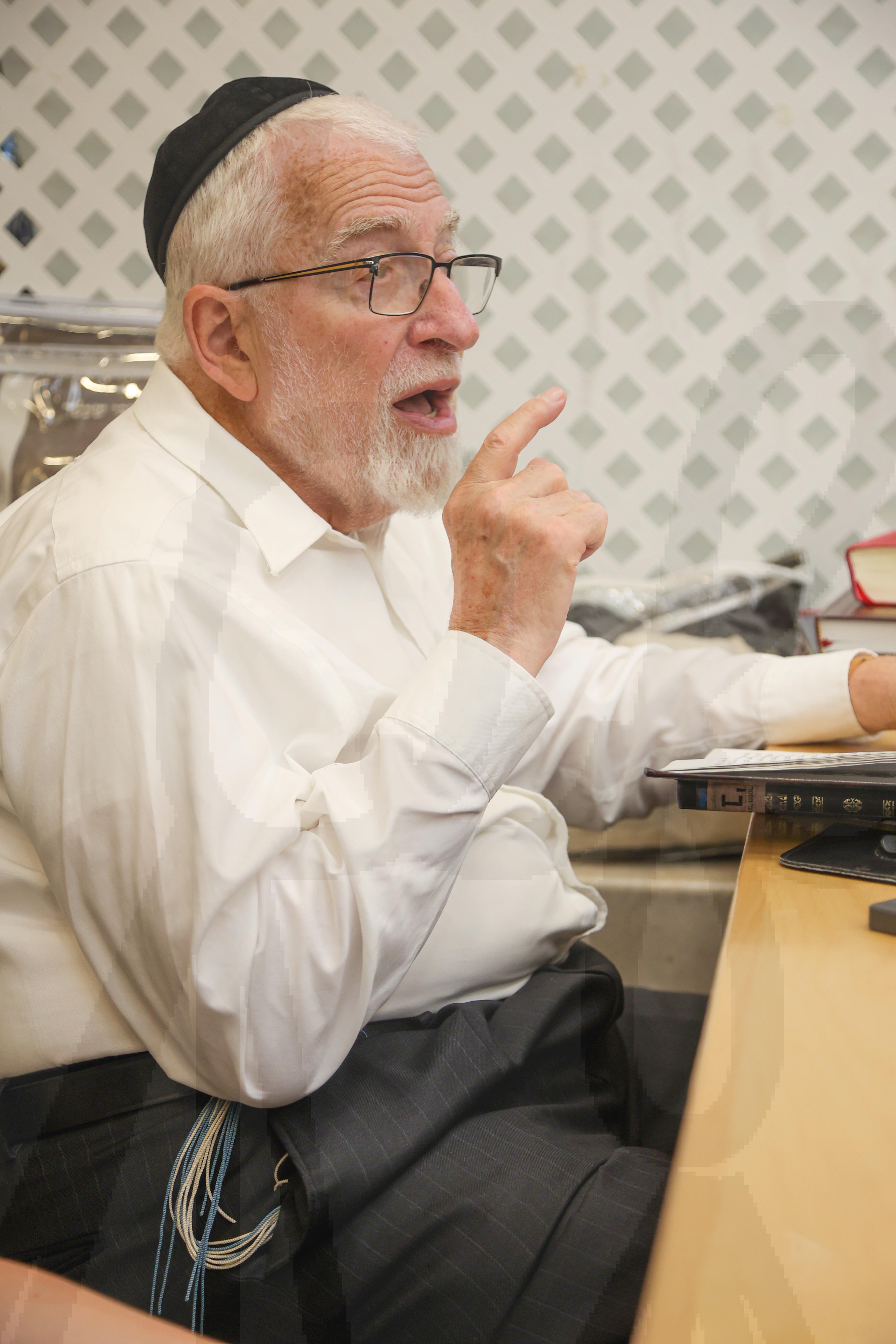
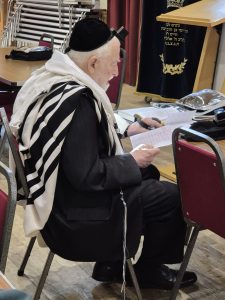
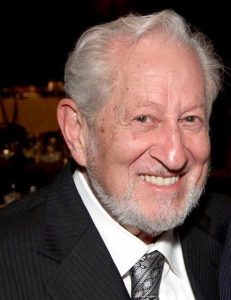
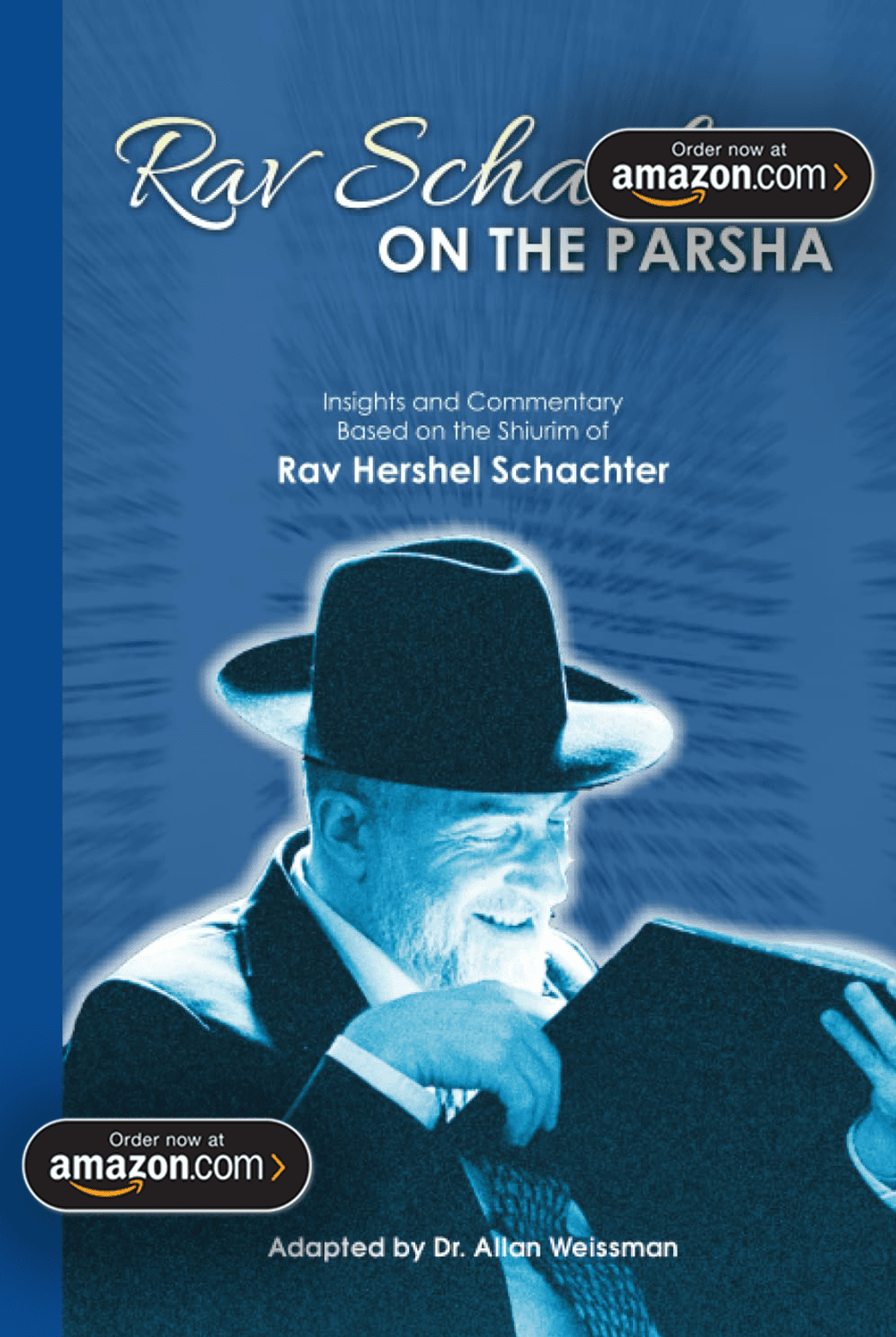
Most people who follow contemporary halacha already know Rav Hershel Schachter. He has been teaching at Yeshiva University for decades, and his psak is familiar from many areas of practical halacha, including his work with the Orthodox Union in kashrus.
His involvement with Techeiles goes back to the early years of the modern renewal. When the first sets became available, he bought one and started wearing it. Not as a novelty — as a considered halachic decision, based on the sugyos and the possibility of fulfilling the mitzvah more completely.
What makes his involvement particularly interesting is that his tying method has changed over time. That shift is itself worth noting.
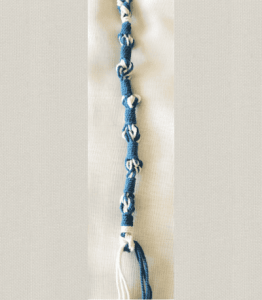
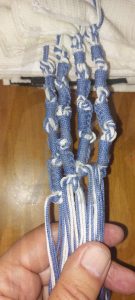
Originally he used a Tosafos-style tying: seven chulyos, each made of three winds, separated by double knots. The techeiles was framed by white winds at the beginning and end — a structure that incorporated the Rambam’s requirements while keeping things visually coherent.


His current method looks different. He now uses seven winds between double knots, with the wrapping beginning and ending in three white coils. This gives more weight to the Raavad’s reading of the Gemara in Menachos 39a — “not fewer than seven and not more than thirteen” — treating that as a total-winds count rather than requiring each chulya to be exactly three winds. The chulyos can be larger. The structure holds.
At some point during that transition, he advised people who had tied with his earlier method to shift to a 7-3-3-3-3-7-7 pattern. Fully reworking to seven winds per chulya would’ve made those string sets too short to work with, so this was a practical middle step.
There’s one small story attached to the shift to three white winds at the beginning and end. Rav Schachter has mentioned it came from a conversation with a fourteen-year-old at an NCSY event, during a learning session on Perek HaTecheiles. The kid raised a point. Rav Schachter thought about it and changed his practice. That’s the kind of story that illustrates something real about how he approaches psak: the sugya is what matters, not who raised the question.
The Baal HaIttur also figures in here. He’s makpid that the techeiles and lavan not simply run together at the end — there should be a distinct, visible lavan finish. The current tying, which ends with three white wraps, fits that requirement cleanly. You can actually see where the techeiles stops and where the lavan closes it out.
So none of this is arbitrary, and it’s not just splitting the difference between competing shittos. The Tosafos, the Rambam, the Raavad, the Baal HaIttur — multiple positions are being worked in simultaneously, and the result is still a normal, wearable tying. That’s pretty characteristic of Rav Schachter across the board: go into the sugya seriously, see what the Rishonim are actually saying, and pasken accordingly — even if that means revisiting something you were doing before.


For background on the underlying sugyos: Menachos 39a, Rambam Hilchos Tzitzis 1:7, the Ptil Tekhelet published materials, and Rav Schachter’s shiurim on YU Torah.
One interesting detail is the shift from one white wind at the beginning and end to three white winds. Rav Schachter has related that this point came up after a conversation with a fourteen-year-old high school student at an NCSY event while they were learning Perek HaTecheiles. The comment led him to think further about the structure of the tying. It is a small story, but it says something important about his approach: the sugya matters more than ego, and a good point is worth considering no matter who raises it.
There is also a Baal HaIttur piece in the background here. The Baal HaIttur is makpid that the techeiles and lavan should not just run into each other at the end. Rav Schachter’s current tying, which ends with three white wraps, fits well with that. The lavan is not just a token wrap. It is noticeable. You can see where the techeiles stops and where the lavan finishes it off.

So the tying is not random, and it is not just “splitting the difference.” You can see a few different shittos being worked in: Tosafos, the Rambam, the Raavad, and the Baal HaIttur. It is still a normal, wearable tying, but there is a lot packed into it. That is very much Rav Schachter’s style in general: learn the sugya carefully, see what the Rishonim are saying, and do what seems most correct — even if that means changing an earlier practice.
For more on the background of these discussions, see Menachos 39a, Rambam Hilchos Tzitzis 1:7, the materials published by Ptil Tekhelet, and Rav Schachter’s shiurim on YU Torah.


Tying Method
| Method | String Ratio | URL |
|---|---|---|
| Tosafot Schachter | Tosafot | Link |
Minhagim
| Minhag | Minhag SubGroup | Fully or Partially? |
|---|---|---|
| Ashkenazi | Full | |
| Chassidic | Full |