Debate Responses
Section 1 – Rishonim and early sources pointing to a snail-like Chilazon
Subject: Rishonim and early sources that associate Chilazon/Shablul with “snail”
TL;DR: Several Rishonim and early grammarians tie chilazon or shablul to the Arabic/Old French words for snail, distinguish land and sea snails, and describe “melting” creatures that match snail behavior, not generic worms.
Full answer:
A number of early sources explicitly connect chilazon or related terms to what in Arabic, Old French, and later European languages is simply called a snail:
-
R’ Yonah HaSepharadi Ibn Janach – Peirush L’Kithvei Qodesh
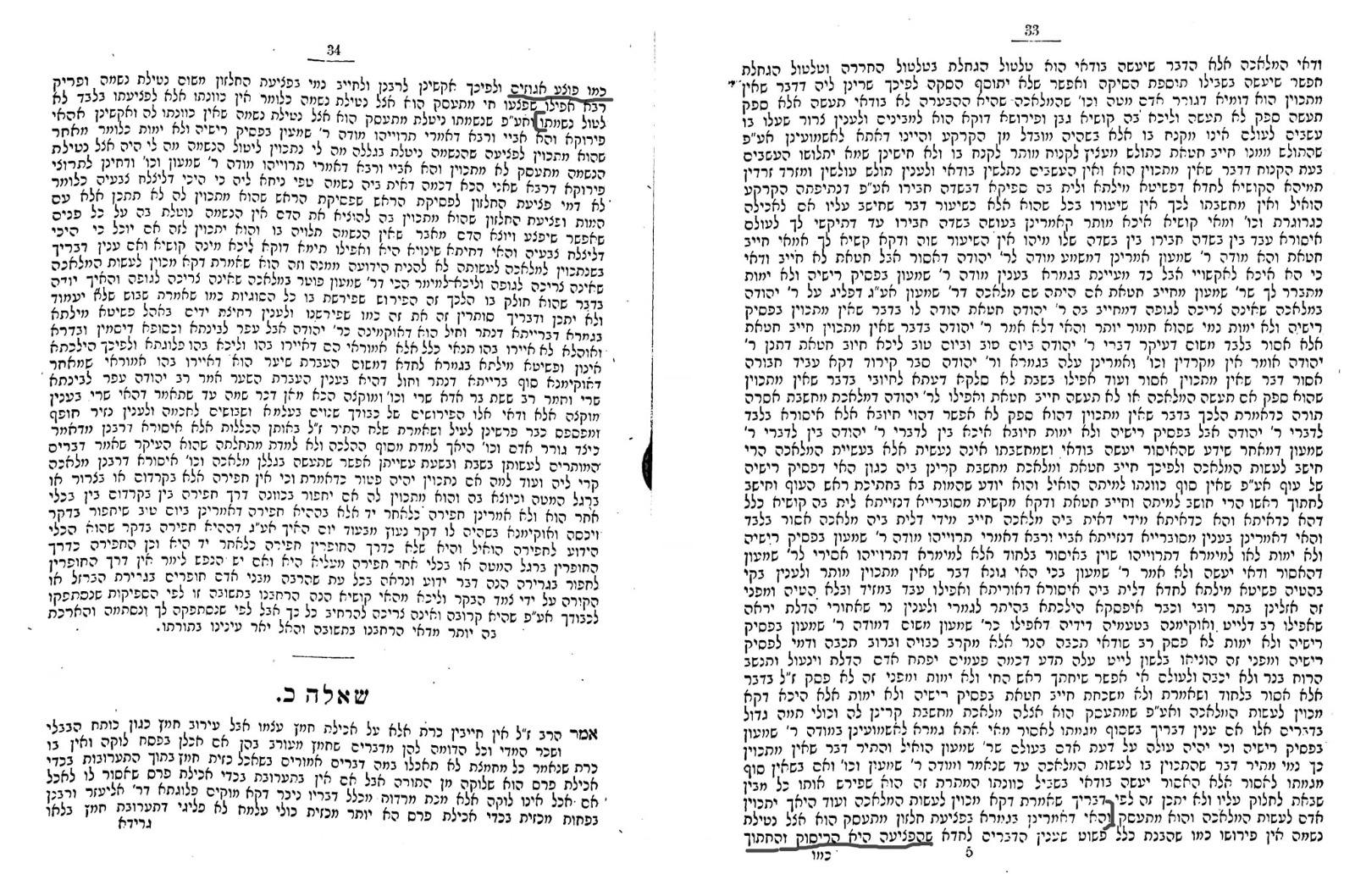
On the verse “כמו שבלול תמס יהלוך” (“like a shablul that melts as it goes”), Ibn Janach writes that this creature is close in his eyes to “the creeping thing that is called in Arabic chilazon.” In Arabic (and later Hebrew usage), ḥalazun / halzun is the standard word for snail.-
So: shablul ←→ Arabic chilazon ←→ snail.
-
-
Tanchum Yerushalmi
R’ Tanchum identifies chilazon with the Arabic term “al-ḥalzun”, again the ordinary word in Arabic for snail. This is a straightforward lexical equation: chilazon = halzun = snail. -
R’ Avraham ben HaRambam – on “potzea chilazon”
In his discussion of psik reisha and davar she’eino miskaven (Shabbos 75a), R’ Avraham ben HaRambam explains that “potzea” as applied to the chilazon means “ריסוק והחיתוך” – crushing and cutting, like cracking nuts with a mallet. Murex proponents read this as a natural description of breaking a hard shell to access the dye-bearing body. While this doesn’t spell out “snail,” it aligns very naturally with a shelled marine animal rather than a soft-bodied worm. -
Raavya (on Berachos 1:2)
The Raavya, in defining the time to say Krias Shema, explains the distinction between seeing techeiles and karti (blue wool and leek-green wool) as distinguishing between the Greek terms “purfirin” and “prisinan” – purpura (Tyrian purple/blue) and prasinon (leek-green). He notes:-
Prasa in Greek = leek
-
Prasinon = green
This doesn’t define chilazon directly as a snail, but it firmly situates techeiles in the same Greek color terminology used for mollusk dyes (purpura), which historically comes from snails.
-
-
Yad Ramah – Sanhedrin 91a, on the “mountain chilazon”
On the Gemara that describes a mountain having one chilazon one day and being filled with chilazonos the next after rain, Rashi identifies this with the chilazon ha-techeiles. The Yad Ramah rejects that and explains:-
This mountain chilazon is not the techeiles chilazon,
-
It is “a different species, created from dirt and water, called in Arabic ‘Halzum’”.
“Halzum” in Arabic means snails; the Yad Ramah is talking about land snails formed (in the ancient conception) from moist earth after rain. Crucially, he distinguishes: -
Land snails (Arabic Halzum) on the mountain,
-
Sea chilazon of techeiles – a different creature.
That implicitly sets up a land vs. sea snail contrast.
-
-
Ibn Ezra – on Shablul, Tehillim 58:9
On “כמו שבלול תמס יהלך” Ibn Ezra writes:“בדברי הקדמונים ז”ל: ברא שבלול והוא כדמות דג במים שימס בהליכתו”
“According to the early authorities (Kadmonim) z”l: the creation of the shablul is like that of a fish in the water, which melts as it goes.”This is the same “melting as it moves” picture found in Midrash and in Rashi’s description of snails that leave their shell, ooze slime, and eventually melt and die in their own secretion. Even if Ibn Ezra doesn’t spell out “snail,” the imagery is very close.
Postscript – Old French and later Romance languages
-
Rashi explicitly equates shablul with “Limtza / Limetz”, which in Old French means snail.
-
Radak translates Chomet as “Limsa,” clearly in the same lexical family.
-
In modern Italian, “lumaca” still means snail, again showing that this cluster of forms—limtza, limetz, limsa, lumaca—is a snail-word family.
Taken together, these sources show that multiple Rishonim and medieval grammarians:
-
Treat chilazon / shablul as cognate with Arabic and Old French words for snail, and
-
Explicitly distinguish land snails from the sea creature of techeiles.

Section 2 – Rashi, Limtza, and the use of “tolaas”
Subject: Does Rashi’s use of “tolaas” exclude a snail?
TL;DR: The anti-chilazon side argues that Rashi calls the chilazon a tolaas and only uses “Limtza” (snail) away from techeiles, so maybe the techeiles chilazon is something else. The pro-chilazon side responds that tolaas is a broad class term (like “vermes”), Rashi is not a dictionary, and once you include manuscript corrections and other Rishonim, it’s much more natural to read Rashi as including snails under tolaas.
Response Text:
Anti-chilazon argument:
-
Rashi only translates chilazon explicitly as “Limtza” (snail) in places that are not about techeiles.
-
In the critical sugyos about the chilazon ha-techeiles, he uses “tolaas” – worm.
-
Therefore, the techeiles chilazon could well be another creature entirely, and the non-techeiles chilazon cases might be a different usage of the word.
-
Earlier scholars like Michaelis, Lewysohn, and the Radzyner Rebbe assumed snail, but that assumption is not spelled out in Rashi on techeiles.
Pro-chilazon counter-arguments:
-
Rashi is not composing a zoological dictionary.
He comments where clarification is needed:-
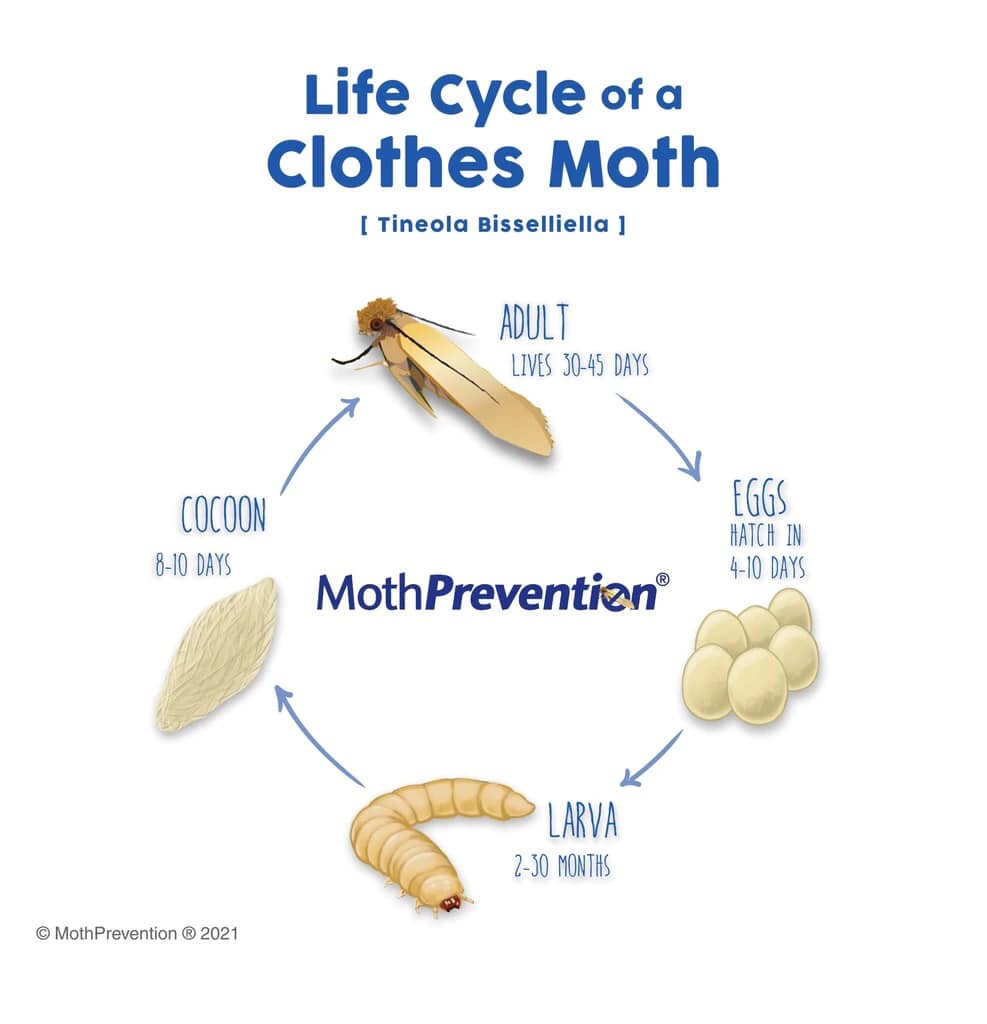
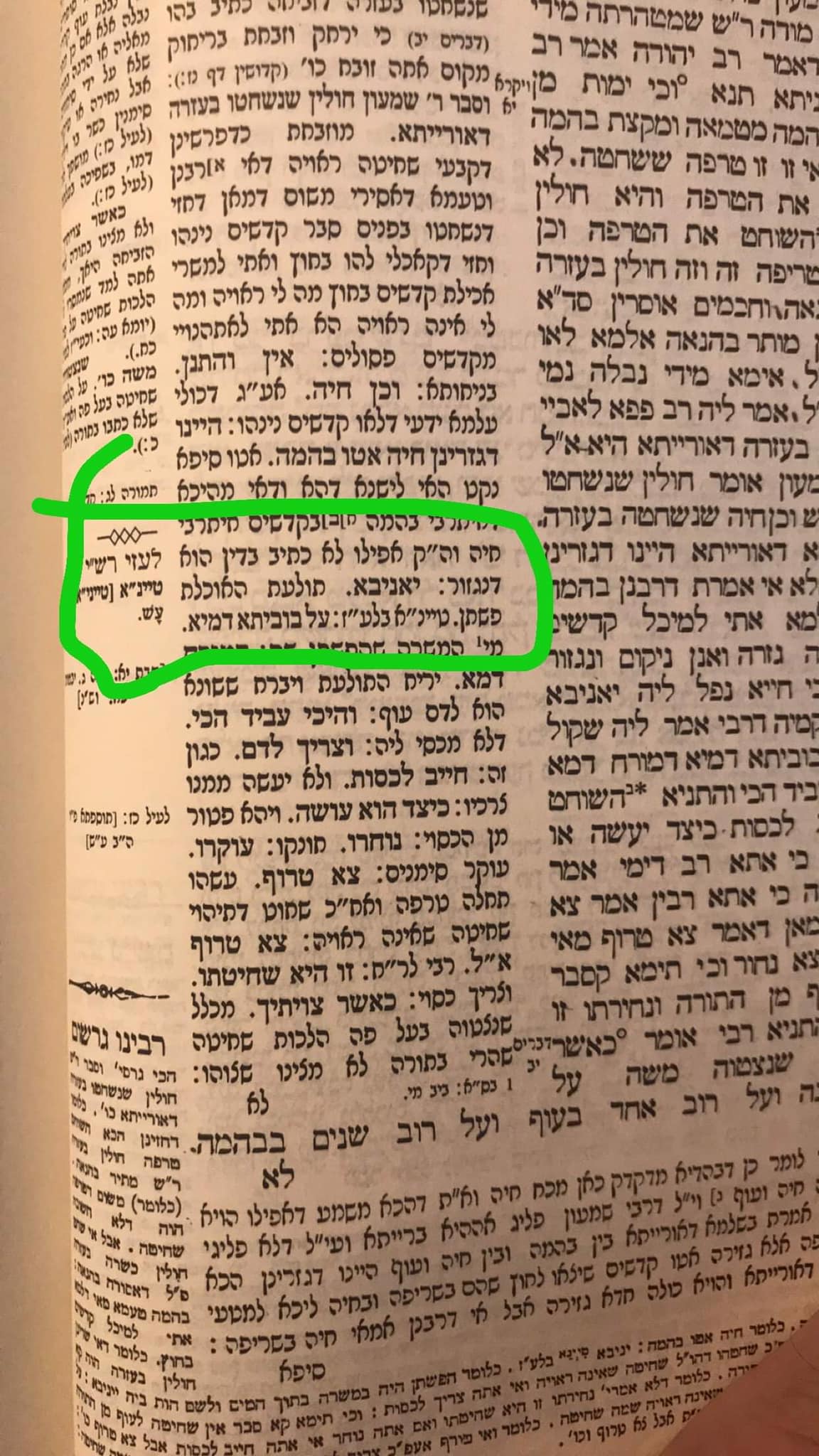
In Chullin 85b, Rashi explains “Yaniva” as a tolaas that is a moth.
-
That shows tolaas can be a broad category term (“larva-like creature”), with finer species detail supplied where necessary.
-
-
Tolaas can describe a life-stage or component, not the whole species.
-
In places where Rashi uses tolaas but the creature is more complex (e.g., a moth), he is often pointing to its larval / worm-like phase.
-
Saying “Rashi calls it a tolaas” doesn’t prove it’s not a snail-type creature; it may be focusing on one aspect or stage.
-
-
Shablul is almost always understood as a snail.
-
In Lashon HaKodesh, shablul is consistently treated as snail.
-
In several languages, the terms for “worm,” “maggot,” and “snail” overlap, or at least share roots.
-
The word “chilazon” never appears in Tanach and is probably borrowed (Aramaic / regional), sharing a lexical pool with Arabic ḥalazun.
-
-
Rashi chooses when to spell out the Old French term.
-
Rashi spells “Limtza / Limetz” (snail) in sugyos where halachic understanding depends on recognizing a particular creature.
-
It is highly implausible that in all those places chilazon means “snail,” but just in the context of techeiles it secretly means something completely different.
-
The simpler reading is: whenever he doesn’t say otherwise, his regular usage of Limtza/Limetz-snail stands behind the word chilazon.
-
-
Additional Rishonim support the snail reading.
-
Once you factor in Ibn Janach, Tanchum, Ibn Ezra’s shablul, the Yad Ramah’s Halzum, and Rashi’s Old French glosses, you have a solid cluster of sources pointing toward snail-type creatures.
-
The pro side argues: a handful of explicit snail associations plus the corrected Rashi texts outweigh a literalist reading of tolaas as “earthworm only.”
-
Thus, the tolaas wording in Rashi is best seen as category-level language, not a decisive zoological exclusion of snails.
Images



Section 3 – Tolaas as a Broad Zoological Category
Subject: How pre-modern “worm” classes can include snails
TL;DR: Pre-modern science often grouped very different slimy/soft-bodied creatures under one “worm” class. Analogously, tolaas can be a broad class including slugs and snails, with chilazon as a more specific term inside that category.
Response Text:
A key pro-chilazon argument comes from the history of zoology:
-
“Tolaas” ≈ broad “slimy creature” category.
-
A slug is basically a snail without a shell.
-
Anything worm-like, larval, or slimy could easily fall under tolaas in Hazal’s language.
-
-
Linnaeus and the class “Vermes.”
-
In Linnaeus’s Systema Naturae, the class “Vermes” (worms) encompassed creatures we’d never group together today. Under “Vermes” he included:
-
Intestina: earthworms, roundworms, leeches, hagfish, etc.
-
Mollusca: slugs, sea slugs, polychaetes, sea mice, jellyfish, starfish, sea urchins.
-
Testacea: clams, cockles, nautiluses, snails, serpulid worms.
-
Lithophyta: various corals.
-
Zoophyta: bryozoans, Hydra, sea pens, tapeworms, etc.
-
-
All of these wildly different creatures were once lumped into a single “worm” class.
-
-
Analogy to tolaas and chilazon.
-
The pro side suggests that “tolaas” functions like “Vermes”: a wide class of creepy-crawly, slimy beings.
-
“Chilazon” is then a more precise term inside that class, referring to the helix-bearing animal from which techeiles is extracted.
-
On this reading, Rashi’s use of tolaas for chilazon is perfectly compatible with the chilazon being a snail. It tells you the broad class; the more specific identity comes from the word chilazon itself and its cognates.
Section 4 – “Limon / Nimin” and the Misprint Issue
Subject: Do Rashi’s other “chilazon” glosses weaken the snail case?
TL;DR: The anti-chilazon side tries to show chilazon being used for non-snail things (Limon, Nimin), but manuscript evidence and a dedicated Laaz sefer show those are misprints for “Limetz” — Rashi’s snail word — which actually strengthens the snail reading.
Response Text:
Anti-chilazon side’s point:
-
In two other sugyos, Rashi appears to use chilazon in ways unrelated to snails:
-
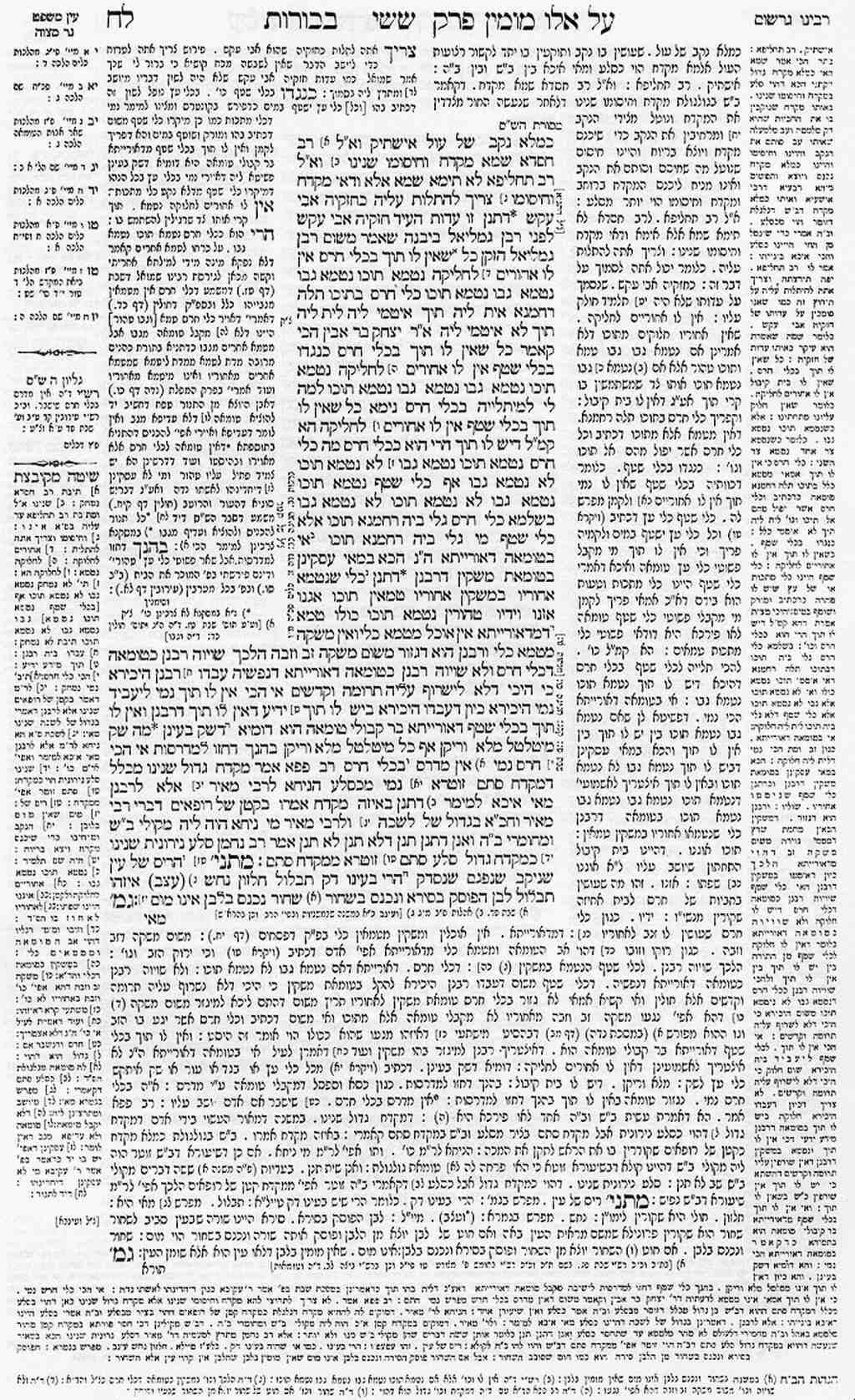
Bechoros 38a: Rashi describes an illness called “Limon”, linked to slime, in connection with chilazon.
-
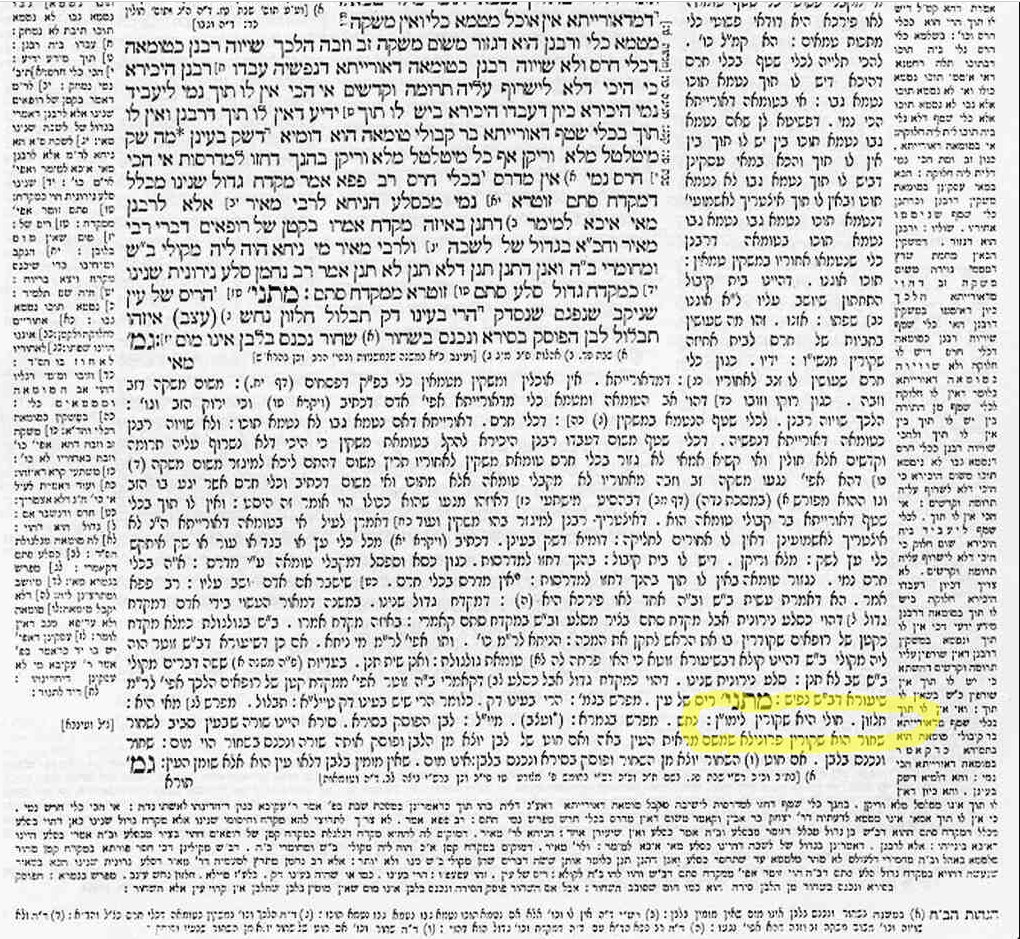
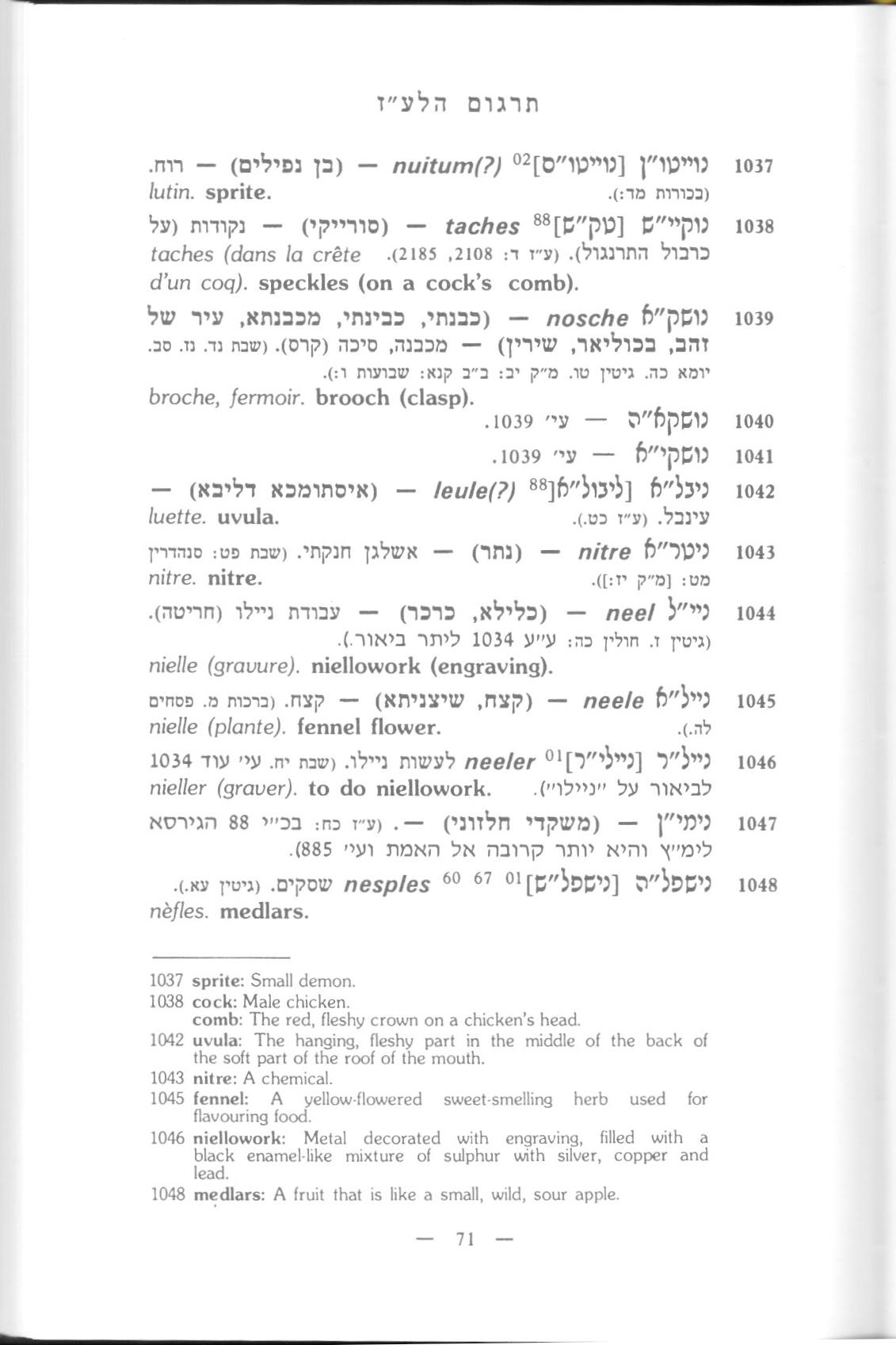
Avoda Zara 28b: On “Mishkedei Chalzonei,” Rashi uses the term “Nimin.”
-
-
This suggests that the word chilazon might have multiple, inconsistent referents, which weakens the idea that it has one clear snail meaning.
Pro-chilazon response:
-
These are printing errors, not Rashi’s original words:
-
Manuscript evidence shows both places should read “Limetz”, not “Limon” or “Nimin.”
-
The Vilna Shas preserved the misprints, which then spread.
-
-
The sefer on Rashi’s Laaz explicitly:
-
Identifies “Nimin” as a corruption of “Limetz”,
-
States that restoring “Limetz” is “closer to the truth.”
-
Once corrected, both sugyos become additional instances of Rashi using Limetz, his Old French word for snail, in chilazon-related contexts.
Instead of undermining the snail reading, these sugyos — properly restored — add two more data points to the snail side of the scale.



Section 5 – R’ Avraham ben HaRambam and Potzea Chilazon
Subject: What does “crushing and cutting like nuts” tell us about the chilazon?
TL;DR: The anti-chilazon side insists R’ Avraham ben HaRambam never calls the chilazon a snail and even calls it a “fish,” while the pro-chilazon side points out that describing potzea as “crushing and cutting like nuts” is naturally read as breaking a shell.
Response Text:
Anti-chilazon presentation:
R’ Avraham ben HaRambam, in a long teshuva about psik reisha and davar she’eino miskaven, uses “potzea chilazon” as a case study:
-
He explains that potzea chilazon is classified as misasek with respect to killing, because the intent is to take its blood for dye, not to kill it.
-
He defines “potzei” as:
“ריסוק והחיתוך – crushing and cutting/incision,”
like cracking nuts in Mishnah Shabbos 17:2. -
He then notes:
-
Potzea is not like chopping off a head.
-
When you decapitate, your desired action necessarily kills the creature.
-
With potzea chilazon, you seek to extract blood.
-
You can be potzea a limb, take blood, and not kill the chilazon; this is done to keep the color clear.
-
Since death is not inevitable, the usual psik reisha logic doesn’t apply.
-
The anti-chilazon side stresses:
-
Pro-chilazon writers argue that comparing potzea chilazon to smashing nuts implies breaking a shell, which fits a snail.
-
But R’ Avraham gives two aspects — crushing and cutting.
-
He explicitly discusses taking blood from a limb, which fits incision more than shell-smashing; shells don’t have “limbs.”
-
When R’ Avraham actually describes the species in a techeiles context, he writes:
“You obtain this color in wool by dyeing it with the blood of a fish that grows in the sea” – “דם דג שגדל בים”.
So, he calls it a fish, not a snail.
The anti-chilazon side concludes:
-
R’ Avraham does not explicitly identify the chilazon as a snail.
-
The point is not that he cannot be referring to a snail, but that he never says so.
Pro-chilazon counter:
-
The pro side argues that “ריסוק וחיתוך” (crushing-and-cutting) should be read as a single integrated act — not two unrelated options.
-
The analogy “like potzea nuts” conjures exactly the picture of:
-
Smashing a hard shell,
-
Splitting it to reach the inside.
-
-
That description fits a shelled creature (such as a marine snail) extremely well.
-
Calling it a “fish” in another context can be understood as:
-
Using “fish” broadly for small sea creatures (as in k’min dag katan), or
-
Emphasizing its aquatic nature, not its exact taxonomy.
-
In summary:
-
Everyone agrees R’ Avraham ben HaRambam does not explicitly say “snail.”
-
The disagreement is whether his “crushing and splitting like nuts” language implicitly supports a shelled chilazon.
Section 6 – Ibn Ezra on Shablul: Snail, Worm, or Something Else?
Subject: How much can we get from Ibn Ezra’s comment to Tehillim 58:9?
TL;DR: The anti-chilazon side claims Ibn Ezra never says “snail” and can be read as describing a sea-worm drawing on Midrash; the pro-chilazon side argues he is clearly echoing Menachos (“beriaso domeh l’dag”) and is part of the snail-leaning lexical tradition.
Response Text:
Anti-chilazon analysis:
Tehillim 58:9 says:
כְּמ֣וֹ שַׁבְּלוּל תֶּ֣מֶס יַהֲלֹךְ –
“Like a shablul that melts away as it walks…”
-
Rashi there: “Yesh poshrim Limtza” – some say it is a snail.
-
Ibn Ezra writes:
“In the words of the early authorities (Kadmonim) z”l: the creation of the shablul is like that of a fish in the water that melts as it goes.”
The anti-chilazon side asks: Which Kadmonim?
They point to Bereishis Rabba 51:1:
“Like this kilai/silai limatsa, like a shilshul that melts in its own excrement.”
They then survey the commentaries:
-
Eitz Yosef (with a variant reading that replaces shilshul with limtza):
-
Describes various sheratzim that are types of shablul, which, when they leave their shell, exude slime and excrement until they melt and die.
-
This parallels Rashi in Moed Katan 6b on shablul, which is explicitly a snail melting after leaving its shell.
-
-
Maharzu keeps the girsa with “shilshul” and notes:
-
Shilshul is the smallest creature in the sea, citing Chullin 40b.
-
Rashi in Avoda Zara 42b and Chullin 40b defines shilshul as a tolaas (worm).
-
So, the anti-chilazon side highlights two tracks:
-
A snail track: shablul/limtza leaving a shell and melting (Rashi, Eitz Yosef).
-
A worm track: shilshul as a small sea worm (Maharzu, Rashi’s tolaas).
They note:
-
The snail-reading commentaries do not stress the sea.
-
The worm track (Maharzu) does explicitly put the creature in the sea.
Returning to Ibn Ezra:
-
He describes shablul as “k’dmus dag b’mayim” – like a fish in the water that melts.
-
He doesn’t say “snail” or “worm” in so many words.
-
The only clear reference we’ve seen that connects shablul to the sea explicitly is this Maharzu line via shilshul; Ibn Ezra may be drawing that imagery, but that points to sea worms as well as snails.
The anti-chilazon bottom line:
-
Ibn Ezra can be read as relying on the Midrash/Chullin worm track, not necessarily on chilazon in Menachos.
-
Therefore, it is overreaching to quote Ibn Ezra as “a Rishon who explicitly calls the chilazon a snail.”
-
He never says “snail”; his comment remains ambiguous.
Pro-chilazon counter-argument:
The pro-chilazon side responds:
-
Strong parallel to Menachos.
-
The phrase “ברא שבלול והוא כדמות דג במים” (“its creation is like that of a fish in the water”) strongly echoes “ברייתו דומה לדג” in Menachos, where the sugya speaks about the chilazon ha-techeiles.
-
Bereishis Rabba itself doesn’t mention fish language; Menachos does.
-
When Ibn Ezra says “Kadmonim,” he typically means Chazal in the Talmudic sense, not just Midrashic compilations as books.
-
-
Snail vs. worm is not a strict dichotomy.
-
A snail is essentially a worm-like body in a shell.
-
In ancient terminology, such creatures often share families of words; it’s not either “worm” or “snail” with modern precision.
-
-
Lexical family: chilazon, shablul, shilshul.
-
Chilazon: a helix-bearing creature, often understood as a snail; may also lend its name to rounded shapes or ailments.
-
Shablul: often interpreted as snail, particularly focusing on the soft body (sometimes contrasted with the shell).
-
Shilshul: a worm or slimy creature; the association with loosened bowels and excrement easily morphs into a term for worms/snails that melt in their own slime.
-
-
Authority of Ibn Ezra.
-
Ibn Ezra is explicitly presenting what the Kadmonim said about shablul; it is part of the mesorah of language.
-
We don’t second-guess his basic word identifications just because he uses poetic description instead of taxonomic Latin.
-
-
Reinforcing points about tolaas and Rashi.
-
The pro side emphasizes again that:
-
Tolaas can refer to a stage or component rather than a species.
-
Shablul is, in most sources, a snail word, and the lexical overlap in other languages supports that.
-
Rashi’s choice to spell out Limtza/Limetz in specific places is driven by halachic need, not by a hidden agenda to redefine chilazon in the techeiles sugyos.
-
-
So while the anti-chilazon reading stresses ambiguity, the pro-chilazon side sees Ibn Ezra as naturally fitting into a snail-leaning tradition, especially when cross-referenced with Menachos and the broader chilazon/shablul lexicon.
Section 7 – Yad Ramah, Halzum, Land vs Sea Snails, and the Acharonim
Subject: What Yad Ramah, etymology, and later authorities contribute to the chilazon debate
TL;DR: The anti-chilazon side uses Yad Ramah to separate a “snail” on the mountain from a “worm” of techeiles; the pro-chilazon side answers that Yad Ramah is distinguishing land vs sea chilazon within a helix-word family, and notes that major Acharonim and Gedolim clearly did not see Rashi’s “tolaas” as blocking a snail-based chilazon.
Response Text:
1. Yad Ramah’s reading of Sanhedrin 91a (anti-chilazon emphasis)
Sanhedrin 91a describes a mountain where:
“Today there is only one chilazon; tomorrow, after the rains, the whole mountain is full of chilazonos.”
-
Rashi identifies this chilazon as the techeiles chilazon, a worm from the sea that appears once in seventy years, whose blood is used for techeiles.
The Yad Ramah:
-
Cites this approach (calling the chilazon a worm used for techeiles).
-
Then explicitly rejects it:
“It does not appear correct in my eyes, for it makes more sense that this chilazon is not the one we speak of regarding techeiles, for several reasons…”
He argues:
-
How did the sea chilazon end up on the mountain?
-
If you say the rain clouds carried it up, then the proliferation the next day might be from more sea chilazon coming in, not from the first one.
-
You also can’t prove anything from something that appears only once in seventy years.
-
If you attribute the proliferation to its eggs, then those creatures are not formed from earth and water and therefore don’t demonstrate the point about creation from soil.
-
-
Yad Ramah’s conclusion:
“It is more reasonable that the chilazon here is not the one of techeiles, but another species created from dirt and water, which in Arabic is called Halzum.”
The anti-chilazon reading is:
-
The mountain chilazon is explicitly a snail (Arabic Halzum).
-
The techeiles chilazon, as described by Rashi and not rejected by Yad Ramah, is a worm.
-
This is taken as a proof that Yad Ramah differentiated: snail ≠ chilazon ha-techeiles.
2. Linguistic / etymological response (pro-chilazon)
The pro-chilazon side brings in philology:
-
The Classical Greek ἑλικών (helikōn) means helix-shaped, spiral.
-
This term was borrowed into Imperial Aramaic as חלזונא (chelazona) and appears in Syriac as ḥəlāzōnā.
-
The form חלזונא literally means: “the little thing (-ona) that has a helix.”
-
Over time, in Judeo-Aramaic and Arabic, the final aleph dropped:
-
Aramaic/Hebrew: חלזון (chilazon)
-
Arabic: ḥalazūn, the everyday word for snail.
-
From this perspective:
-
The core meaning of chilazon / halazun is a helix-bearing animal, i.e. something with a spiral shell – a snail or similar.
-
Worms do not have helix shells; snails do.
-
Yad Ramah, in calling the mountain creature “Halzum” in Arabic, is simply pointing out that both languages use the same helix-word for that kind of creature.
So rather than establishing that the techeiles chilazon is a worm and only the mountain one is snail, the pro side argues:
-
Yad Ramah is:
-
Severing the Sanhedrin chilazon from the techeiles sugya,
-
Identifying the Sanhedrin case as a land snail,
-
Leaving open what exactly the techeiles chilazon is, beyond its belonging to the same chilazon / helix family.
-
3. Acharonim and Gedolim (pro-chilazon emphasis)
The pro-chilazon side then points to later authorities:
-
Many Acharonim and Gedolim were fully aware of Rashi’s “tolaas” and of the Yad Ramah, yet:
-
Some identified the chilazon as a snail or clam (both non-worm).
-
The Radzyner Rebbe identified chilazon as a cuttlefish, also not a worm.
-
Major poskim who either supported or seriously considered such identifications did not dismiss them because Rashi used tolaas.
-
-
Later, R’ Yitzchak Herzog favored Janthina, another non-worm marine invertebrate.
-
In correspondence and analysis, the issue of “but Rashi said tolaas” is not treated as a decisive objection against non-worm candidates.
-
Many poskim who supported or at least did not oppose Murex trunculus as chilazon also clearly knew the Sanhedrin sugya and Rashi’s language but didn’t disqualify a snail on that basis.
The pro-chilazon conclusion:
-
In actual halachic analysis, from the 1600s onward, major talmidei chachamim did not treat Rashi’s “tolaas” as a show-stopper.
-
That practical mesorah strongly suggests that tolaas is not determinative of the species, and that the snail / mollusk identification remains firmly on the table.
4. Land vs Sea Chilazon and relevance of the sugya
Two final pro-chilazon points:
-
A simple harmonization is to say:
-
The mountain chilazon in Sanhedrin is a land snail (Halzum),
-
The techeiles chilazon is a sea snail.
-
Both share the same chilazon / halazun / helix word family, but differ in habitat and species.
-
-
Even taken on Rashi’s terms, the Sanhedrin sugya is not decisive for techeiles identification:
-
The Yad Ramah explicitly says that this Sanhedrin chilazon is not the techeiles one.
-
The creation-from-dirt theme and mountain habitat don’t match a mollusk like murex in any straightforward way.
-
Thus, this sugya is better seen as a separate case and not a direct description of the chilazon ha-techeiles at all.
-