

Debate Responses
Item
Although ארגמן is commonly translated as “purple dye”, according to all Torah commentators, ארגמן is in fact red (blood 219 or fiery red 220) – not purple. This is clear in the פסיקתא as well as many Rishonim 221. The Rambam, Ibn Ezra and others all say that ארגמן was produced from the insect called “lacca”222. Kerria lacca is a species of scale insect that secretes “Lac”, a scarlet resinous secretion (see Fig. 6 on page 106). The use of lac dye goes back to ancient times. It has been used in India as a skin cosmetic and dye for wool and silk. In China it is a traditional dye for leather goods. This red leather dye is
mentioned in the Gemara as well 223.
The Rishonim state that the color of ארגמן was quite similar to תולעת שני – the crimson dye called “kermes”224. Kermes is a red dye derived from the dried bodies of the females of a scale insect in the genus Kermes, primarily Kermes vermilio (see Fig. 6 on page 106). The
English color word crimson is derived from the word kermes, and many other languages have a word for “red” that is derived from the kermes name due to the widespread use of this dye in medieval times and the rich red color that it yields. 225
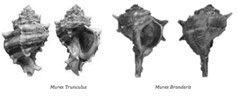
Unlike the above Rishonim, Philo and Josephus assume that the dye of ארגמן was derived from a shell-fish and not an insect.226. According to the Septuagint, ארגמן is translated as πορφύρα – porfύra, which would seem to indicate that ארגמן was derived from the purphura snail. Even if we were to accept that this is the source of ארגמן (and thereby reject the explanation of the Rishonim), it is likely that the snail used for ארגמן was the
Murex Brandaris. This species produces a reddish dye and was always used in antiquity to dye red-purple, as opposed to the Murex Trunculus that produces a blue dye and was used for תכלת . In archaeological digs of ancient dyeing sites, these two species are found in separate areas, since they were used for two separate and distinct colors – red and blue (see inset). 227
Pliny also refers to two distinct colors derived from the Murex; see above question (page 92).
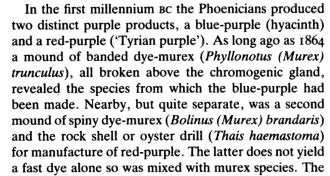
Furthermore, the violet-purple dye that the Murex Trunculus can produce is not
very stable. With simple exposure to sunlight prior to use, the dye will no longer produce
violet – only blue. Even after dyeing the wool violet (by lack of sunlight exposure), if the wool is boiled or steamed for a few minutes, it changes to blue. The permanent color of this dye certainly cannot be considered violet. (See Fig. 7 on page 106)
Perhaps this is what the Zohar means when it says that תכלת begins as a mixture of red and blue (i.e. purple), and only afterwards changes to pure blue228.
Bottom Line: According to the Rishonim, ארגמן was a red-dye derived from an insect. According to others it was derived from a sea creature – probably the Murex Brandaris that was recorded as the source of red-purple in those times.
Footnotes
219 אברבנאל )במדבר פרק ג( “וכבר ידעת שהארגמן הוא אדום מאד יותר מן התולע… בארגמן דומה לדם”.
220 משנת רבי אליעזר )פרשה יד עמוד 266 ( “למה ארגמן. שהוא דומה לאש.”
221 פסיקתא רבתי )איש שלום( )פיסקא כ – פ’ מתן תורה( “… אמר לו חזור לשמאלך, חזר וראה אנשים לובשים לבוש אדום, אמר לו מה אתה רואה, אמר לו אנשים לובשים לבוש אדום, אמר לו היא ארגמן…”. רמב”ם )כלי המקדש ח יג( “הארגמן הוא הצמר הצבוע אדום”, אברבנאל )שמות כה י( “והארגמן הוא המשי הצבוע אדום”. מצודת ציון )משלי לא כב( “וארגמן – צבוע בצבע אדום ושמו ארגמן”. וכ”כ רבינו בחיי )שמות כח ו( מאירי )יומא כג א( פירוש רבינו ישעיה הראשון וכן רלב”ג )אסתר א ו(, ספר השרשים לאבן ג’נאח )ערך ארגמן(, אבן עזרא )שמות כה, ד(, רד”ק )דברי הימים ב ב ו(.
222 פירוש המשנה לרמב”ם )כלאים פרק ט א( “ותכלת הוא הצמר הצבוע “אזרק”. וארגמן “ארגואן” והוא הצמר הצבוע ב”לך”. ותולעת שני הוא הצמר הצבוע בקרמז.” וכן בפי’ ר’ עובדיה מברטנורא )שם( ופני משה )שם ד”ה אין הכהנים(. ובהשגות הראב”ד חולק, “א”א לי נראה ארגמן ארוג משני מינין או משלשה צבעין על כן נקרא ארגמן.” וע’ כסף משנה, משנה למלך, רדב”ז ומהר”י קורקוס שכולם דחו פירוש הראב”ד. וגם הראב”ד מסתמא אינו חולק על הפסיקתא שארגמן הוא אדום, ורק בא לחלוק שארגמן נעשה מכמה מינים.
223 חולין )כח ע”א( “דקא בעי ליה לדמיה ללכא”, פירש”י: “ללכא – צבע עור אדום שקורין פרק”א.”
224 דברי הימים )ב פ”ב ו( “וְּעַׁתָה שְּלַׁח לִּי אִּיש חָכָם לַׁעֲשׂוֹת בַׁזָהָב וּבַׁכֶסֶף וּבַׁנְּחֹשֶת וּבַׁבַׁרְּזֶל וּבָאַרְּגְּוָן וְּכַׁרְּמִּיל וּתְּכֵלֶת” פירש”י: “ובארגון – זה ארגמן: וכרמיל – זו תולעת שני תדע שהרי לא נזכר כאן תולעת שני”. וכ’ הרד”ק: “ובארגון – כמו בארגמן, ותרגום ארגמן ארגונא והוא צבע אדום, וכרמיל הוא צבע אדום ג”כ אלא שארגמן הוא צבע אדום שקורין לאקא, וכרמיל הוא תולעת השני והוא צבע הכרמי.” וע’ אבן עזרא )שמות כה, ד( “וארגמן כדמות אדום, ובדברי הימים: ארגון )דה”ב ב, ו(, ובלשון ערבי ארגואן, וזה הצבע לא יהיה כי אם בצמר או במשי. ותולעת שני וכתוב ושני התולעת
)ויקרא יד, ו(, כמו מצור החלמיש )דבר’ ח, טו(, חלמיש צור )שם לב, יג(. והגאון אמר בו קרימ”ז כי הוא אדום, רק איננו כצבע הארגמן.”
225 Information about Lac and Kermes is from the following Wikipedia articles: Kerria Lacca, Lac, Kermes Vermilio.
226 Philo, (On the Life of Moses II, XVIII. 88), Josephus (Antiquities, Book III Ch. 7.7) “The veils, too, which were composed of four things, they declared the four elements; for the fine linen was proper to signify the earth, because the flax grows out of the earth; the
purple signified the sea, because that color is dyed by the blood of a sea shellfish; the blue is fit to signify the air; and the scarlet will naturally be an indication of fire.”
וכ”ה באברבנאל )שמות פרק כה( מלה במלה. וכ”מ בס’ מכבים א’ )ד’ כג(. וכ”ה התפארת ישראל )כללי בגדי קודש של כהונה( בשם חכם מאו”ה.
227 וע’ בתוס’ השלם עה”ת בשם המדרש )בראשית מט יג( “וזהו חלזון, ועושים ממנו כל מיני צבעים”. ויתכן שכוונתם שגם ארגמן עושים מסוג חלזון, ש”חלזון” הוא שם המין ואינו דוקא סוג אחת . כמבואר לעיל עמוד
228 זוהר )תרומה ח”ב קמט:( “תכלתא נפיק מגו ההוא גוון סומק וכד נחית לתתא אתרחק גוון סומק ועאל גו ההוא אתר דאיהו ימא ואצטבע גוון תכלא” )תרגום: “התכלת יוצא מתוך ההוא צבע אדום וכשיורד למטה מתרחק הצבע האדום ועולה לתוך מקום ההוא שהוא ים ונצבע בצבע תכלת”.(