Debate Responses
Agree Response
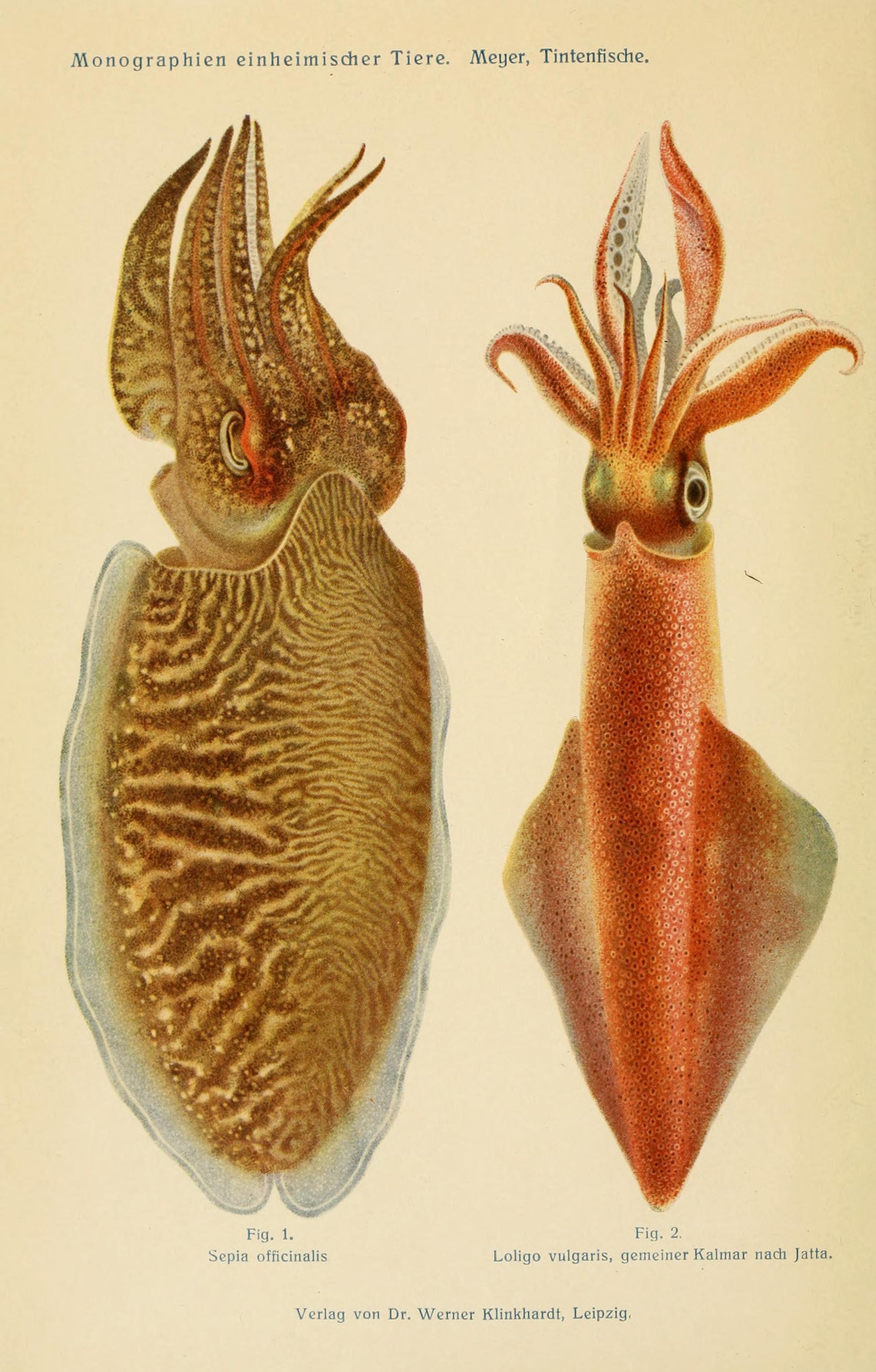
R’ Gershon Henoch Leiner was of the opinion that it literally had to be a type of fish that swam, and was preceded by German Rabbi Ludwig Lewysohn, who in 1858 published his take in Talmudic Zoology (Die Zoologie Des Talmuds: Eine Umfassende Darstellung Der Rabbinischen Zoologie, Unter Steter Vergleichung Der Forschungen Älterer Und Neuerer Schriftsteller) that, based on his understanding of the Rambam’s simanim, the Chilazon was a squid called cuttlefish (though he also was very critical of the Rambam and said in fact that the Rambam was wrong). The Maharsham, Rav Yehoshua Kutner (Ein Hatecheiles, p. 221), the Beis HaLevi (Ein Hatecheiles, p. 13) and the Chofetz Chaim discussed the Radzyner techeiles and therefore may have accepted the cuttlefish as a possible Chilazon. The most that can be hypothesized is that they were open to the chilazon being other marine creatures aside for a snail. The reason this is mentioned is that the purpura snail “Mesorah” has been passed down by lots of sources, including: Chavas Yair, Shiltei Giborim, R’ Yaakov Emden, Radal, Toafos Re’em, R’ Shamshon Refael Hirsch (Purpurschnecke), and others.
Linguistically speaking, in some places Rashi translates chilazon as limace, which is Old French for snail (Avodah Zarah 28b). While in modern French it translates as “slug” (as escargot has become the word for snail), Limace translated into Hebrew becomes Shablul, which strictly speaking is “snail.” As an aside, in Italian the word for snail is “lumaca.” In other places Rashi describes its body as that of a worm (Sanhedrin 91a); a snail is basically a worm, albeit with a shell.
When we go to the near-eastern languages it’s more explicit. Halzun in Arabic means “snail” with the creature inside the snail. In modern-Aramaic it’s Halzono. In Farsi it’s halazun.
One last one: Dr. Israel Ziderman holds that Techeiles’ main color is hyacinth. This is best supported when Chazal translated Techeiles into the Greek septuagint as “yakinthos.” Yakinthos and hyacinth linguistically sound very similar, and seems be one of the strongest indicators in terms of what color Techeiles should be. The problem is that hyacinth now is associated with a specific shade of violet, not blue. Hyacinth turns into including blue when we realize that the English word “blue” for Techeiles didn’t appear until the 14th-15th century Wycliffe Bible translation [1]. Further proof of hyacinth having blue in its umbrella term is from two places:
- Johannes Michaelis, an early 18th century philologist, was the first one to suggest that Techeiles came from a sepia, in this case the sepia loligo, which is a close cousin to the sepia officianalis, the cuttlefish. The color it would produce in his terms was hyacinth.
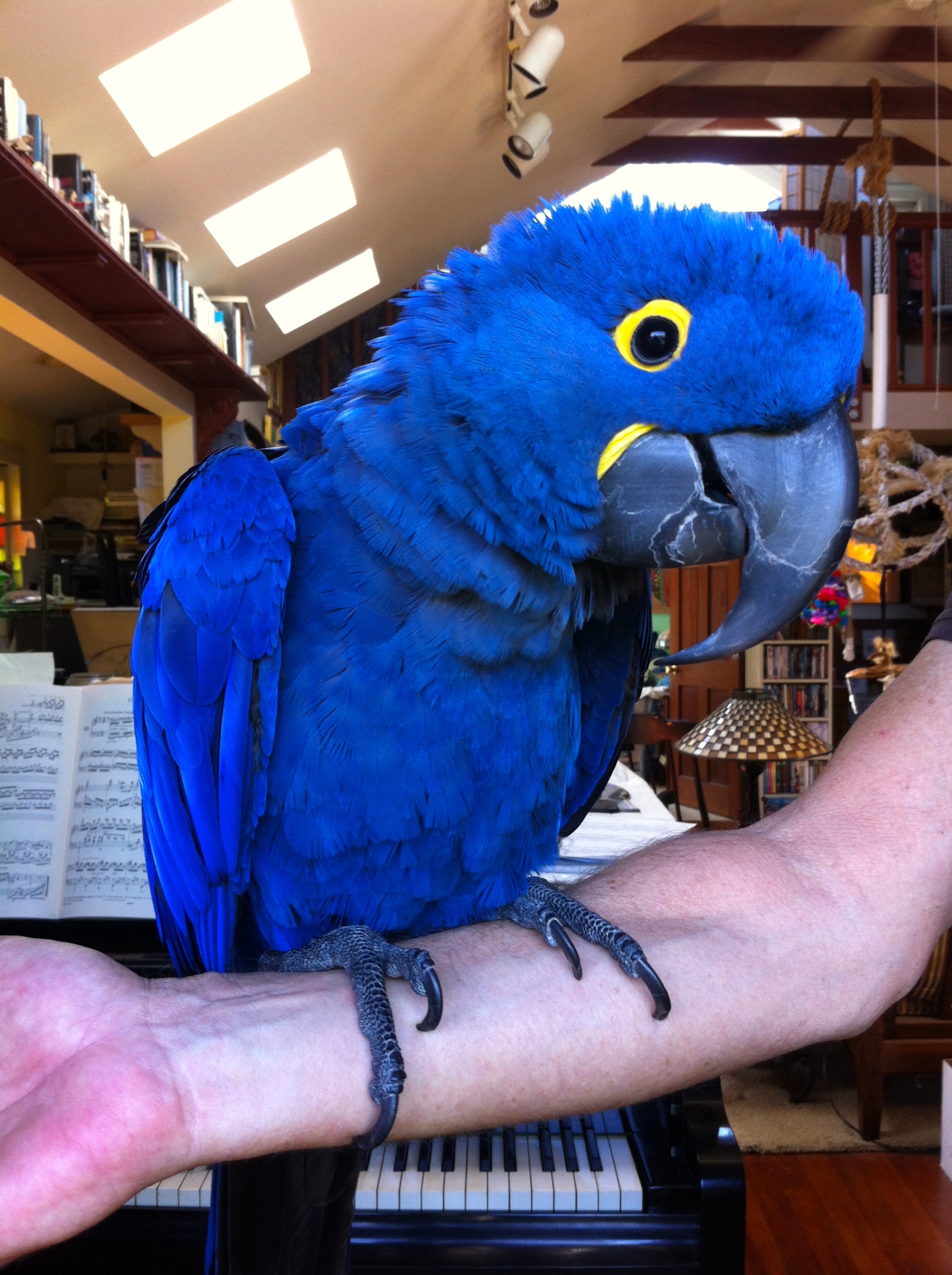
- To this day there’s the Hyacinth Macaw, which earned its name in the early 1700s as well. That bird has a gorgeous coat of blue, not violet (though some shades of violet are included).
Images
Footnotes
- Wycliffe translation (2 centuries before King James – https://www.biblestudytools.com/wyc/numbers/15.html): “Speak thou to the sons of Israel, and thou shalt say to them, that they make to them hems by (the) four corners of their mantles, and fasten they in them laces of jacinth; (Speak thou to the Israelites, and thou shalt say to them, beginning now, and forevermore, they shall put tassels on the four corners of their mantles, and fasten a blue ribbon to the tassels;) “
Item
The Gemara says “וברייתו דומה לדג”. A snail is not fish-like, so R’ Doniel Kleinman argues that Chazal were not talking about a murex snail.
Anti Techeiles – Bigdei Chamudos – Rabbi Doniel Osher Kleinman
Item
The Gemara does not say the chilazon is a fish. It says it resembles a fish. Rashi on Shabbos also says the chilazon is “כמין דג קטן” — like a small fish — which is comparison language, not scientific classification. Once the description is analogical, it is reasonable to say Chazal were giving field סימנים, not writing a zoology textbook.
Item
Kleinman argues that “גופו דומה לים” should mean the body itself looks like the sea, meaning blue or sea-colored, not that algae or sea growth on the shell makes it look marine. He treats the simple reading as fatal to the murex identification.
Item
That is only compelling if you assume every siman must be read in the narrowest, most literal way. But Chazal often describe creatures by how they appear in the real world. If a sea creature’s outer appearance blends into the sea environment, that can still fit “דומה לים.” More importantly, even if this one siman is debated, the case for murex was never built on this phrase alone; it is a cumulative case, not a one-line proof.
Item
Kleinman notes that Rashi in Sanhedrin calls the chilazon a “תולעת”, which sounds unlike a classic snail and therefore pushes away from the murex.
Item
The word “תולעת” in older rabbinic usage is not a modern biological category. It can be a broad descriptive term for a creeping or lowly creature and does not by itself exclude a mollusk. That is especially true because Rashi elsewhere describes the chilazon as “כמין דג קטן,” showing that he was speaking descriptively, not taxonomically. So “תולעת” is not a knockout proof against a snail.
Item
If the chilazon were really a famous sea snail, Kleinman argues that Chazal or the Rishonim should have described it more clearly and directly.
Item
That argument cuts both ways. The very fact that the Gemara uses the already-known word chilazon may suggest that the creature was familiar enough in its own time that no longer explanation was needed. Also, lexically, the term chilazon was used broadly enough to include shelled marine creatures; Jastrow explicitly defines חלזון as a conchiferous animal, snail, oyster, and especially the purple-shell used for dyeing techeiles. So the term itself does not exclude a snail at all.
Item
Kleinman argues that the siman of “עולה אחד לשבעים שנה” does not fit the murex snail and that if the Gemara meant a creature people actually knew, that feature should have been observable as well.
Item
Even many supporters of murex do not read “once in seventy years” as a simple literal biological cycle. It can be understood as an expression of rarity, periodic abundance, or unusual surfacing. In other words, even if this phrase remains difficult, that does not disqualify the murex unless one assumes every line of the Beraisa must map onto modern biology in a rigidly literal way.
Item
The language of extracting dye — “ובדמו צובעין תכלת” and “הפוצעו” — sounds to Kleinman more natural for a creature with obvious blood or a fish-like body than for a snail.
Item
On the contrary, “הפוצעו” works quite well for a hard-shelled mollusk. In Shabbos 75a, the Gemara discusses trapping the chilazon and breaking it, and one explanation explicitly refers to breaking its shell. Rashi there explains “הפוצעו” as pressing it so that its blood comes out. That language is very compatible with opening or crushing a shell-creature to extract dye material.
Item
Kleinman’s basic method is that the Gemara’s סימנים should be read as tight identifiers, and once the fit is strained, the murex should be rejected.
Item
The strongest reply is that the murex case was never meant to stand on one siman in isolation. The argument is cumulative: Chazal describe a marine chilazon used for dye; the word chilazon can include snail-like shell creatures; ancient evidence from the eastern Mediterranean shows large-scale purple-dye production from muricid sea snails; and chemical analysis of archaeological textiles has identified dye from Hexaplex trunculus. So even if some textual details remain debated, the broader fit remains very strong.