

Debate Responses
Item
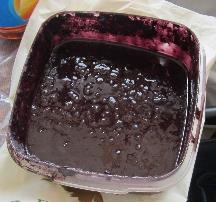
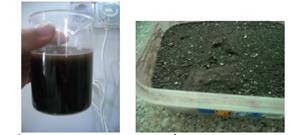
When the blood of a few snails is collected together, it fits the description of the Rambam very well. When the blood is extracted from the snails, the blood immediately turns from clear to very dark purple, and it looks black like ink.
Item
Rav Moshe Feinstein writes that the chilazon blood is black and cannot turn blue without the addition of other ingredients (Igros Moshe Yoreh Deiah 2:133). He cannot hold that the Murex is the chilazon.
Item
Exactly – only when other ingredients are added is the blood of the murex reduced 4, and only then can it turn from black to blue. In any case, Rav Moshe is clear that what he is saying is only according to the Rambam and that Tosafos were unsure of this (presumably because they didn’t see the dying process).
Footnotes
4. Reduction is a process that allows the murex dye to bond with the wool. The added ingredients only aid the reduction process and do not change the color. However, in the reduced state, the black [deep purple] blood is able to lose its red component, thereby producing a blue dye.
Item
“…‘כדיו שחור ודמו התכלת לעין’… ‘מראה גופו לים דומה’…”
English: “Its blood is black like ink but dyes techeiles. Its body resembles the sea.”
📖 Source: חלזון התכלת במשנת הראשונים, סימן ה
Item
“…הרבה קונכיות בגוון כחול/ירקרק—‘דומה לים’ הוא גם הסוואה; אין ראיה לדין צבע מוגדר.”
English: “Many shells are bluish-green. ‘Like the sea’ refers to camouflage, not a precise Pantone shade.”
📖 Source: תגובה לקונטרס לחלזון במשנת הראשונים, עמ’ 6
Item
Rambam writes that both Techeiles and Kala Ilan are called Shachor. In ancient times early color systems used only two terms: dark (shachor) and light (lavan). Then came red (adom) and then green/yellow (yarok). These colors in turn play a major role in Nidda blood, whether it’s adom or not.
In addition, the original Arabic would have used the term aswad for shachor, and indeed, consider Surah Al-Baqarah (2:187) in the Qur’an:
“…eat and drink until the white thread becomes distinct from the black thread of dawn.”
(ḥattā yatabayyana lakumu al-khayṭu alabyaḍ mina al-khayṭi al-aswad mina alfajr)
The metaphor is nearly identical to Berachos: white and black threads as visual cues for twilight. Arabic commentators explain aswad here as the dark blue of pre-dawn—not pitch black, but just… very dark.
Another case: Surah Aal-E-Imran (3:106):
“On the Day [some] faces will turn white, and [some] faces will turn black.”
(Yawma taswaddu wujūhun wa tabyaddu wujūh…)
Therefore, we see from here that “black” wasn’t fixed and rather was more of a shade range.
Item
Rabbi Yitzchak Herzog once cited a treatise by Samuel ben Hofni Gaon, he noted that Rambam frequently drew from Greek sources. In History of Animals (Book V, Ch. XIII:3), Aristotle describes purpura sea snails: “Most of them contain a black pigment; in others it is red, and the quantity of it small.”