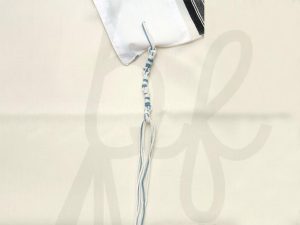
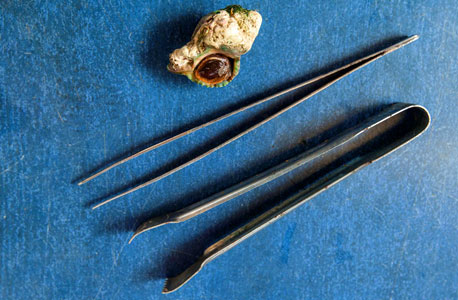
In Parshas Shelach, the Torah gives us the mitzvah to place a thread of Techeiles among the strings of tzitzis. What exactly lies behind this mitzvah?
Daniel Lipson – 17.06.2019

“Speak to Bnei Yisrael and tell them that they shall make tzitzis on the corners of their garments throughout their generations, and they shall place upon the tzitzis of each corner a thread of Techeiles.”
During the Biblical period, and later during the time of the Second Beis Hamikdash, Jews wore talleisim in which some of the tzitzis strings were dyed Techeiles. This dye does not come from a plant, but from a liquid found in the body of a certain sea creature known as the chilazon. From this liquid, the special dye can be produced. Chazal say in the Tosefta in Maseches Menachos:
“Techeiles is kosher only when it comes from the chilazon.”
In Maseches Menachos, daf 44, Chazal describe the chilazon. What was apparently clear in their time, however, became a mystery in later generations:
“The Rabbis taught: This chilazon — its body resembles the sea, its form resembles a fish, it comes up once in seventy years, and with its blood they dye Techeiles. Therefore, it is expensive.”
There are other girsaos and descriptions as well, and they do not necessarily make the identification any easier. A tremendous amount has been written over the generations trying to understand these sources and identify the chilazon.
The Techeiles-dyeing industry in our region seems to have come to an end sometime around the early Arab period. Chazal say that the dye was “nignaz,” hidden away. Some explain, though, that this does not mean the method of producing it was literally forgotten, since these were known industrial techniques. Rather, Techeiles became something kept in the royal treasuries, with its use restricted to kings, officials, and the upper levels of government. This also seems to fit the words of the Ramban in Shemos 28:
“Even today, no man would dare wear Techeiles except a king of the nations.”
The royal dye of the ancient world was known as purpura, or Purpura. The Roman naturalist Pliny the Elder discussed this dye and the process of making it from sea snails found along the Mediterranean coast. He mainly discusses purple dye, but researchers have suggested that these creatures could produce a range of colors along the red-purple-blue spectrum. Obviously, the subject is much more complicated than that; it has been studied extensively, and there are different opinions about many of the details.
Beginning in the 17th century, scientists tried to identify the purpura snails and their shells. A number of early books dealing with the subject can be found in the National Library’s Edelstein Collection for the History of Science.
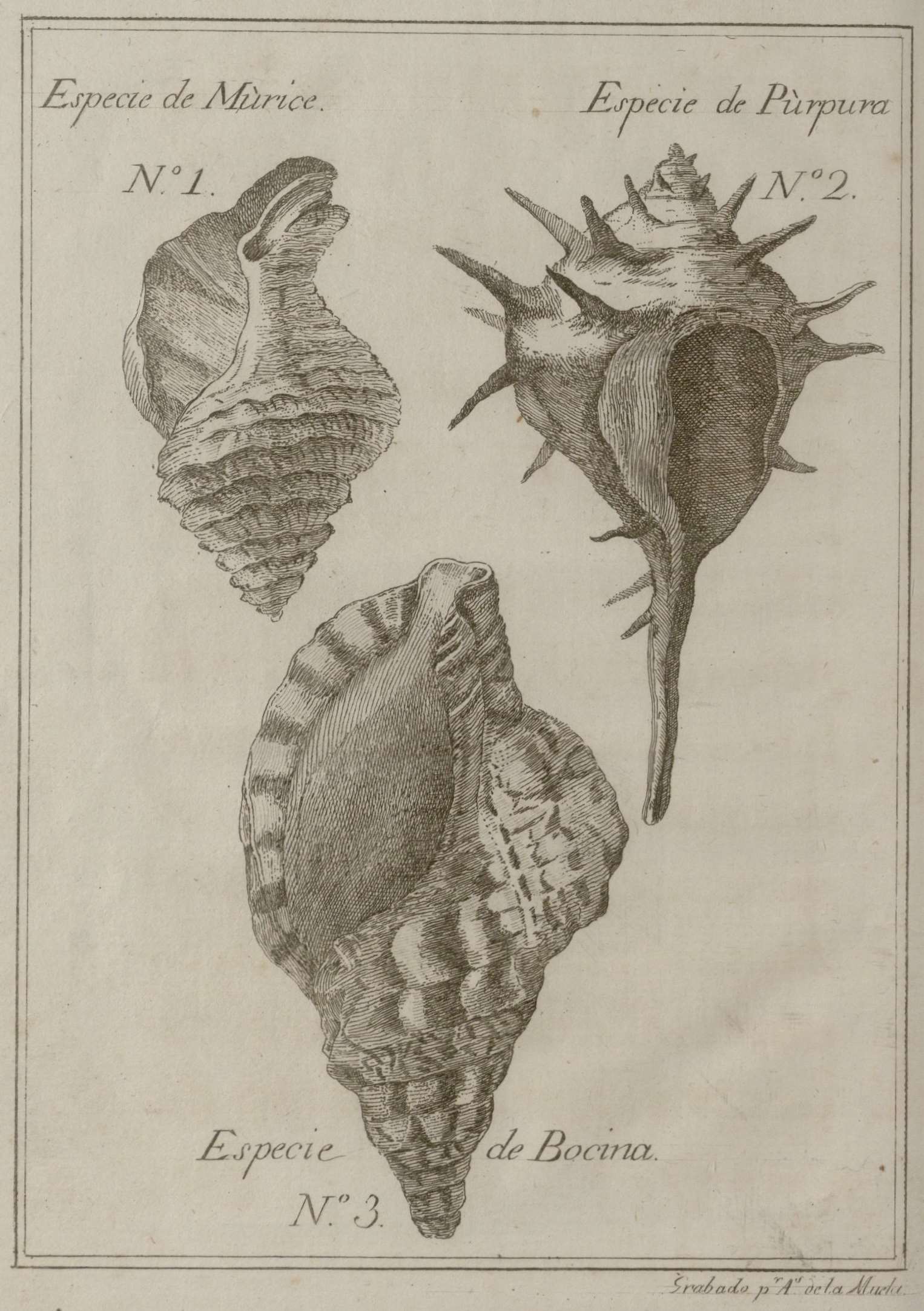
Illustration of shells from the book Memorias sobre la púrpura de los antiguos, restaurada en España, Madrid 1779
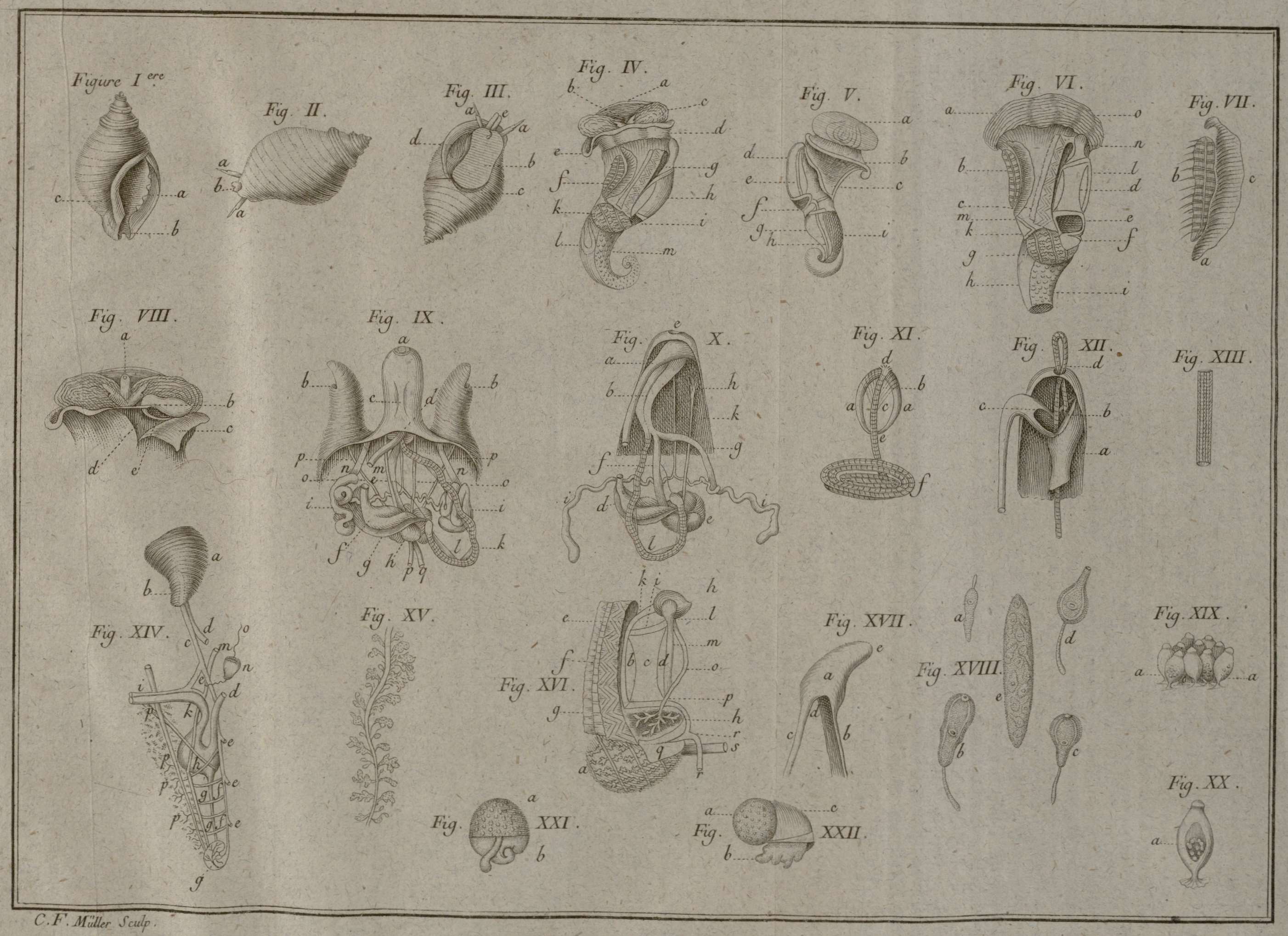
Illustration from the book Purpur-Sneglen, Holland 1777
It is possible that after the Arab conquest, the industry of producing Techeiles dye moved for a time from the eastern Mediterranean to Europe. Eventually, it seems that the use of the chilazon was replaced by plant-based dye. Chazal mention kala ilan, a plant-based substance whose color was identical to Techeiles. There are many opinions regarding the meaning and linguistic origin of the term.
The Aruch, the medieval Talmudic dictionary, describes the color as Techeiles and gives the foreign-language term as “indiko.” Indigo is well known today, among other things, as the dye used for blue jeans. Kala ilan could produce the same color as animal-based Techeiles, but halachically it is invalid for dyeing tzitzis strings.
“I am the One Who will ultimately punish… the person who hangs kala ilan on his garment and says that it is Techeiles.” (Bava Metzia 61b)
In any event, the method of producing Techeiles from the chilazon was lost, and for more than a thousand years Jews did not place Techeiles in their tzitzis, wearing only white strings. The poskim stress the importance of the mitzvah of Techeiles, while recognizing that in their time it was no longer practically available.
The first person in modern times to attempt to restore Techeiles to tzitzis was the Radzyner Rebbe, Rav Gershon Chanoch Henoch Leiner (1839-1890).
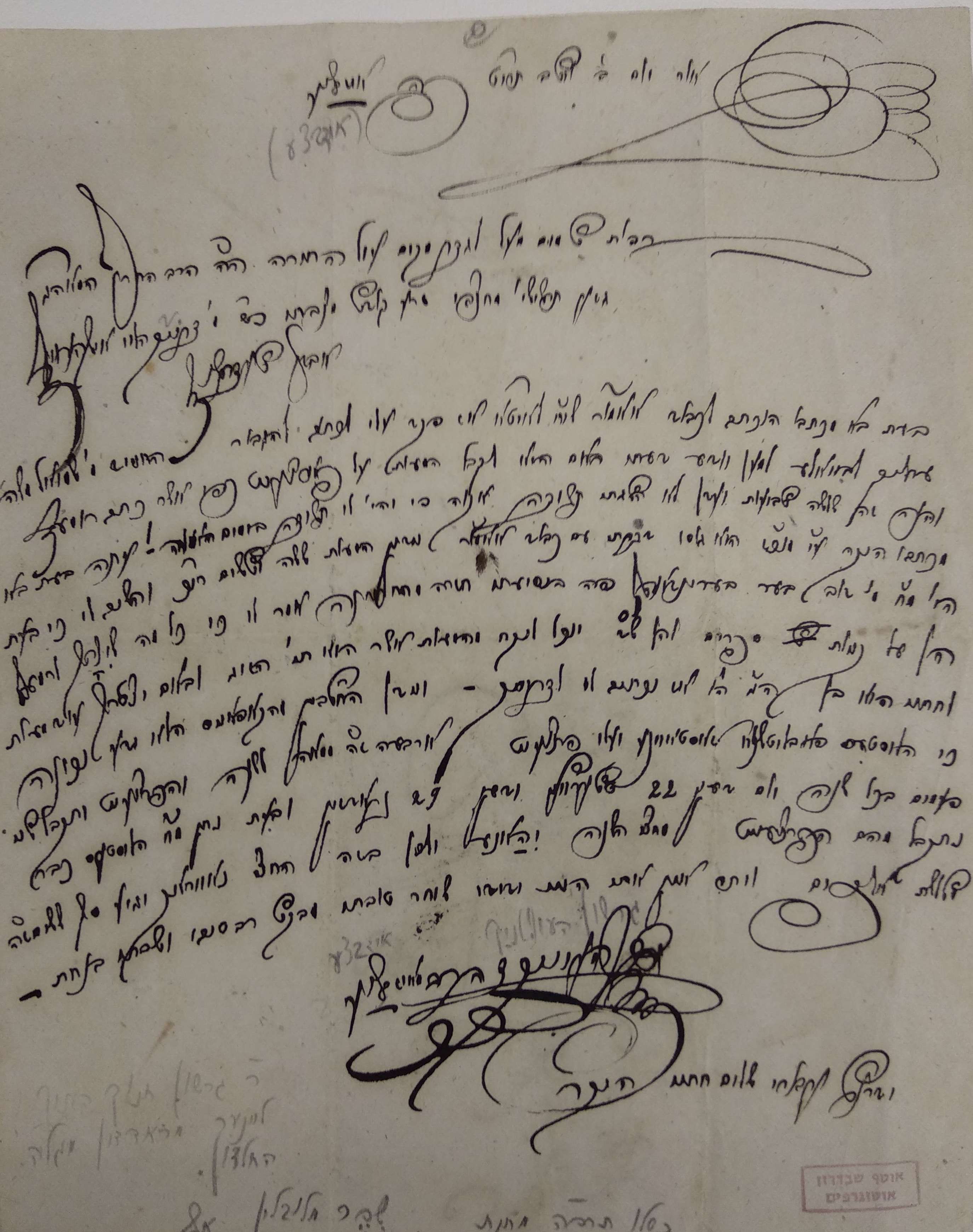
Handwriting of the Radzyner Rebbe from the collections of the National Library of Israel
His first sefer, “Maamar Sefunei Temunei Chol,” was printed in Warsaw in 1887 and discusses whether it was possible in his own time to rediscover the chilazon mentioned by Chazal as the source of Techeiles dye. Not long afterward he published another sefer, “Maamar Ptil Techeiles.” In that sefer, Rav Leiner argues that he had succeeded in identifying the chilazon.
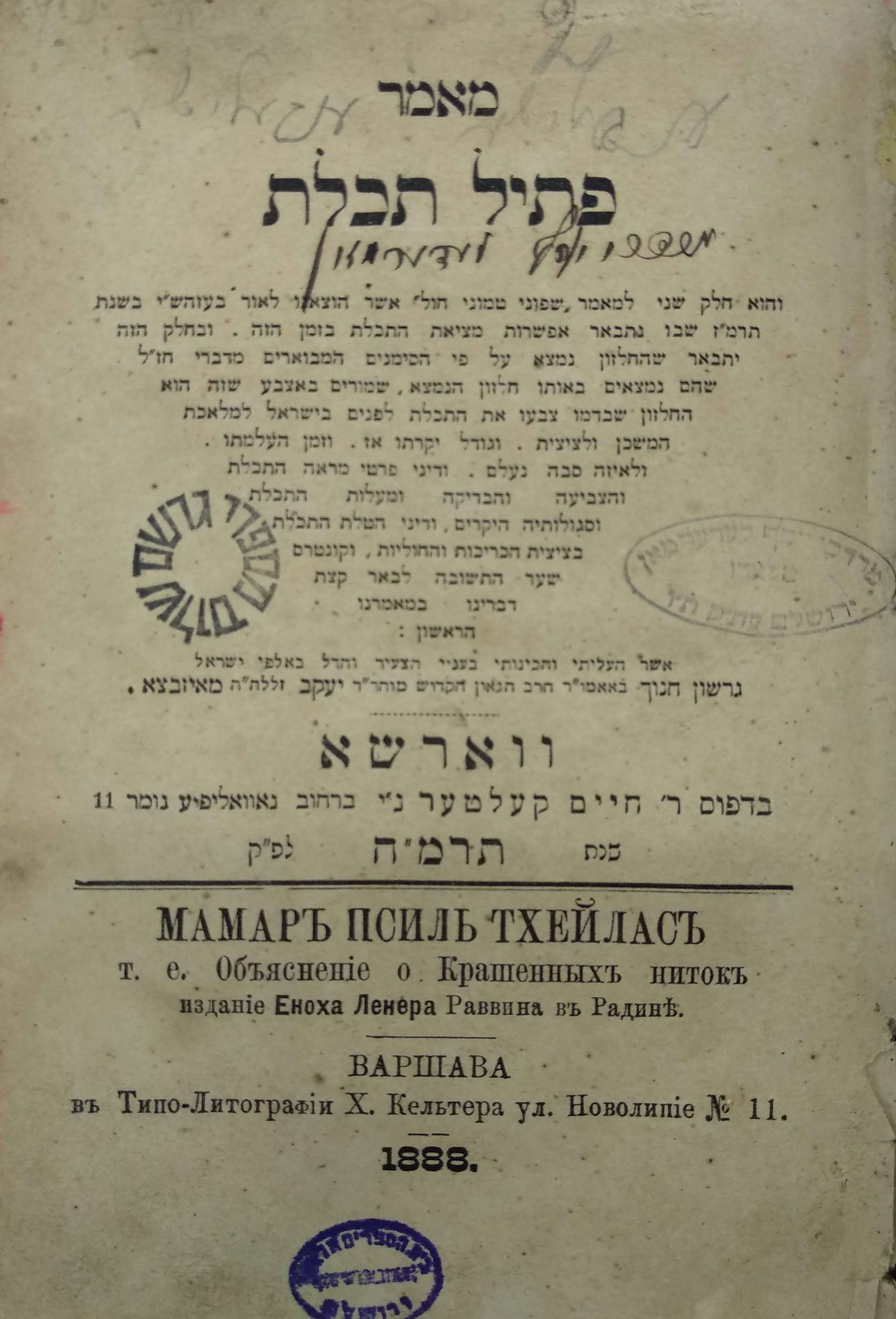
Maamar Ptil Techeiles
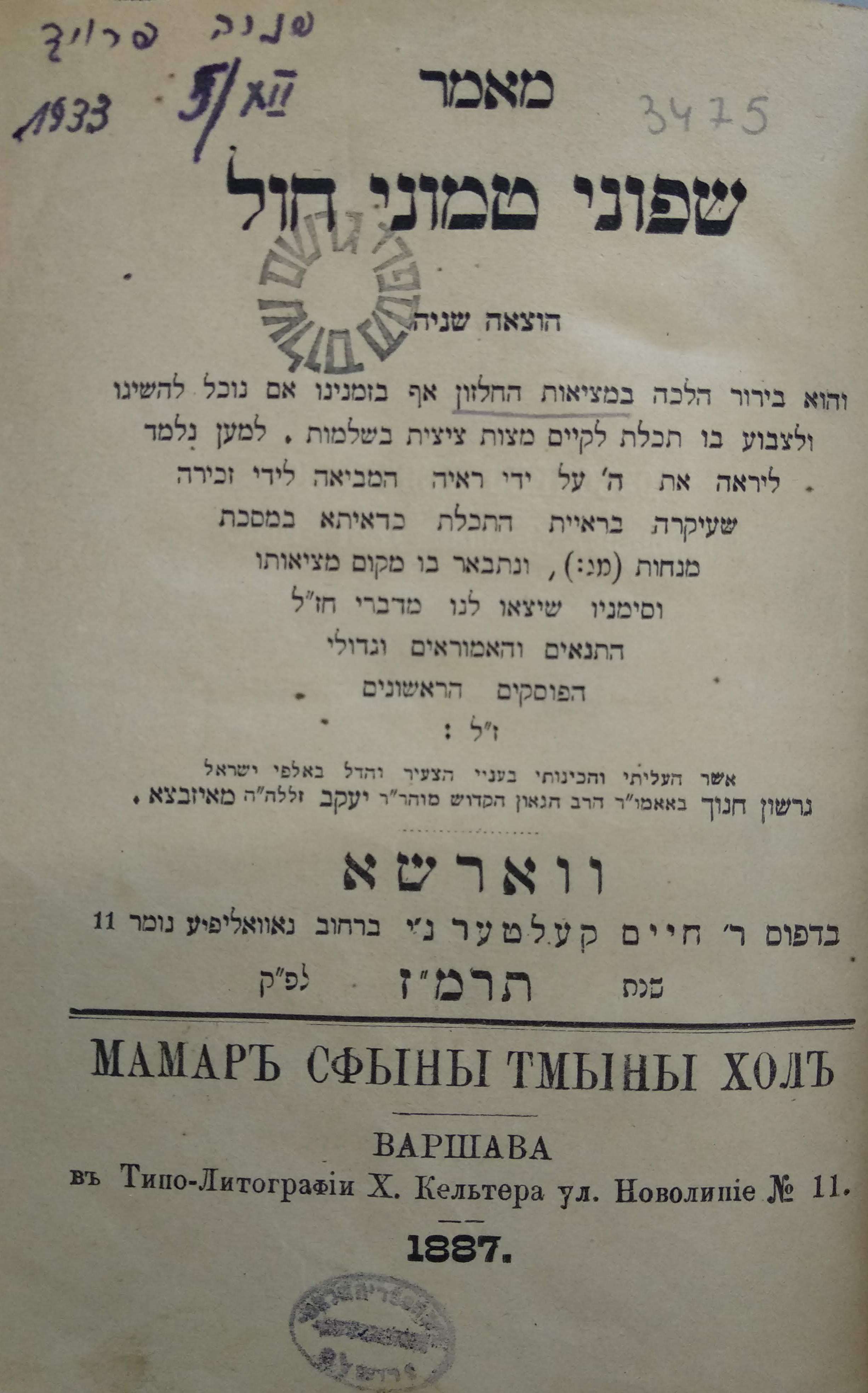
Maamar Sefunei Temunei Chol
As part of his research, Rav Leiner traveled all the way to Italy:
“We took upon ourselves to travel great distances by sea, and we came to the shores of the Mediterranean in Italy, to the city of Naples, where the greatest variety of sea creatures can be found. There is a place there where sea animals and creeping creatures are gathered, under an association devoted to the study of marine life. It is a large stone building sunk into the ground on the shore of the Mediterranean, with rows of rooms built of clear glass — an aquarium — through which seawater is constantly flowing. All kinds of sea creatures move about there freely and can be seen through the glass walls. One can observe each creature’s movements, the way it eats and travels, and all the details of its behavior. There I saw the chilazon alive and moving freely, and I will now record all of its identifying signs and the way it behaves.”
In his view, the chilazon was the sea creature known in modern Hebrew as the common cuttlefish, Sepia officinalis.
Opposition to his identification began almost immediately. Some of his opponents even published sefarim attacking Rav Leiner’s position, at times in extremely sharp language.
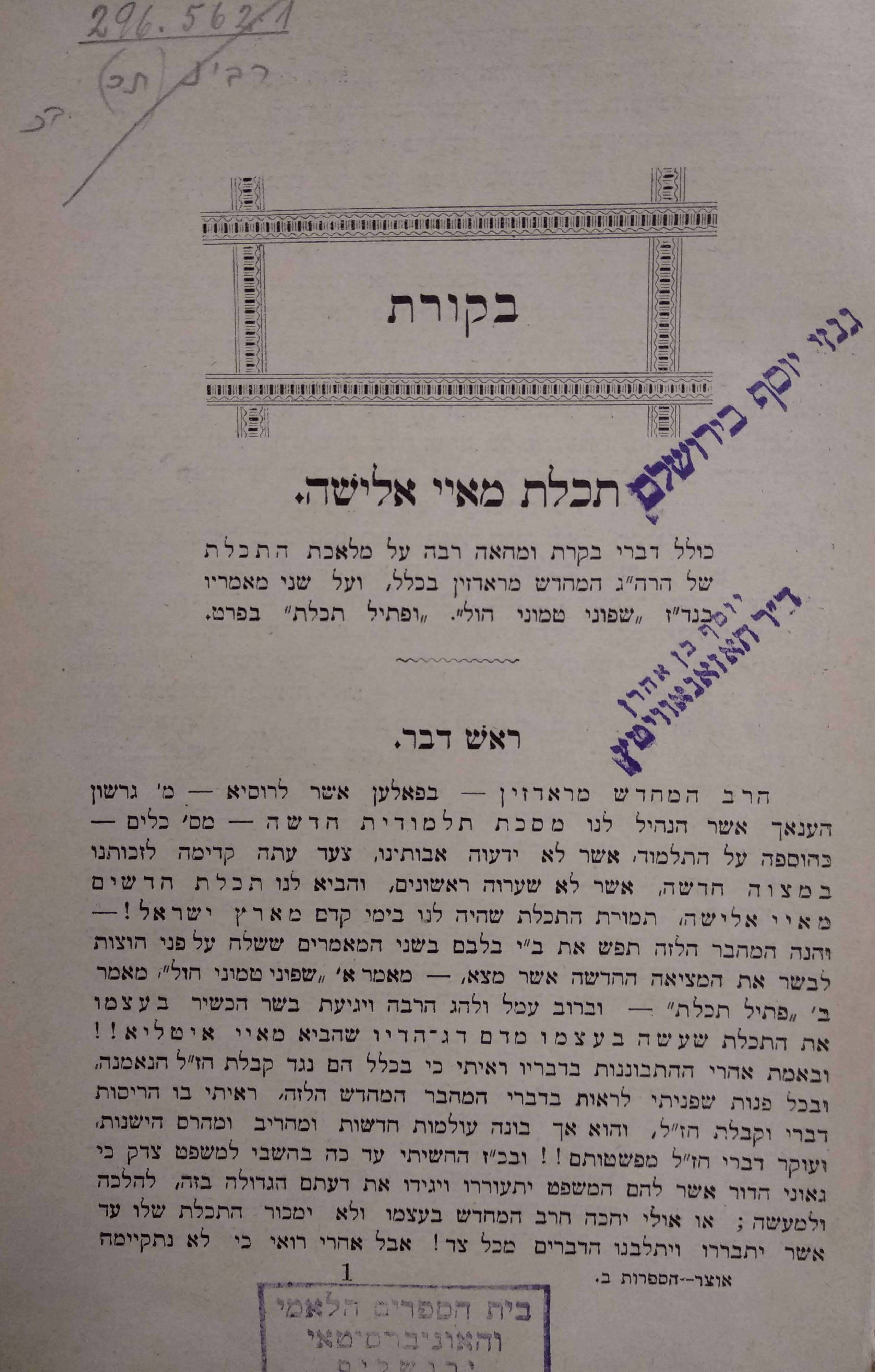
Bikores Techeiles Mei’iy Elisha, Krakow 5648 (1888)
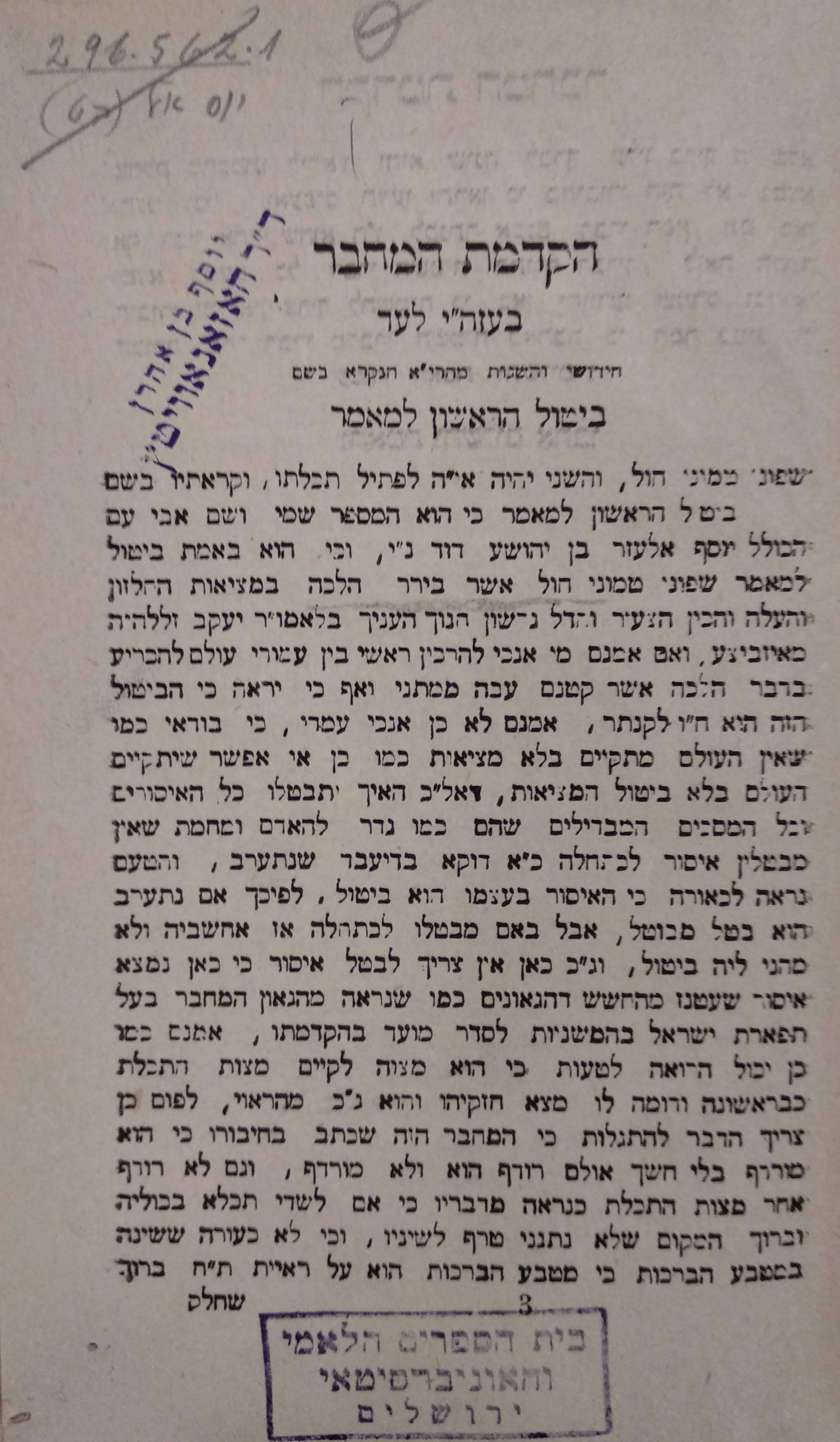
Bitul HaRishon LaMaamar, Warsaw 5648 (1888)
Rav Leiner responded to these attacks and tried to explain and defend his position. He also wrote many teshuvos to questions that were sent to him and received haskamos from a number of rabbanim. He put all of this into writing in the sefer “Ein HaTecheiles,” which was published by his son after his passing.
As a result of Rav Leiner’s discovery, thousands of Radzyner Chassidim began dyeing their tzitzis with Techeiles according to his formula. The special formula was lost during the Holocaust, but was later rediscovered in the writings of Israel’s Chief Rabbi, Rav Yitzchak Isaac Herzog. Rav Herzog disagreed with Rav Leiner’s identification, but in correspondence with the Rebbe’s son before the Holocaust, he received the Radzyner formula for making the dye. This allowed the Chassidim to continue producing it after the Holocaust.
Rav Herzog had a theory of his own.
With his academic training and research abilities, Rav Herzog was familiar with the writings of Pliny, Aristotle, and other ancient authors who discussed the textile-dyeing industry of antiquity.
He was also familiar with the more modern research of European chemists and was in contact with some of them. He published his own knowledge and research in a 1913 doctoral dissertation entitled Hebrew Porphyrology. Rav Herzog believed that Techeiles had been produced from the Janthina sea snail.
At the same time, he was aware that the identification had difficulties and was certainly not conclusive.
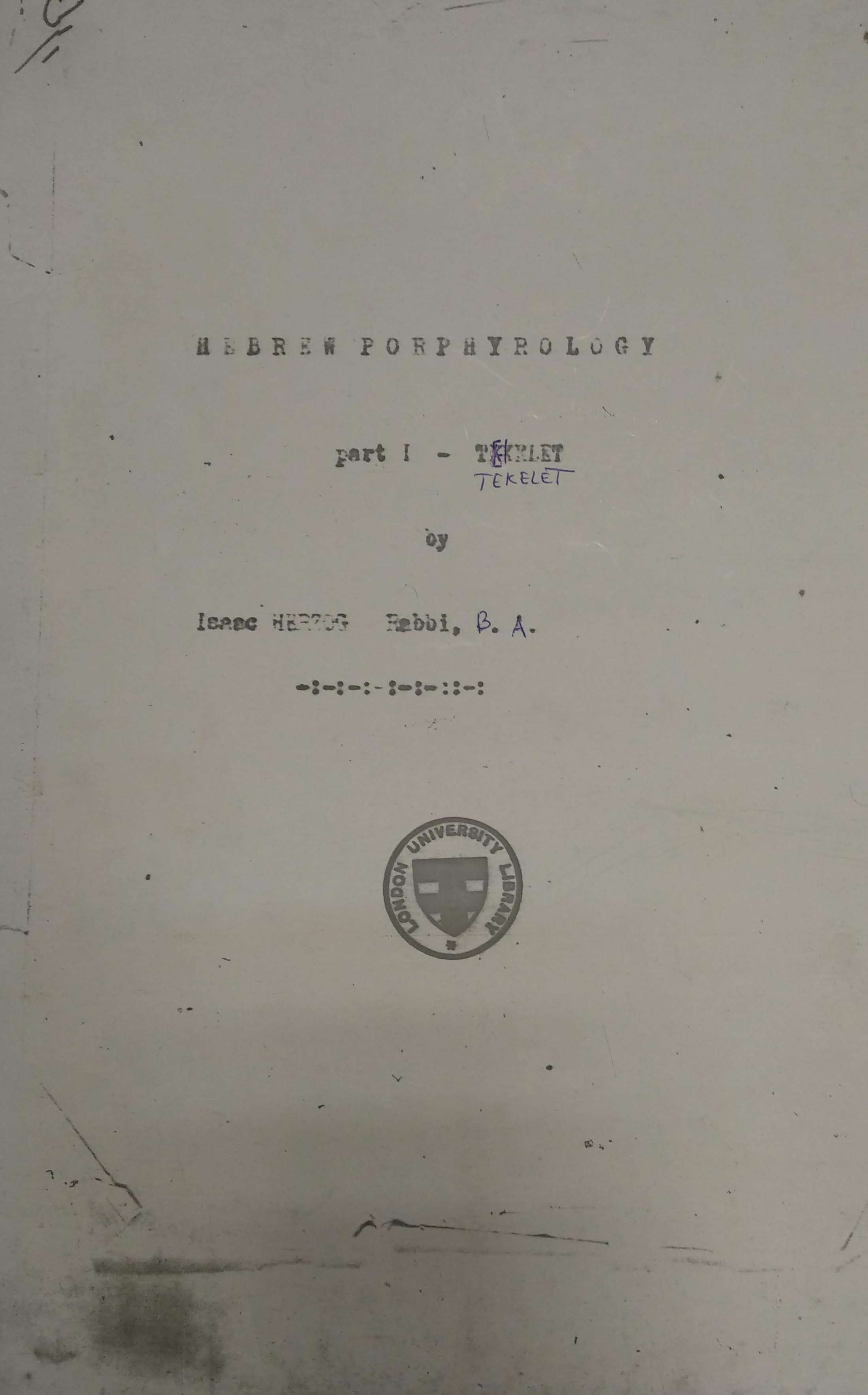
Photograph of Rav Yitzchak Isaac Herzog’s doctoral dissertation on the Chilazon HaTecheiles
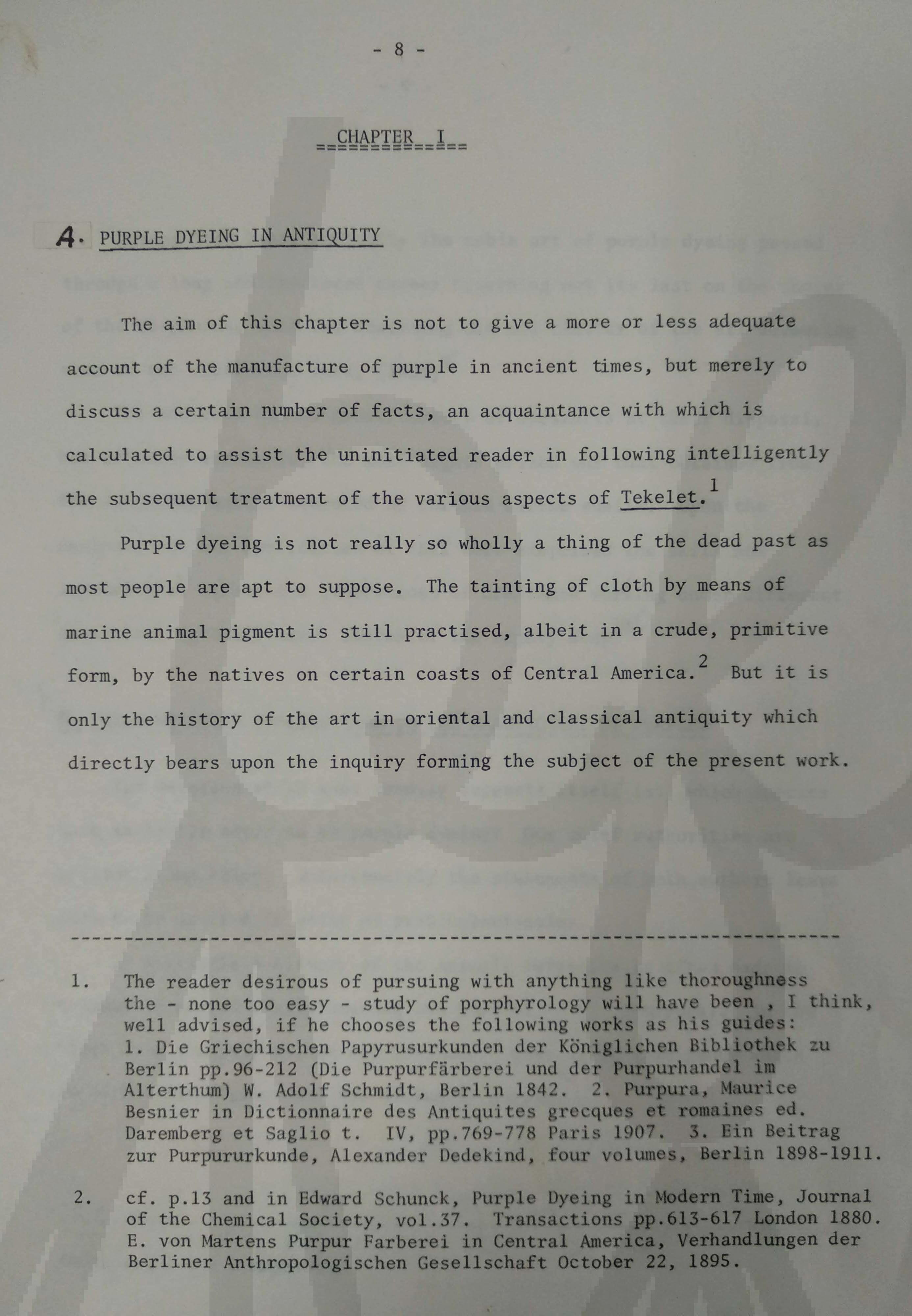
Photograph of Rav Yitzchak Isaac Herzog’s doctoral dissertation on the Chilazon HaTecheiles
Among other things, Rav Herzog submitted Radzyner tzitzis for scientific laboratory testing. In his view, the results showed that the Radzyner Rebbe and his Chassidim had been misled by an Italian chemist, and that their Techeiles dye was actually based on other chemical substances.
About sixty years later, Dr. Sidney Edelstein conducted a similar test on the tzitzis of Radzyner Chassidim and reached the same conclusion. The process being used was a chemical method known since 1740. At that time, the blue dye was made from ox blood, but it could be produced from any animal substance, including a sea creature. The end result is the same: the actual color comes from a chemical compound, while the animal material supplies only the nitrogen.
Sidney Edelstein was a Jewish-American chemist and an expert in textile dyeing. During his research into Techeiles, he came across Rav Herzog’s extensive work and took the initiative to have it republished. The dissertation was printed as a book together with new research articles written in 1987 by marine biologist Prof. Ehud Spanier and by Dr. Moshe Ron, a former director of the Edelstein Collection.
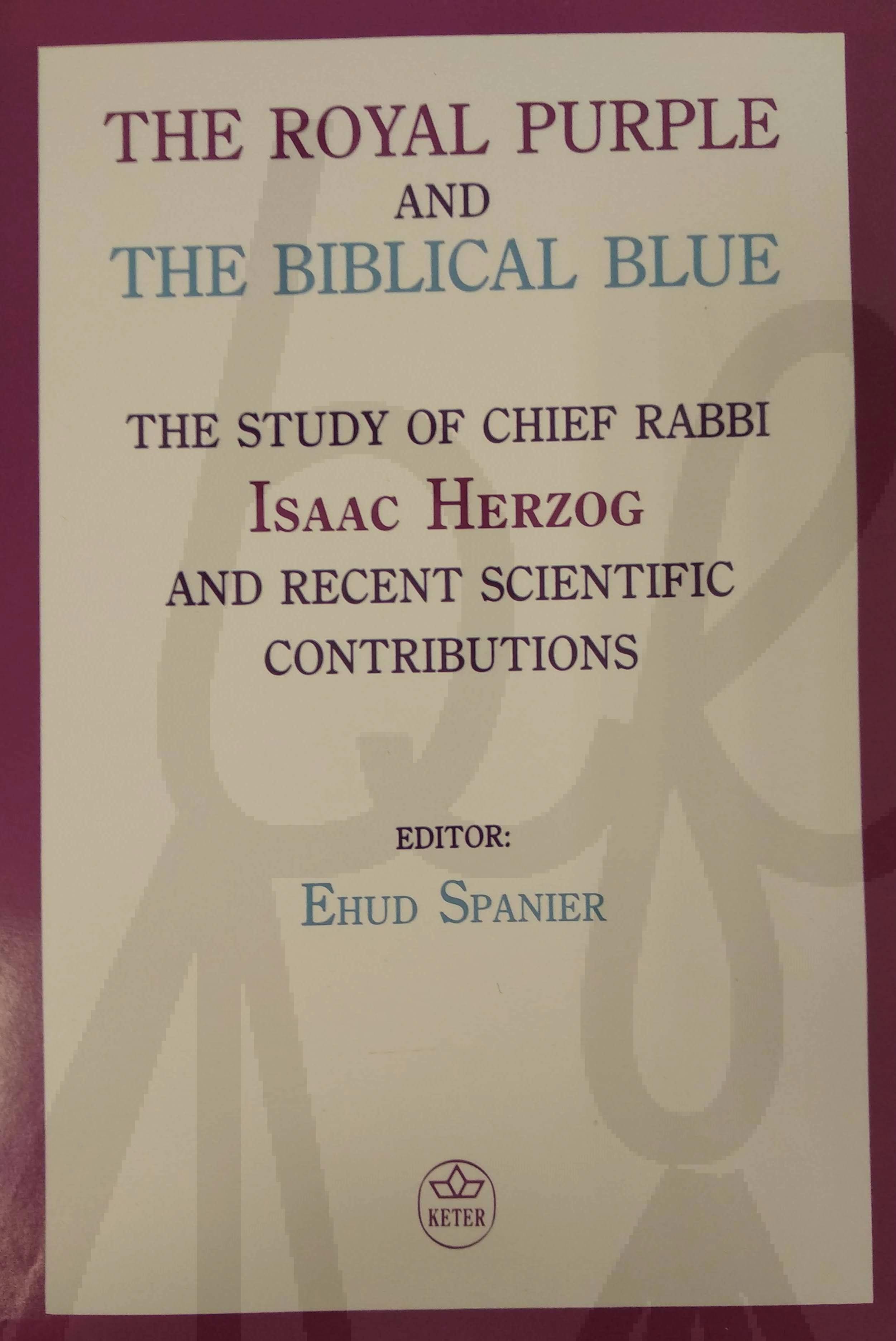
Rav Herzog’s doctoral dissertation in a later edition
Edelstein was also a collector of books dealing with the development of science and technology. His large collection included books from the 16th century through the modern period. It focused mainly on the history of chemistry and alchemy, the technology of science, and the history of textile dyeing, bleaching, and dry cleaning. He donated his library to the National Library in 1976. The collection also contains a photocopy of Rav Herzog’s doctoral dissertation.

Sidney Edelstein
Based on halachic, historical, archaeological, and chemical research, the identification that has become widely accepted in recent generations is the Murex trunculus, known today as Hexaplex trunculus. The Techeiles dye is produced from a liquid found in a gland beneath the snail’s gills. After adding chemical substances and heating it at a steady temperature, the desired color is produced.
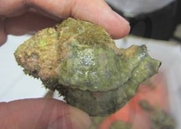
Murex trunculus in its shell (Wikimedia Commons)
In recent years, many sefarim and articles have been published about the rediscovery of Techeiles and the dyeing of tzitzis, and many of them can be found in the National Library as well. Worth mentioning are Rav Menachem Burstein’s comprehensive sefer, “HaTecheiles,” and the many publications of Ptil Tekhelet.