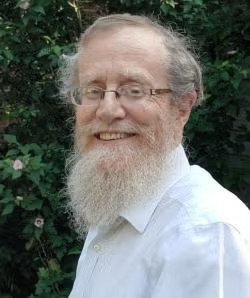
Every so often Mendel Singer is described as a Radzyner chassid. That description makes intuitive sense. He comes from a Radzyner background, has spent years involved with Radzyner Torah and history, and his name appears throughout the contemporary Radzin website on posts dealing with the Rebbes, Radzyner minhagim and shiurim.
Singer himself, however, has pushed back on the label.
In a public discussion in 2020, somebody referred to him as a “Radziner chossid.” Singer responded parenthetically:
“I wish I could earn that distinction.”
He went on to object more generally to labels in discussions about Techeiles, arguing that a person’s arguments should be dealt with on their merits rather than dismissed because he is Radzyner, Modern Orthodox, or anything else.
At first glance, the distinction sounds strange. If somebody comes from Radzyner chassidim, learns Radzyner Torah, is actively involved with Radzyner material and maintains a strong connection to the chassidus, what exactly is missing?
The answer seems to be that historically, at least in some periods of Radzyn, “Radzyner chassid” was understood as something you had to live up to. It wasn’t merely an inherited affiliation.
Rav Shmuel Shlomo’s Radzyn
This comes through particularly strongly in accounts of Rav Shmuel Shlomo Leiner, the son of the Tiferes Yosef and the fifth Radzyner Rebbe.
The official Radzin history describes Rav Shmuel Shlomo as extremely zealous and says that he maintained unusually high standards for Radzyner shtieblach. If a shtiebel didn’t meet those standards, he was prepared to close it. One example involved a gabbai who did not send his daughters to the local Beis Yaakov. Rav Shmuel Shlomo personally intervened and shut the shtiebel down.
A longer Radzyner publication about Rav Shmuel Shlomo puts the matter much more sharply. It describes his goal as restoring the older Izbitza standard and drawing close only chassidim who met his demanding criteria and devoted themselves seriously to avodas Hashem. He would make unannounced visits to Radzyner shtieblach in different towns because he wanted to see what the chassidim were actually like when they weren’t standing in the atmosphere of the Rebbe’s court.
In the case of the gabbai mentioned above, he reportedly took the keys, told everyone to leave and declared:
לאו שמייהו חסידים, אין להם חלק ונחלה בראדזין
In other words, these people did not deserve to be called chassidim and had no portion in Radzyn. The same account says that when Rav Shmuel Shlomo assumed the leadership he removed people from the Tomaszow shtiebel who were associated with Zionist organizations or sent their sons to government schools.
Whatever one thinks of those standards today, the terminology is revealing. Being present in a Radzyner shtiebel did not automatically make somebody a Radzyner chassid in the Rebbe’s eyes.
It wasn’t simply ancestry
This also helps explain something that otherwise sounds like wordplay.
A person can be descended from Radzyner chassidim. He can identify strongly with Radzyner Torah. He can learn the Mei HaShiloach, Beis Yaakov and Orchos Chaim. He can preserve Radzyner history and minhagim. None of that necessarily means he feels entitled to say, “I am a Radzyner chassid.”
There is a certain old-fashioned meaning of chassid hiding here. It isn’t simply the equivalent of denomination or family background. It describes a relationship to a Rebbe and a derech of avodah. In that usage, calling yourself a chassid can sound less like stating your ancestry and more like making a claim about yourself.
That makes Singer’s “I wish I could earn that distinction” considerably easier to understand.
He wasn’t necessarily saying that he has nothing to do with Radzyn. Clearly he does. The contemporary Radzin site itself has numerous posts credited to Mendel Singer, including material concerning Rav Nosson Englard, Radzyner minhagim, the Mei HaShiloach and the Baal HaTecheiles.
The point is almost the opposite. Someone can be deeply connected to Radzyn and still hesitate to award himself the title Radzyner chassid.
Not every Radzyner Rebbe approached this the same way
It would also be a mistake to turn Rav Shmuel Shlomo’s approach into a timeless entrance examination for Radzyn.
His father, Rav Mordechai Yosef Elazar Leiner, the Tiferes Yosef, led a very large chassidus and was heavily involved in communal affairs and chinuch. Radzyner sources describe tens of thousands of chassidim during his period.
After the Holocaust, Rav Avrohom Yissochor Englard rebuilt Radzyn under completely different circumstances. The official history specifically describes his warmer approach and his efforts to bring back people whose connection to Radzyn and Torah had weakened during and after the war. The current Radzyner Rebbe of Yerushalayim, Rav Nosson Nochum Englard, is likewise described as being heavily involved in outreach and teaching people well outside a narrow Radzyner circle.
So there doesn’t appear to be one permanent list of requirements where you check ten boxes and receive your Radzyner membership card.
Still, Rav Shmuel Shlomo’s attitude tells us something about the culture behind the word.
So is Mendel Singer a Radzyner chassid?
That’s probably the wrong question, especially since Singer himself has publicly asked people not to use the label for him.
It would be accurate to say that he comes from a Radzyner background and is closely involved with Radzyner Torah and history. He apparently prefers not to claim the title Radzyner chassid for himself, and there is good historical precedent for understanding why somebody with a genuine connection to Radzyn might nevertheless make that distinction.
Personally, I had assumed “descended from Radzyner chassidim but not a Radzyner chassid” was mostly semantics. After looking into the older Radzyner conception of what being a chassid meant, I don’t think it is.
In that world, being descended from chassidim was something you inherited.
Being a chassid was something you had to earn.